Is Ritalin harmful in itself?
Ritalin is a medication with proven benefits for people with ADHD, and its common side effects in medical use, such as headache, reduced appetite, and difficulty sleeping, can be managed with a doctor. But the picture changes completely when it is used without a diagnosis, at higher doses, or in ways that were not prescribed. Then its effects on the heart and brain multiply and the risk of addiction appears.
Short-term harms of Ritalin
These harms appear within hours of excessive use, and can occur from the first few times:
- A racing heart and palpitations, and raised blood pressure.
- Severe insomnia and being unable to sleep for many hours.
- Loss of appetite, nausea, stomach pain, and dry mouth.
- Headache, dizziness, and trembling hands.
- Anxiety, tension, and irritability, which can reach the point of panic attacks.
- Raised body temperature and sweating, and in severe cases seizures.
Harms of Ritalin to the heart and blood vessels
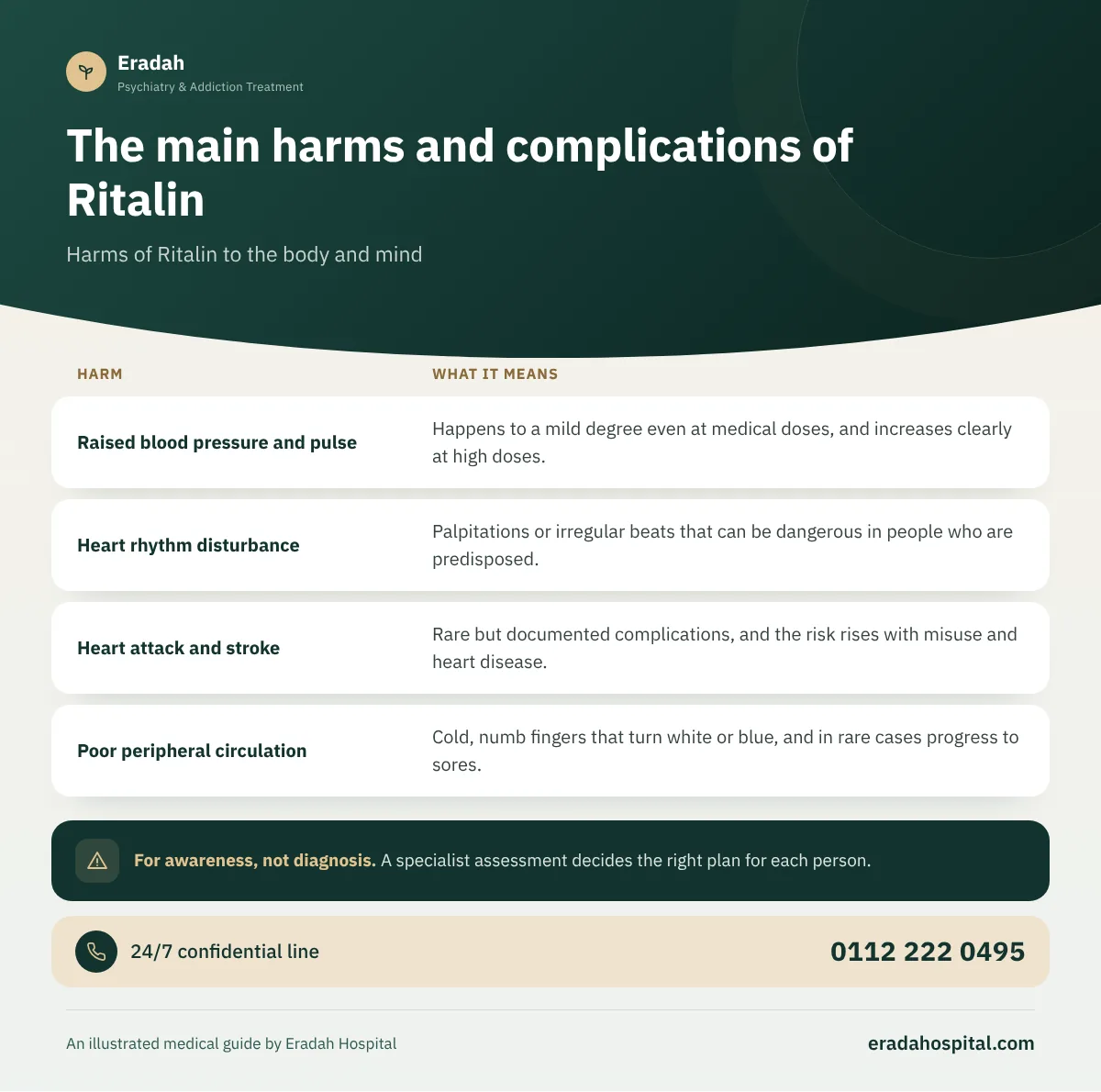
The heart is the organ most affected by stimulants. The official drug leaflet warns against its use in people with structural heart defects, cardiomyopathy, a serious heart rhythm disorder, or coronary artery disease, because their risk of sudden death is higher.
| Harm | What it means |
|---|---|
| Raised blood pressure and pulse | Happens to a mild degree even at medical doses, and increases clearly at high doses. |
| Heart rhythm disturbance | Palpitations or irregular beats that can be dangerous in people who are predisposed. |
| Heart attack and stroke | Rare but documented complications, and the risk rises with misuse and heart disease. |
| Poor peripheral circulation | Cold, numb fingers that turn white or blue, and in rare cases progress to sores. |
Harms of Ritalin to the brain and mental health
When a stimulant is used in amounts beyond what the brain needs, the balance of dopamine and norepinephrine is disrupted, and psychological harms appear that range from mild to serious:
Constant tension, quick irritability, and mood swings that can turn into aggression.
Chronic insomnia that weakens memory and concentration, the opposite of what people who use it for studying are looking for.
Hallucinations, paranoid suspicions and persecutory thoughts, or a manic episode, even in people with no previous psychiatric history.
When the effect wears off, exhaustion, sadness, and emotional numbness follow, which pushes people to use it again.
These risks are higher in people with bipolar disorder or a family history of it, a psychotic disorder, or severe anxiety. This is why a doctor assesses these factors before prescribing, an assessment that is completely absent with self-medication.
Harms of Ritalin to students
Some students turn to Ritalin to stay up before exams, believing it improves their performance, but the outcome is often the opposite: sleepless nights that weaken memory consolidation, anxiety on exam day, palpitations and headache, and then severe exhaustion once exam season ends. With repetition it can turn into a dependence that is hard to stop, even after studies are over.
Harms of using Ritalin for weight loss
Ritalin reduces appetite, so some people use it without a prescription to lose weight. But weight loss this way comes at the expense of the heart, sleep, and mood. The weight often returns when the drug is stopped, and this pattern may be linked to problems in the person's relationship with food that need specialist assessment. There is no safe use of a drug for weight loss when it was not designed for that.
Harms of mixing Ritalin with other substances
| The mix | The main risk |
|---|---|
| Ritalin + alcohol | The stimulant masks the feeling of being drunk, which leads people to drink more, while putting extra strain on the heart. |
| Ritalin + other stimulants | Doubles the strain on the heart and raises body temperature, with a risk of seizures and psychosis. |
| Ritalin + MAO inhibitor antidepressants | A medically prohibited interaction that can cause a sudden and dangerous rise in blood pressure. |
| Ritalin + pills from unknown sources | They may contain much more dangerous substances without the person knowing. |
| Ritalin + large amounts of caffeine and energy drinks | More palpitations, insomnia, and anxiety. |
Harms of Ritalin for teenagers and pregnant women
The teenage brain is still developing until roughly the mid-twenties, so stimulant misuse at this age raises the risk of addiction and affects sleep, growth, mood, and school performance. Even in medical use, the doctor monitors a child's height and weight, because the drug may slow growth slightly in some children.
During pregnancy and breastfeeding, human data are limited, and the drug passes into breast milk. For this reason, any woman who takes it by prescription should discuss a pregnancy plan with her doctor without stopping it on her own, while using it without a prescription during pregnancy is a risk with no justification.
Do the harms of Ritalin go away after stopping?
In most cases, yes. Blood pressure and pulse return to normal, and sleep, appetite, and mood improve within weeks of supervised discontinuation. Major complications such as stroke, heart damage, or a psychotic episode need dedicated treatment and follow-up. You can find the steps for stopping safely on the page about Ritalin addiction treatment.
Signs of poisoning from Ritalin and stimulants: call an ambulance on 123 immediately
- A very fast or irregular heartbeat with chest pain or pressure
- A severe rise in body temperature with heavy sweating or hot, dry skin
- Severe agitation, hallucinations, or confusion and loss of awareness of place and time
- Seizures or severe tremors that do not stop
- Signs of a stroke: sudden weakness on one side of the body, difficulty speaking, or loss of consciousness
Call an ambulance on 123 immediately, move the person away from heat and from objects that could hurt them, and do not put anything in their mouth during a seizure. If they lose consciousness but are breathing, place them on their side, stay with them, and keep the medicine box to show the paramedics.
Call the ambulance 123
19Social and legal harms