Common side effects of zolpidem
Not all zolpidem side effects are equal: some are bothersome and pass, while others are rare but can change a person's life in a single night. Knowing the difference is what protects the patient.
MedlinePlus lists drowsiness, headache, dizziness, nausea and constipation as the most common effects. According to the drug label, in trials involving older adults, dizziness, drowsiness and diarrhea were more common with zolpidem than with placebo.
Sleepwalking and sleep-driving
Zolpidem was linked to most of the cases that led the US Food and Drug Administration in 2019 to add a "boxed warning" to Z-drugs. Of 66 cases of complex sleep behaviors that ended in serious injury or death, 61 people were taking zolpidem, as reported by RAPS from the agency, which attributed this to how often it is prescribed compared with the others. The injuries included falls, burns, drowning and exposure to extreme cold.
This happens when a person moves and acts while not fully awake: cooking, leaving the house, driving, or making phone calls, then remembering nothing in the morning. The label stresses that it can happen from the very first tablet, at the recommended dose, even without alcohol.
Amnesia and the morning effect
Temporary forgetfulness of what happens after the tablet is one of the best-known harms of zolpidem, and it increases if the person does not go straight to sleep. The morning effect led the US Food and Drug Administration to lower the recommended dose for women, after it was found that the morning blood level may be enough to impair driving because women clear the drug more slowly. The label warns that the risk of impaired driving the next morning increases if the tablet is taken with less than 7 to 8 hours left for sleep, at a higher dose, or together with another sedative or alcohol.
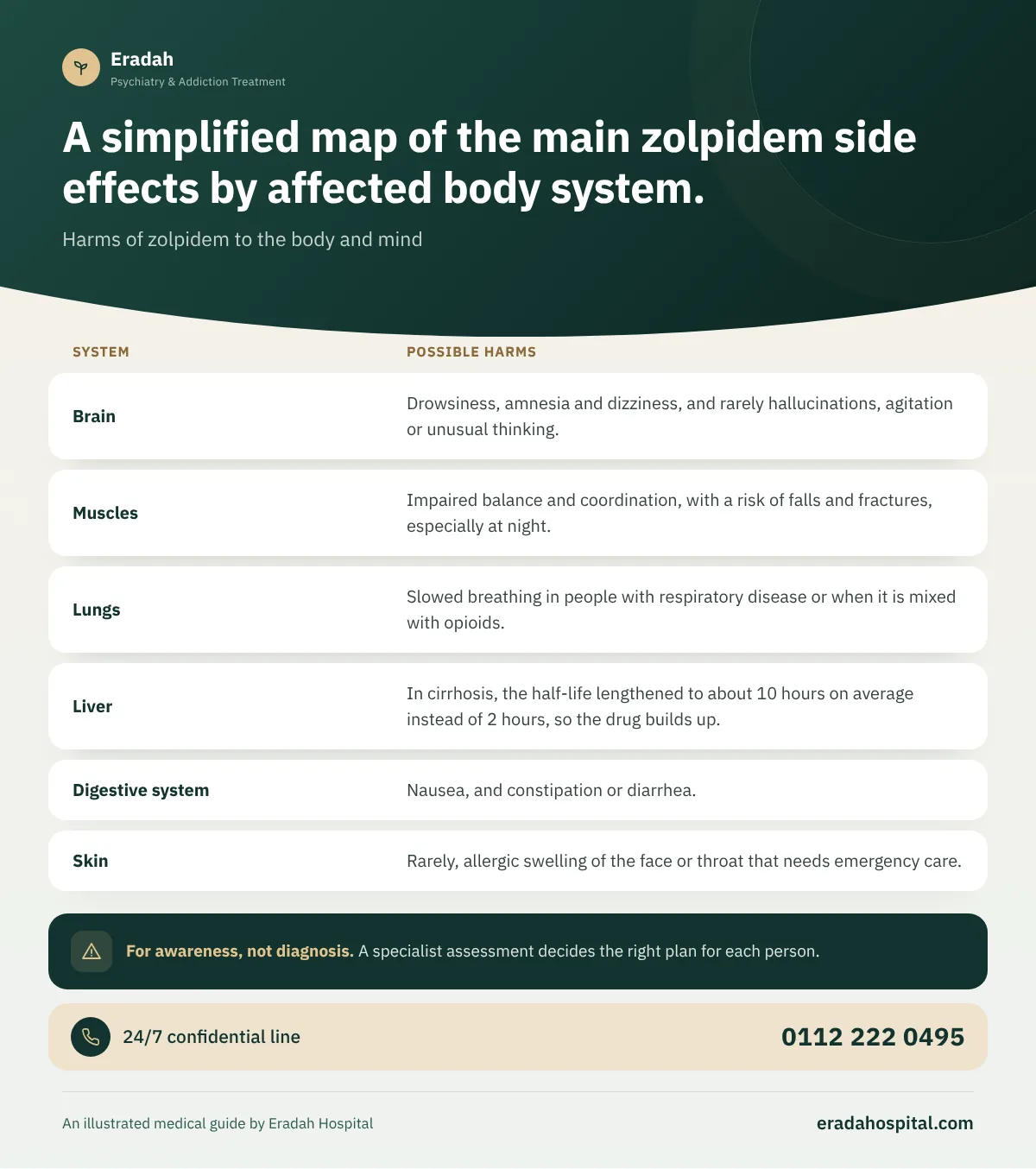
Effects of zolpidem on body systems
| System | Possible harms |
|---|---|
| Brain | Drowsiness, amnesia and dizziness, and rarely hallucinations, agitation or unusual thinking. |
| Muscles | Impaired balance and coordination, with a risk of falls and fractures, especially at night. |
| Lungs | Slowed breathing in people with respiratory disease or when it is mixed with opioids. |
| Liver | In cirrhosis, the half-life lengthened to about 10 hours on average instead of 2 hours, so the drug builds up. |
| Digestive system | Nausea, and constipation or diarrhea. |
| Skin | Rarely, allergic swelling of the face or throat that needs emergency care. |
Why is zolpidem riskier for older adults?
In a study of older adults cited in the drug label, zolpidem blood levels were higher and stayed elevated longer than in younger people. In trials outside the United States, 1.5% of patients reported falls, and 93% of those who fell were aged 70 or older, most of them taking doses higher than recommended. For this reason older adults need a lower dose set by the doctor, and medical reviews advise avoiding it in this age group whenever possible.
Psychological harms of zolpidem
The drug label lists changes in thinking and behavior such as reduced inhibition, bizarre behavior, agitation and a feeling of unreality, and warns that depression may worsen in some patients. For this reason a doctor should review any sudden change in mood, and the depression or anxiety that often hides behind insomnia should be treated rather than simply increasing the sleeping pill.
Harms of mixing zolpidem with other substances
| The mix | The main risk |
|---|---|
| Zolpidem + opioids such as tramadol | Increased risk of slowed breathing, according to the drug label. |
| Zolpidem + alcohol | Doubled impairment of movement and attention, and more sleep behaviors. |
| Zolpidem + another sleeping pill or sedative | Excessive sedation, and the label does not recommend combining two sleep medications on the same night. |
| Zolpidem + some antidepressants such as sertraline | Higher zolpidem blood levels or more drowsiness. |
| Zolpidem + ketoconazole | Higher levels and a stronger effect, while rifampicin reduces its effect. |
In overdose cases, whether from zolpidem alone or with other depressants, outcomes have ranged from drowsiness to coma with heart and breathing disturbances, and some ended in death, according to the label. You will find what to do immediately in the overdose guide.
Zolpidem in pregnancy and breastfeeding
A StatPearls review notes that use close to delivery may be associated with sedation of the newborn and weak breathing, and that cases of excessive drowsiness have been reported in infants of mothers who use it. For this reason, any decision to use or stop it during pregnancy or breastfeeding should be made with a doctor only.
Long-term harms: dependence and escalating doses
With daily use, the sleep-inducing effect gradually weakens, so some people raise the dose on their own, and medical reports describe cases that reached doses many times higher than therapeutic, with euphoria, anxiety and withdrawal on stopping. The page on zolpidem addiction symptoms explains how families can notice this shift, and the page on zolpidem addiction treatment explains how it is treated.
Danger signs after taking zolpidem: call an ambulance (123) immediately
- Deep drowsiness or a coma the person cannot be roused from.
- Slow or irregular breathing, or blue lips and limbs.
- Low blood pressure or a weak or irregular pulse.
- Taking it with an opioid painkiller, alcohol, or another sedative.
- A seizure or severe confusion after suddenly stopping high doses.
Call ambulance (123) immediately and do not wait for them to “sleep it off.” If the person is unconscious but breathing, place them on their side in the recovery position, stay with them and watch their breathing until the paramedics arrive, and do not give them any sedative, stimulant or food. Tell the paramedics what they took, the approximate amount and the time, bring the medicine box if you find it, and tell them if the person also drank alcohol or took an opioid painkiller.
Call the ambulance 123