Physical signs of zolpidem misuse
The symptoms of zolpidem addiction differ a little from most sedatives because its effect is short; signs may appear in brief bursts after each dose and then vanish, which can make families doubt their own observations.
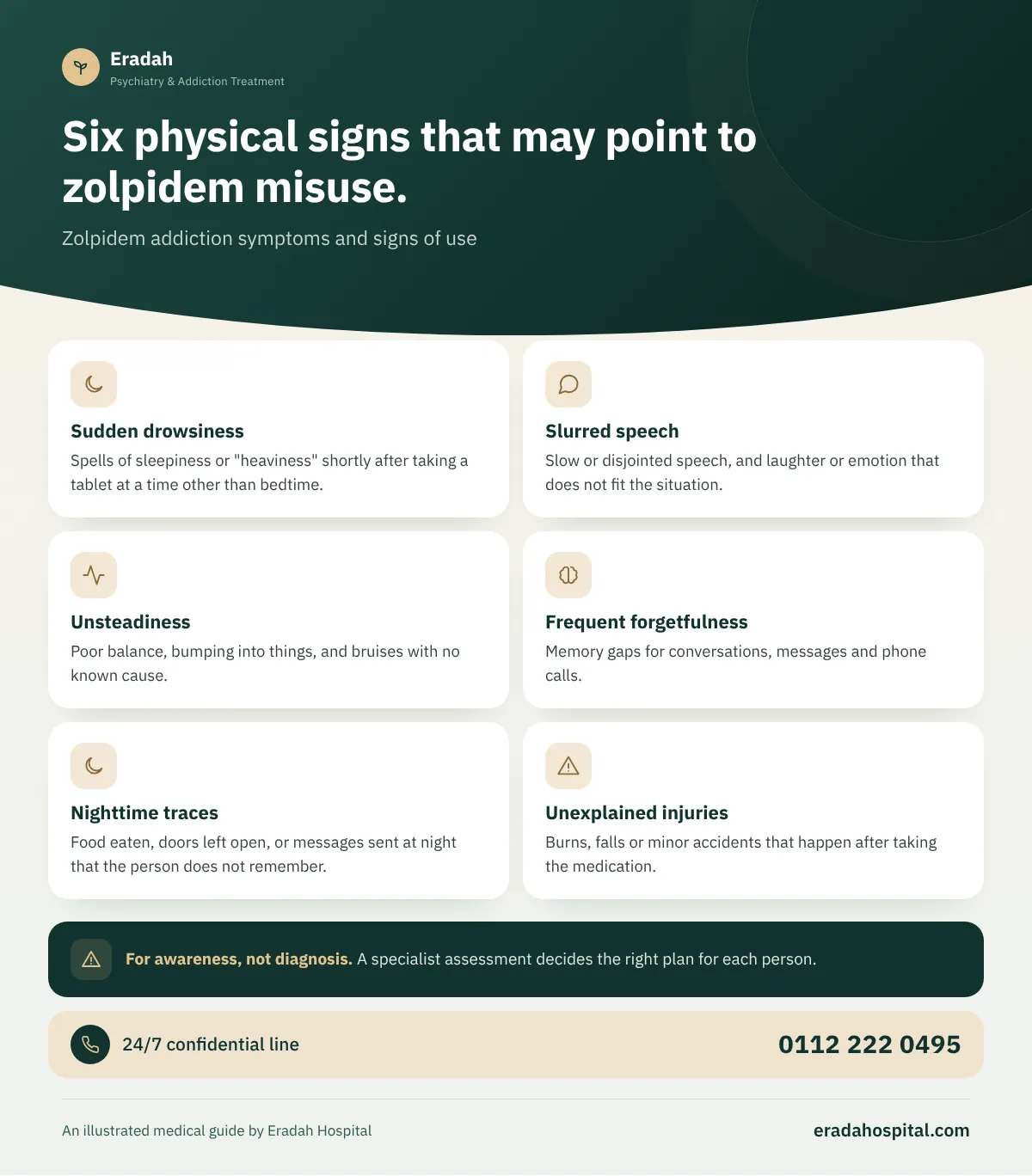
Spells of sleepiness or "heaviness" shortly after taking a tablet at a time other than bedtime.
Slow or disjointed speech, and laughter or emotion that does not fit the situation.
Poor balance, bumping into things, and bruises with no known cause.
Memory gaps for conversations, messages and phone calls.
Food eaten, doors left open, or messages sent at night that the person does not remember.
Burns, falls or minor accidents that happen after taking the medication.
Behavioral signs
- Taking it during the day or at social gatherings instead of at bedtime.
- Staying awake after taking it to "enjoy" its effect.
- Gradually increasing the number of tablets and running out of the box early.
- Moving between doctors or pharmacies, or using improper prescriptions.
- Mixing it with alcohol, painkillers or sedatives.
- Fiercely defending the medication and refusing any talk of cutting down.
Medical reports, including a Chinese review published in 2024, describe cases in which a person started zolpidem for insomnia and then raised the dose on their own after noticing that it gave euphoria and relief from anxiety, until reaching doses many times higher than therapeutic. In France, zolpidem was among the drugs that most often appeared in forged prescriptions before dispensing rules were tightened.
Psychological signs
- Anxiety and tension that build before the next dose and settle after it.
- Mood swings and irritability, and sometimes a tendency to withdraw from others.
- Decline in concentration and performance at work or school.
- Constant preoccupation with getting the medication and the times to take it.
How is zolpidem addiction diagnosed?
The drug label distinguishes between physical dependence, meaning withdrawal symptoms on sudden stopping, and addiction, which is marked by loss of control, compulsive use, continued use despite harm, and strong cravings. The psychiatrist bases the diagnosis on a detailed interview that covers:
- How long it has been used, the actual amount, and the timing.
- The purpose: is it only for sleep, or for relaxation or euphoria?
- Other substances, especially alcohol and opioids.
- Any anxiety, depression or chronic insomnia behind the use.
Prescription use or addiction?
A person who follows their prescription may need zolpidem for many nights in a row and find it hard to stop; this is physical dependence, treated with a gradual plan. But someone who takes it without sleeping, takes more than prescribed, or hides their use is showing signs of addiction that call for a broader intervention. The drug label notes that people with a history of alcohol or drug problems are more likely to misuse it and should be followed closely by their doctor.
How do you tell zolpidem misuse from other substances?
| Substance | The clearest signs |
|---|---|
| Zolpidem | A short effect that appears and fades, with forgetfulness and nighttime behavior the person does not remember. |
| Night Calm | Similar signs but a longer effect, with a bitter taste the person complains of. |
| Pregabalin | Dizziness, unsteadiness and weight gain, sometimes with energy instead of sleepiness. |
| Alcohol | A noticeable smell and redness, with similar unsteadiness. |
Signs that are easy to confuse
In older adults, signs of zolpidem may be put down to aging: falls at night, morning confusion and forgetfulness. In women, the morning effect may be more obvious because they clear the drug more slowly. Young people may use it at gatherings with alcohol, and the clearest sign is unexplained sleepiness at a time other than bedtime.
How do you talk to someone you suspect is addicted to zolpidem?
- Choose a quiet time during the day when they are fully alert.
- Start with your worry for their safety, especially driving at night, not with accusations.
- Give specific facts: "I found messages you sent at 3 in the morning and you don't remember them."
- Suggest an assessment with a psychiatrist who treats the insomnia itself and does not simply take the medication away.
- Use the guide on persuading a person with addiction to get treatment if you meet refusal.
Once the picture is clear, the next step is a plan, which you will find on the zolpidem addiction treatment page.
Danger signs after taking zolpidem: call an ambulance (123) immediately
- Deep drowsiness or a coma the person cannot be roused from.
- Slow or irregular breathing, or blue lips and limbs.
- Low blood pressure or a weak or irregular pulse.
- Taking it with an opioid painkiller, alcohol, or another sedative.
- A seizure or severe confusion after suddenly stopping high doses.
Call ambulance (123) immediately and do not wait for them to “sleep it off.” If the person is unconscious but breathing, place them on their side in the recovery position, stay with them and watch their breathing until the paramedics arrive, and do not give them any sedative, stimulant or food. Tell the paramedics what they took, the approximate amount and the time, bring the medicine box if you find it, and tell them if the person also drank alcohol or took an opioid painkiller.
Call the ambulance 123