Why do zolpidem withdrawal symptoms happen?
Zolpidem withdrawal symptoms are the reaction of a brain that has grown used to an extra "brake" every night and then suddenly loses it. Because zolpidem leaves the body quickly, this loss comes quickly too.
The drug label explains that use can lead to physical and psychological dependence, the risk of which rises with dose and length of use, and that physical dependence shows up as a withdrawal syndrome on sudden stopping or rapid dose reduction. MedlinePlus notes that stopping after more than two weeks of use may cause symptoms such as tremor, nausea and sweating, and rarely seizures.
Zolpidem withdrawal timeline
This is an approximate timeline of what may happen when someone stops suddenly after regular use, which we do not recommend:
- The first nightRebound insomnia
Severe difficulty sleeping and tension, and the person may go back to the drug that same night.
- Within 48 hoursPhysical and psychological symptoms
Anxiety, irritability, nausea, stomach cramps, sweating and tremor, and sometimes panic attacks or crying spells.
- The first days after high dosesDanger period
In severe cases, seizures or confusion may occur, which is an emergency.
- Weeks 1 to 3Gradual decline
Physical symptoms ease, and sleep stays broken for a while.
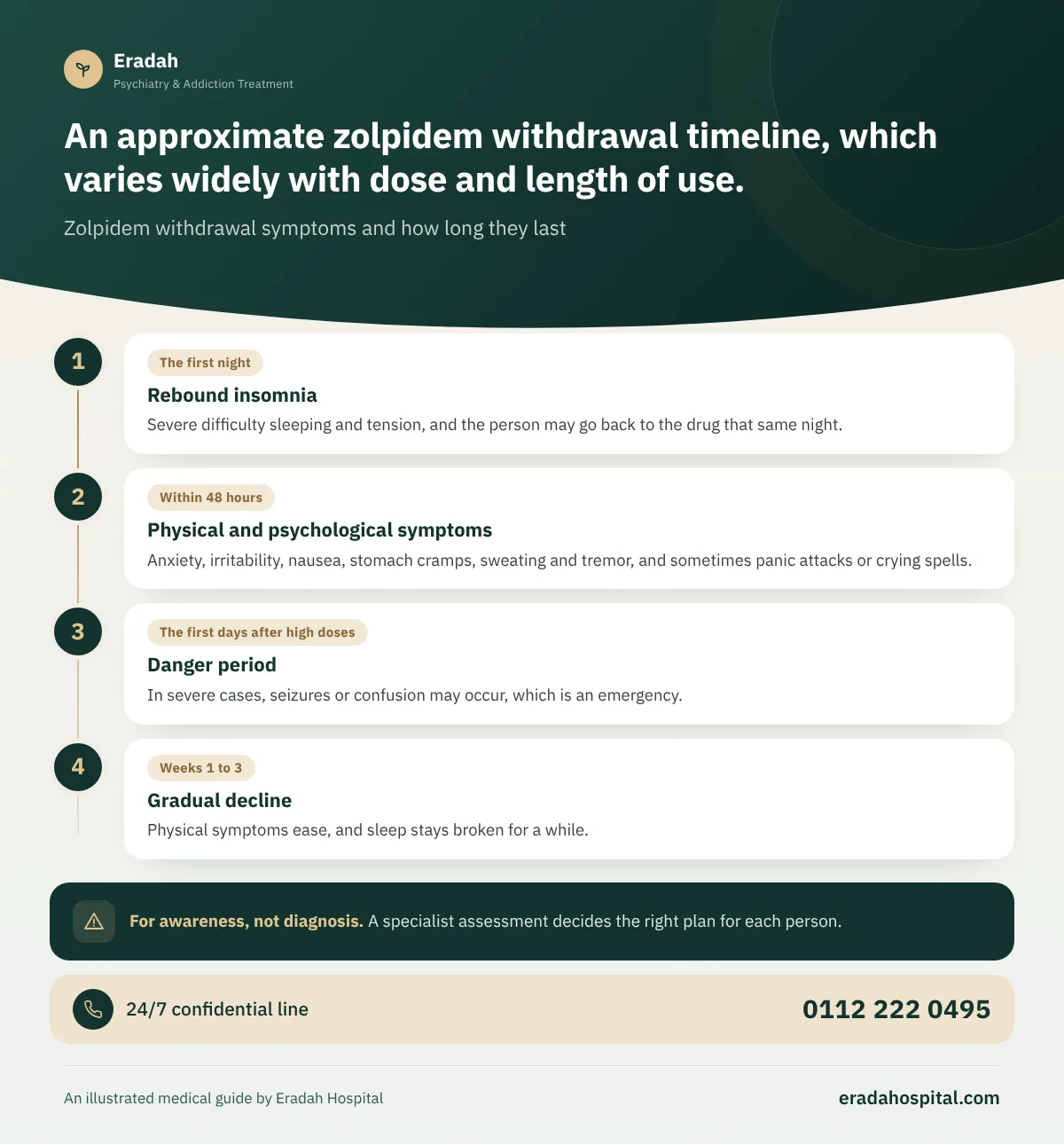
The 48-hour timing comes from the drug label; the other durations are approximate and differ from person to person.
What are the symptoms of zolpidem withdrawal?
| Type | Symptoms |
|---|---|
| Sleep | Rebound insomnia, and broken sleep. |
| Psychological | Irritability and anxiety, panic attacks, uncontrollable crying, and mood swings. |
| Physical | Fatigue, nausea or vomiting, stomach or muscle cramps, facial flushing, dizziness, sweating and tremor. |
| Severe and dangerous | Seizures and delirium, especially after very high doses or with other sedatives. |
In clinical trials the drug label reported that symptoms such as fatigue, nausea, flushing, dizziness, crying, vomiting, stomach cramps and panic attacks appeared within 48 hours of stopping in 1% or fewer of people. But the label itself acknowledges that these data do not give a reliable estimate of the extent of dependence, and that cases of misuse, dependence and withdrawal were observed after the drug reached the market.
Is zolpidem withdrawal dangerous?
With therapeutic doses, usually not. But the picture changes with high doses: in a case published in 2025, a woman arrived at the hospital with weakness in one arm first thought to be a stroke, then developed repeated seizures within 24 hours, and it turned out she had suddenly stopped very high doses of zolpidem that she had been taking daily; she was treated with gradual tapering of a substitute sedative. Cases like this show that a "mild sleeping pill" can cause dangerous withdrawal when its dose multiplies.
Rebound insomnia: why do so many people go back to the drug?
Rebound insomnia is the best-known and most deceptive withdrawal symptom, because it convinces the person that their original insomnia is still there and that they cannot sleep without the drug. The truth is that this insomnia is worst in the first nights and then gradually improves, especially with cognitive behavioral therapy for insomnia. Knowing this in advance is one of the most important tools for preventing a return to the drug.
Who is most at risk of severe withdrawal?
People who take doses far above therapeutic, especially for months.
Overlapping alcohol and sleeping-pill withdrawal raises the risk of seizures.
Using zolpidem with Rivotril or other sedatives.
Withdrawal in them may show up as confusion and falls.
Why is medical supervision needed?
Medical supervision may be a plan set by a doctor who knows the real dose and monitors symptoms, and it does not necessarily mean a hospital stay. The doctor chooses between direct tapering and switching to a longer-acting sedative depending on the case, and steps in quickly at any warning sign. You will find the full plan on the zolpidem addiction treatment page, and details on detox in the guide to medically supervised detox.
How can the family support someone going through zolpidem withdrawal?
- Expect irritability and sleeplessness in the first days and do not take it personally.
- Do not offer them tablets of your own "just so they can sleep tonight."
- Watch for any seizure or confusion and call ambulance (123) immediately.
- Help them keep a fixed wake-up time and get morning light.
- Encourage them to keep up follow-up even after symptoms improve.
Danger signs after taking zolpidem: call an ambulance (123) immediately
- Deep drowsiness or a coma the person cannot be roused from.
- Slow or irregular breathing, or blue lips and limbs.
- Low blood pressure or a weak or irregular pulse.
- Taking it with an opioid painkiller, alcohol, or another sedative.
- A seizure or severe confusion after suddenly stopping high doses.
Call ambulance (123) immediately and do not wait for them to “sleep it off.” If the person is unconscious but breathing, place them on their side in the recovery position, stay with them and watch their breathing until the paramedics arrive, and do not give them any sedative, stimulant or food. Tell the paramedics what they took, the approximate amount and the time, bring the medicine box if you find it, and tell them if the person also drank alcohol or took an opioid painkiller.
Call the ambulance 123