“I study well and I understand, but the moment I pick up the paper my mind goes completely empty, and when I leave the exam hall I remember everything.” This is the complaint of thousands of students every year, especially in the final secondary school exams (Thanaweya Amma). Exam anxiety is not a weakness of character or a lack of studying, but a stress response that can be understood and trained.
What is exam anxiety?
Stress before an exam is a natural reaction, and the UK’s NHS reminds us that being nervous before exams is normal and that what matters is putting it to use in preparation. But anxiety can go too far and disrupt performance itself. In a review covering the results of 238 studies over thirty years, researchers found that exam anxiety is negatively linked to performance on standardized tests, university entrance exams and grade averages, that low self-esteem is one of its strongest predictors, and that it rises the harder the exam seems to the student or the more serious its consequences.
Exam anxiety differs from generalized anxiety disorder, which extends to all areas of life for months, although some students have both.
Symptoms of exam anxiety
The NHS says a student who is stressed about exams may:
- Worry a lot and feel tense and on edge.
- Have headaches and stomach pain.
- Not sleep well, and become easily irritated.
- Lose their appetite or eat more than usual.
- Lose enjoyment in activities they used to love, and have a low mood.
- Feel hopeless about the future.
To this are added things students often describe: a blank mind at the paper, a racing heart and sweaty hands, and a wish to flee the exam hall. If these symptoms come as a sudden, intense attack with shortness of breath and fear of dying, it may be a panic attack.
A practical plan for facing exam anxiety
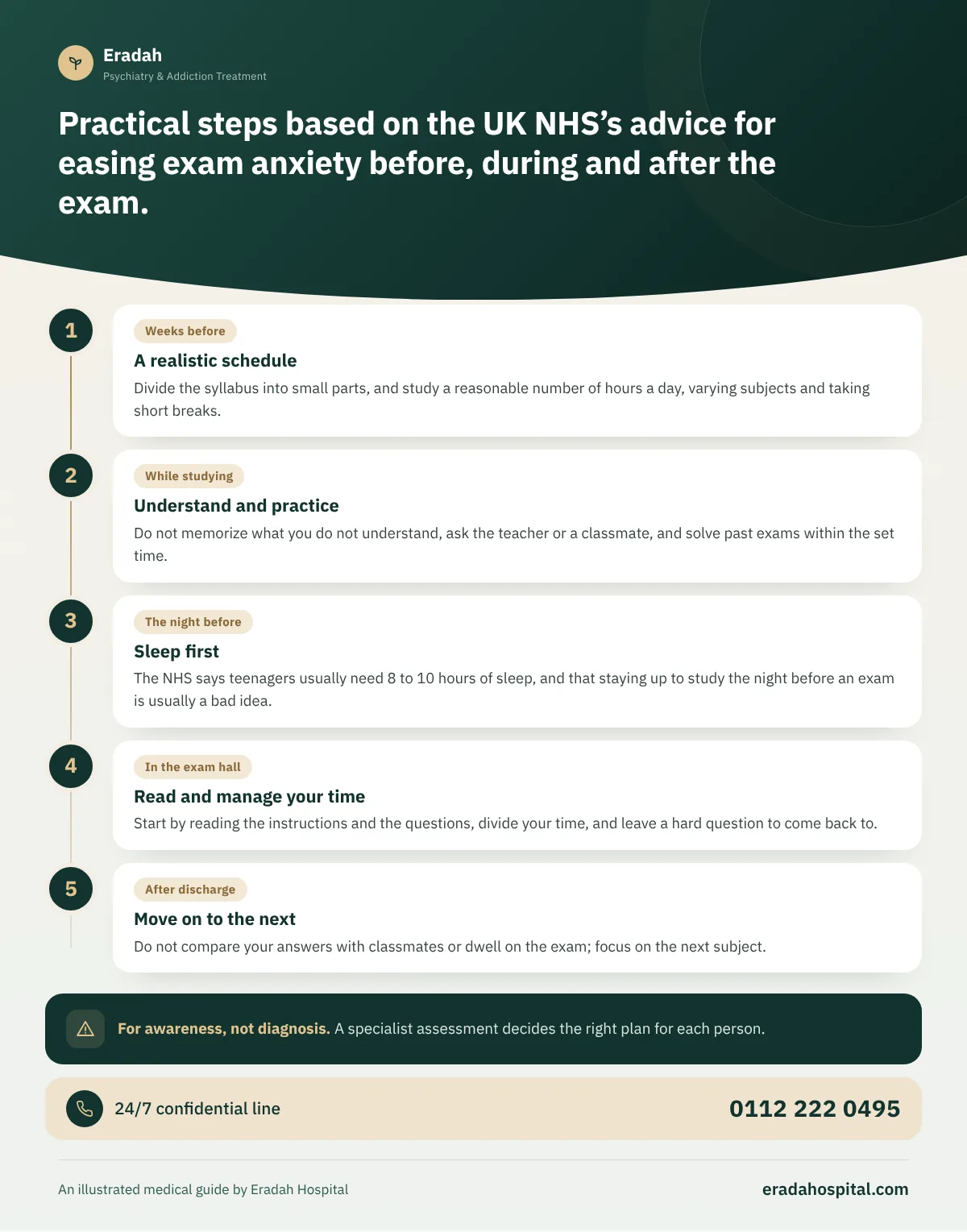
- Weeks beforeA realistic schedule
Divide the syllabus into small parts, and study a reasonable number of hours a day, varying subjects and taking short breaks.
- While studyingUnderstand and practice
Do not memorize what you do not understand, ask the teacher or a classmate, and solve past exams within the set time.
- The night beforeSleep first
The NHS says teenagers usually need 8 to 10 hours of sleep, and that staying up to study the night before an exam is usually a bad idea.
- In the exam hallRead and manage your time
Start by reading the instructions and the questions, divide your time, and leave a hard question to come back to.
- After dischargeMove on to the next
Do not compare your answers with classmates or dwell on the exam; focus on the next subject.
The NHS also advises a good breakfast on exam day, arriving early, getting your equipment ready the night before, and doing physical activity such as walking during breaks, because it eases stress and improves sleep.
A breathing exercise you can use in the exam hall
If you feel stress taking over, the NHS suggests a simple breathing exercise: breathe in through the nose counting to 4, hold your breath counting to 2, then breathe out counting to 7, and repeat several times. Practicing it at home before the exams helps it come easily when you need it. If your mind goes blank on a question, move to one you know; the first answer restores confidence and activates memory.
The parents’ role: support, not pressure
The NHS reports, citing the UK children’s helpline Childline, that many children who call it feel the biggest pressure during exams comes from their family. This is what happens in many homes during the Thanaweya Amma season. The NHS advises parents to:
- Listen to their children and support them, and avoid criticism.
- Be reassuring and positive before the exam, and remind them that failing is not the end of the world.
- Provide a comfortable place to study and balanced meals instead of energy drinks and sugar.
- Go easy on household chores and a messy room during exam time.
- Encourage movement and enough sleep, and talk to teachers if it seems the child is not coping.
Avoid comparing them with relatives’ children, since this is among the things that most raise anxiety and weaken self-esteem.
Study pills and staying up: a danger, not a solution
Some students turn to stimulants or medications bought without a prescription in the hope of focusing and staying awake. The US National Institute on Drug Abuse (NIDA) defines medication misuse as taking it in a way or dose other than prescribed, or taking a medication prescribed for someone else, and notes that stimulants used to treat hyperactivity are among the three most commonly misused classes of medication. Among the best known that students pass around are Ritalin, along with the wakefulness medication modafinil, and more dangerous than both are counterfeit Captagon pills.
Treating exam anxiety: when does a student need a specialist?
In a meta-analysis of 44 randomized trials on university students, psychological interventions were better than the comparison in reducing exam anxiety and improving academic performance, with the strongest support for behavioral therapy, while cognitive behavioral therapy and training in study skills showed promising results that need more research. Ask for a specialist assessment if:
- Panic attacks, vomiting or fainting recur before exams.
- The student starts missing exams or avoids studying completely.
- Sadness and loss of pleasure continue for weeks, or signs of depression appear.
- They have turned to stimulants, sedatives or any substance to bear the pressure.
- They have talked about despair or death, after the result or before it.
At Eradah, the student or family can start with a free, confidential consultation to assess the anxiety and guide them to the right plan, with outpatient follow-up when they need it.