“Everyone around me takes it during exams. They say it lets you study all night.” This is how modafinil reaches many students and night-shift workers, far from the purpose it was made for. This guide explains what the drug actually does, who needs it, what research says about using it to improve focus, and why it can become a burden.
What is modafinil?
Modafinil is a prescription medication from the group of “wakefulness-promoting agents”, and its brand names in Egypt include Modazomel and Pravamax. It is not a traditional stimulant like Ritalin or amphetamine, but it shares some mechanisms of action with them. It does not treat the sleep disorder itself; it reduces daytime sleepiness.
How does modafinil work in the brain?
The mechanism of modafinil is not fully understood, but a brain imaging study published in the Journal of the American Medical Association (JAMA) in 2009 showed that at therapeutic doses it blocks the dopamine transporter and raises dopamine in regions including the nucleus accumbens, part of the reward circuit linked to addiction. The researchers noted the potential for misuse in people who are vulnerable to it. It also affects noradrenaline, histamine, and orexin, which are responsible for wakefulness.
Approved uses of modafinil
- Narcolepsy: irresistible attacks of sleepiness during the day.
- Obstructive sleep apnea: for the sleepiness that remains while using a breathing machine, not as a replacement for it.
- Shift work disorder: for people who work at night and have severe sleepiness at work.
Modafinil for studying and staying up late: what does the research say?
A 2015 systematic review from the University of Oxford looked at studies in healthy people who were not sleep-deprived and found that its effect on attention, learning, and memory was inconsistent in simple tests, that some studies recorded a decline in creative thinking, while a clearer improvement appeared in complex tasks. In other words, the “magic pill” that is promoted is closer to an exaggeration.
More importantly, using it to stay up means postponing sleep, not doing without it: lack of sleep weakens the consolidation of information in memory, the insomnia caused by the drug can last for nights, and mixing it with coffee and energy drinks increases palpitations and tension. You will find details about the effects of caffeine in its own guide.
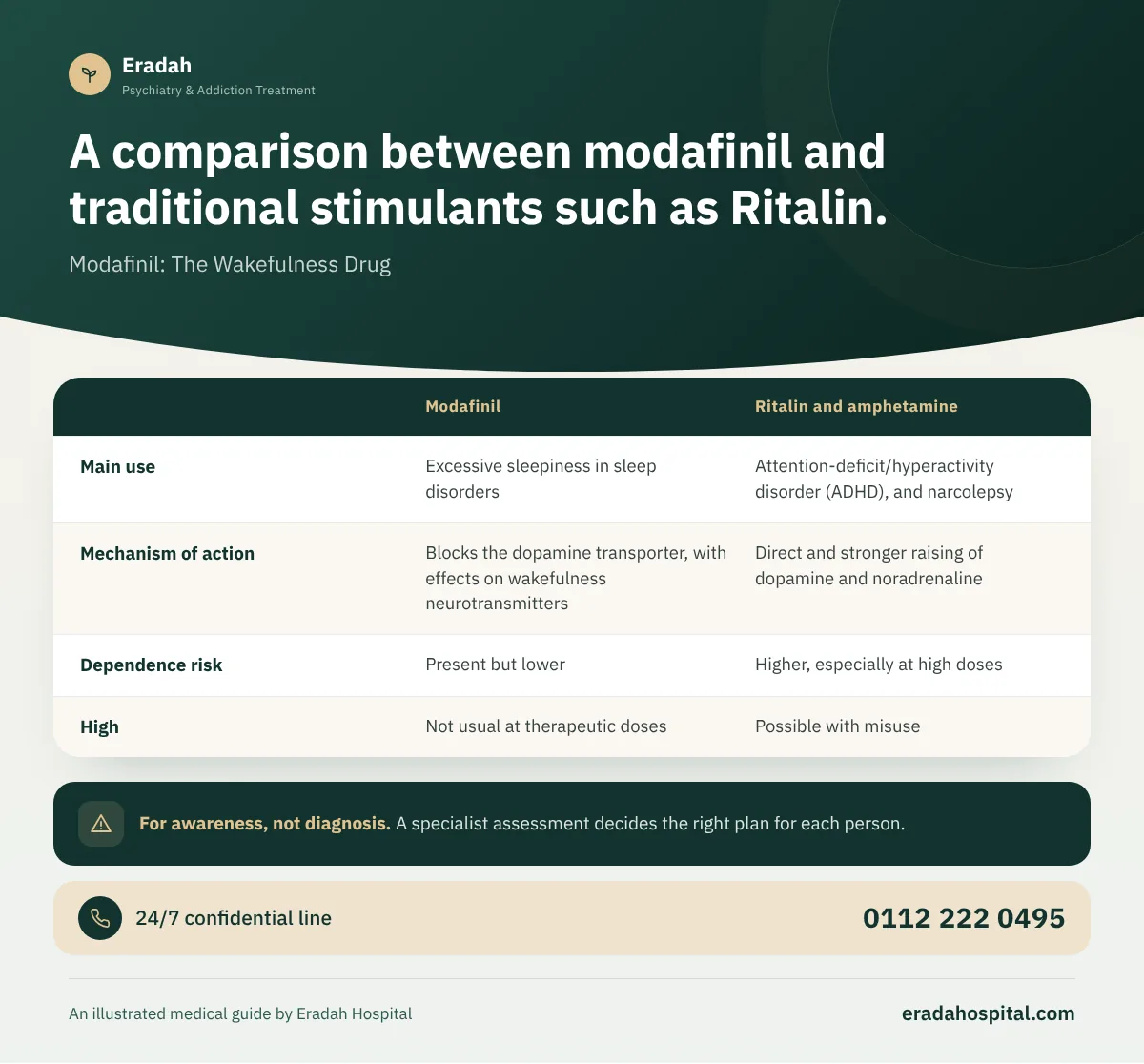
The difference between modafinil and traditional stimulants
| Modafinil | Ritalin and amphetamine | |
|---|---|---|
| Main use | Excessive sleepiness in sleep disorders | Attention-deficit/hyperactivity disorder (ADHD), and narcolepsy |
| Mechanism of action | Blocks the dopamine transporter, with effects on wakefulness neurotransmitters | Direct and stronger raising of dopamine and noradrenaline |
| Dependence risk | Present but lower | Higher, especially at high doses |
| High | Not usual at therapeutic doses | Possible with misuse |
Side effects of modafinil
- Headache, one of its most common effects.
- Nausea and loss of appetite.
- Nervousness, anxiety, and tension.
- Insomnia if taken late in the day.
- Dizziness and palpitations.
- Back pain or diarrhea in some people.
Is modafinil addictive?
The US National Library of Medicine's MedlinePlus states that modafinil can cause dependence, and warns against increasing the dose or the length of use beyond what the doctor prescribed. Its risk is lower than that of traditional stimulants, but higher in people with a history of stimulant use or addiction. Worrying signs include needing it to do any task, increasing the dose, fatigue and depression when stopping, and disrupted natural sleep.
An important interaction is that it weakens hormonal contraceptives while it is being used and for a month after stopping, and it also interacts with some medications such as cyclosporine. It needs caution with heart disease, liver disease, and psychiatric conditions, and pregnancy and breastfeeding are decided with the doctor.
When should you ask for help?
If you rely on modafinil or something similar for studying or work, or combine it with other stimulants, the solution starts with assessing the sleepiness itself: is it lack of sleep, insomnia, depression, or undiagnosed hyperactivity and inattention? At Eradah Hospital this is assessed confidentially, and stimulant dependence is treated in outpatient clinics or with residential care when needed.