“I know I can do it, but the moment I stand in front of people I feel like I'm nothing and everyone around me is better than me.” Many people live with this inner voice for years. They turn down opportunities that suit them, stay silent in meetings, and accept relationships that hurt them because they do not believe they deserve better. This is what we call low self-esteem.
What is low self-esteem?
The NHS defines self-esteem as the opinion we have of ourselves. When it is healthy, we feel good about ourselves and our lives, and we are better able to cope with life's ups and downs. When it is low, we see ourselves and our lives through a critical, negative lens, and we feel less able to deal with the challenges life brings.
People use the phrase “low self-confidence” in two related ways: doubt about being able to do one specific thing, such as speaking in front of an audience, or a general feeling that your worth as a person is lower. The second has a deeper effect and is usually what is meant by low self-esteem.
Signs of low self-esteem
- Constant self-criticism and blowing mistakes out of proportion.
- Difficulty accepting praise and doubting that it is sincere.
- Constant comparison with others that always ends in their favor.
- Avoiding social situations and trying new things.
- Difficulty saying “no” and pleasing everyone at your own expense.
- Apologizing excessively, even when there is nothing to apologize for.
- Accepting poor treatment because you feel you “don't deserve any better.”
Causes of low self-esteem
According to the NHS, low self-esteem often begins in childhood. Teachers, friends, siblings, parents and even the media send us positive and negative messages about ourselves, and for some reason the message “you are not good enough” sticks. Other causes it lists include:
- High expectations from others or from yourself that are hard to meet.
- Stress and difficult events such as serious illness or the loss of a loved one.
- Personality: some people lean toward negative thinking, and some set impossible standards for themselves.
- Repeated bullying and mockery at school, at work or at home.
- Harmful relationships that constantly belittle you, as when dealing with a toxic personality.
Why does low self-esteem persist?
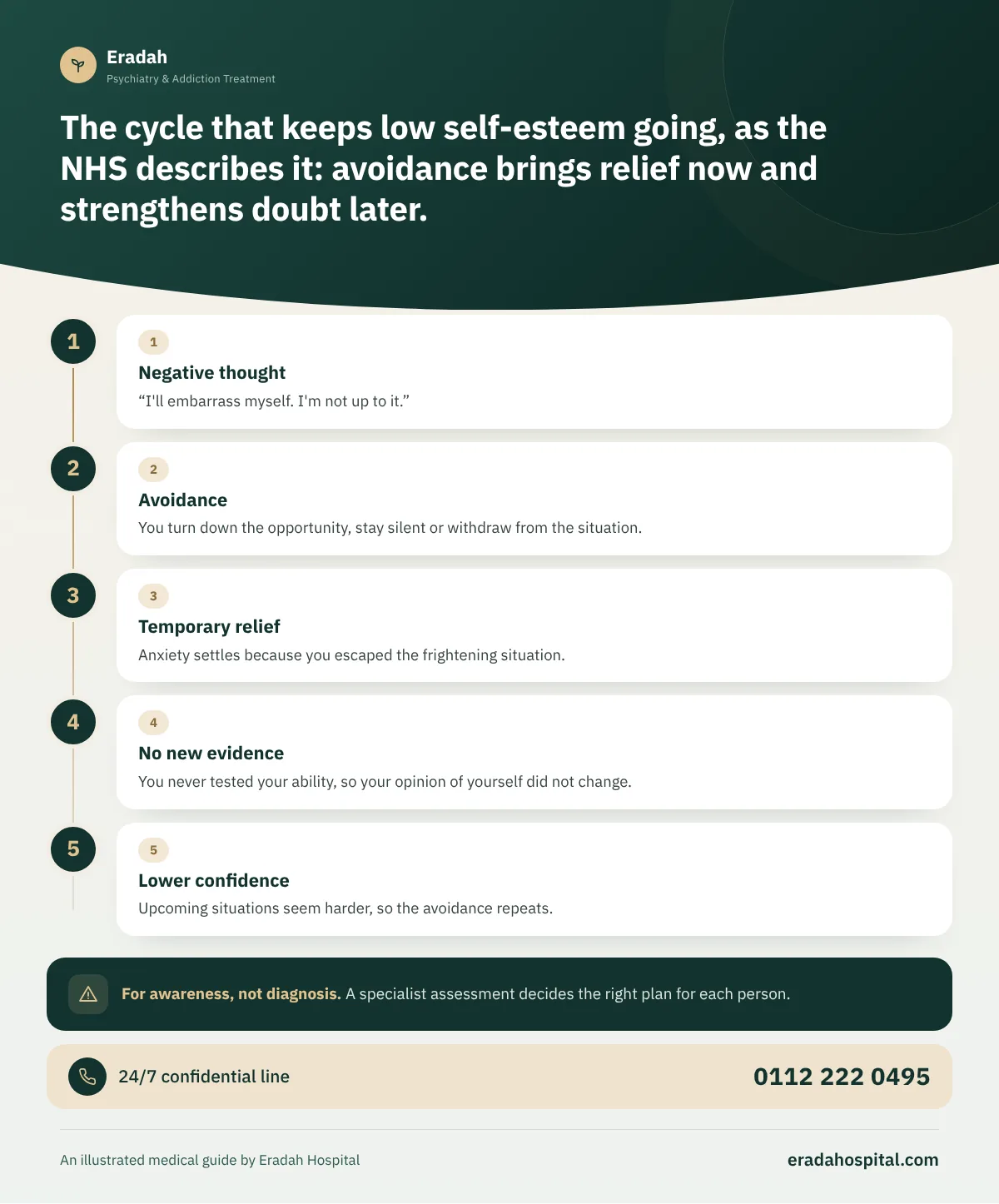
The NHS explains that a person with low self-esteem may hide from social situations, stop trying new things, and avoid anything they see as difficult. This avoidance feels safe in the short term, but over the long term it entrenches doubt and fear, and it teaches a false rule: that the only way to cope is to run away.
- 1Negative thought
“I'll embarrass myself. I'm not up to it.”
- 2Avoidance
You turn down the opportunity, stay silent or withdraw from the situation.
- 3Temporary relief
Anxiety settles because you escaped the frightening situation.
- 4No new evidence
You never tested your ability, so your opinion of yourself did not change.
- 5Lower confidence
Upcoming situations seem harder, so the avoidance repeats.
Low self-esteem, depression and anxiety
The NHS says that living with low self-esteem can harm mental health and lead to depression and anxiety, and may push people toward harmful habits such as smoking or drinking too much to cope with feelings. In an analysis published in the journal Psychological Bulletin in 2013, which pooled 77 studies on depression and 18 on anxiety, the effect of low self-esteem on later depression was stronger than the effect of depression on lowering self-esteem, while the relationship with anxiety ran in both directions with similar strength.
Low self-esteem also overlaps with social phobia and impostor syndrome, and in severe forms that extend back to youth it may be part of avoidant personality.
How do you treat low self-esteem?
The NHS advises starting by recognizing your negative beliefs about yourself and then challenging them:
- Write down the negative thoughts you tell yourself, and ask: when did I start thinking this way?
- Next to each one, write evidence from your own life that contradicts it.
- Write at least 5 positive things about yourself and what people say about you, and put the list where you will see it.
- Notice what you are good at and enjoy doing it.
- Spend less time with people who put you down, and move closer to those who value you.
- Learn to express your opinion and your needs calmly and clearly, and to say “no.”
- Each week, face one small situation you have been avoiding.
When do you need professional help?
If low self-esteem keeps you from working, studying or marrying, or comes with persistent sadness or anxiety attacks, or you have started relying on a substance to face people, it needs assessment. Cognitive behavioral therapy helps change the beliefs that feed the sense of inadequacy, through practical steps. You can start with a session in Eradah's outpatient clinics, and the first consultation is free and confidential.