“We tried three medications for my son and the voices didn't go away, and the doctor says let's try clozapine but he needs tests every so often.” This situation is common among families, and worry about the tests is understandable. But doctors regard clozapine as the medication to turn to when others fail, and monitoring is what makes it safe.
What is clozapine (Leponex)?
Clozapine is an atypical antipsychotic, with brand names that include Leponex, and preparations carrying the generic name are also available in Egypt. According to the US National Library of Medicine (MedlinePlus), it works by changing the activity of certain natural substances in the brain. The StatPearls reference notes that it is not the first choice because of its many side effects, but it has advantages, including a lower risk of suicide, less tardive dyskinesia, and fewer relapses.
What clozapine is used for
- Treatment-resistant schizophrenia: its US label provides for use in people with severe schizophrenia who have not responded adequately to standard antipsychotic treatment.
- Reducing recurrent suicidal behavior in people with schizophrenia or schizoaffective disorder who remain at ongoing risk.
In the InterSePT trial published in 2003, which followed 980 patients at high risk of suicide for two years, suicidal behavior was lower with clozapine than with olanzapine, with 34 patients attempting suicide in the clozapine group versus 55 in the olanzapine group. The US National Library of Medicine notes that the drug should not be prescribed for other uses.
Boxed warnings for clozapine
It can be severe and raises the risk of serious infection, which is why white cells are measured before starting and during treatment.
Dizziness or fainting on standing, with the risk higher at the start of treatment or when restarting after a break.
No driving, swimming or climbing at heights during treatment, because of the risk of sudden loss of consciousness.
Chest pain, palpitations, shortness of breath, or fever with flu-like symptoms call for a doctor immediately.
A higher risk of death with antipsychotics, and the drug is not approved for them.
Bloating, abdominal pain or vomiting with constipation is a serious sign that should not be ignored.
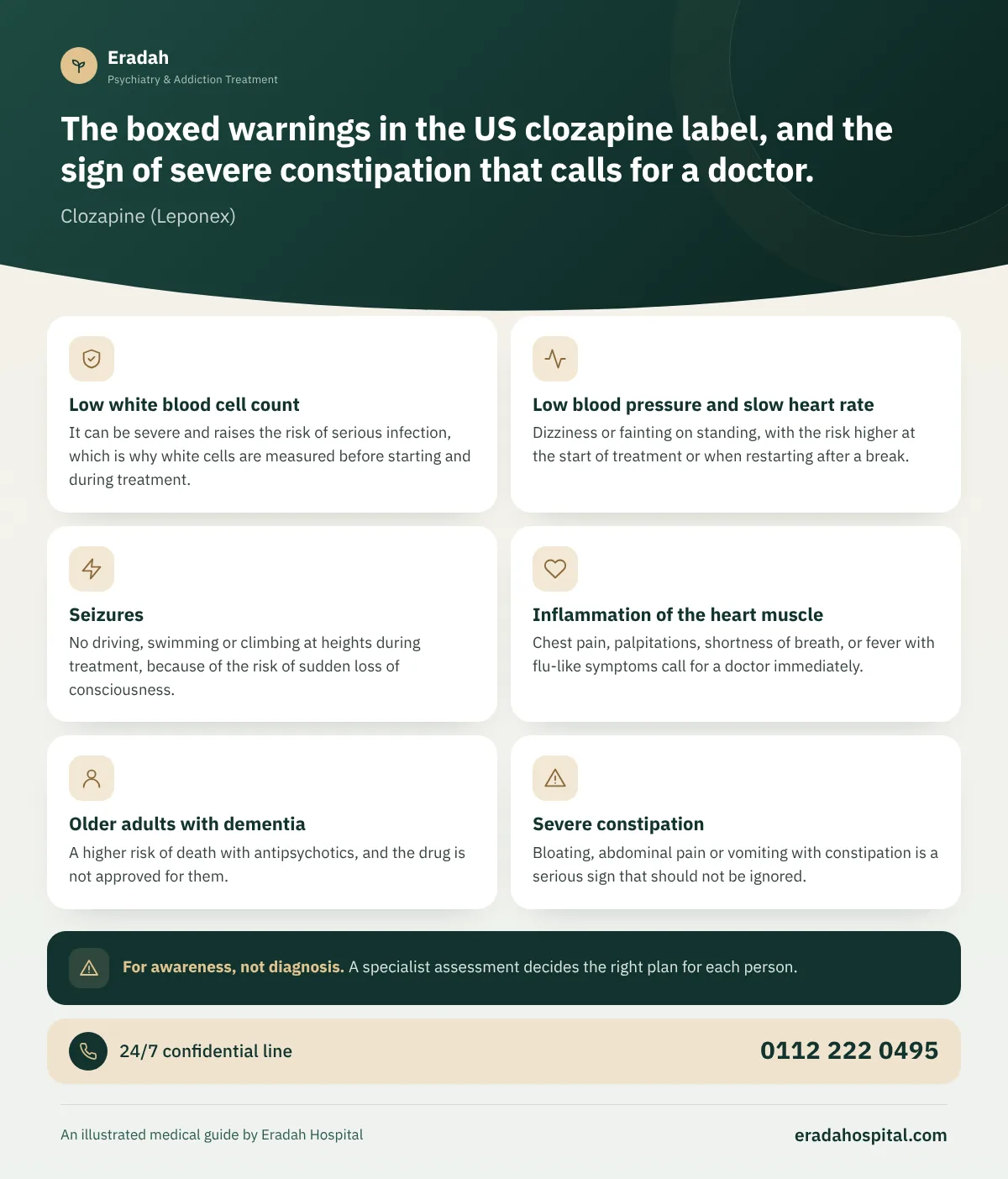
The first five cards come from the boxed warning in the US clozapine label, while constipation is counted by the US National Library of Medicine among the symptoms that call for contacting the doctor immediately.
Why does clozapine need regular blood tests?
Because its most serious effect is a drop in neutrophils, a type of white blood cell that protects the body from infection. The US label calls for measuring them before starting and advises against starting the drug if they are low; the doctor then monitors them regularly and adjusts the plan according to the results. Tests are more frequent at the start of treatment. The family's role here is big: keep to the test appointments, watch for any fever, sore throat, mouth sores or severe tiredness, and tell the doctor immediately.
Common side effects of clozapine
- Drowsiness, dizziness and unsteadiness.
- Increased saliva and drooling, especially at night.
- Dry mouth.
- Restlessness and headache.
- Raised blood sugar, even in people who did not have diabetes.
- Raised blood fats.
Interactions, smoking and pregnancy
- Smoking: the US National Library of Medicine notes that it may reduce the effectiveness of clozapine, and the label asks you to tell the doctor if you smoke or plan to stop, because a change in smoking habits changes the drug level.
- Caffeine: the drug label asks you to tell the doctor how much you consume.
- Alcohol: it increases its side effects, as do sedatives.
- Other medications and St. John's wort may change its level, so do not start any medication without checking.
The US National Library of Medicine notes that taking it in the last months of pregnancy may cause problems for the newborn, so pregnancy should be discussed with the doctor early, without stopping suddenly.
Is clozapine addictive? And what if it is interrupted?
Clozapine does not cause euphoria or addiction, but stopping it is a sensitive decision because symptoms can return strongly. More importantly, someone who has missed it for two days or more should not return to the previous dose on their own; the US National Library of Medicine asks you to speak to the doctor in this case, because an abrupt return raises the risk of low blood pressure and a slow heart rate.
Clozapine, substance use and when to seek help
Many people with schizophrenia smoke or use substances, which complicates treatment with clozapine and raises the risk of relapse, as the guide to schizophrenia and addiction explains. At Eradah, the psychiatry department closely monitors the start of clozapine and its tests, and the dual diagnosis program treats the accompanying substance use. The first consultation is free and confidential.