“The medication calmed my thoughts, but I gained a lot of weight.” This is what patients say most about olanzapine. It is a medication proven effective in controlling psychosis and mania, but it needs vigilance because of its effect on the body. Here we explain how it works, who it is prescribed for, and how to reduce its harms without losing its benefit.
What is olanzapine?
Olanzapine is an active ingredient from the group of atypical antipsychotics, with brand names including Zyprexa and Olapex. It is available as tablets, orally disintegrating tablets, short-acting injections for acute agitation in hospital, and long-acting injections.
How does olanzapine work in the brain?
Olanzapine blocks dopamine D2 and serotonin 5-HT2A receptors, which calms hallucinations, delusions, and mania. But it also blocks histamine, acetylcholine, and alpha-adrenergic receptors, which explains the drowsiness, increased appetite, dry mouth, constipation, and dizziness on standing.
Uses of olanzapine
- Schizophrenia: to ease symptoms and prevent relapse within a schizophrenia treatment plan.
- Manic and mixed episodes in bipolar disorder, as well as preventive treatment.
- With fluoxetine in bipolar depression and treatment-resistant depression.
- Short-acting injections to calm severe agitation in hospital.
Olanzapine and weight gain
A network analysis published in The Lancet Psychiatry in 2020 compared the metabolic effects of 18 antipsychotics and concluded that olanzapine and clozapine had the worst effect on weight, blood sugar, and blood fats, while drugs such as aripiprazole and lurasidone were the mildest. The analysis found that high weight before treatment and being male were linked to a bigger rise in blood sugar. So weight gain does not mean you should stop; it means monitoring and prevention should start early.
- Measure weight and waist circumference before starting and regularly afterward.
- Check fasting or long-term (HbA1c) blood sugar and blood fats periodically.
- A diet that cuts down sugars, fast food, and energy drinks.
- Daily physical activity, even walking.
- Talk to your doctor if the gain speeds up; they may adjust the dose or the medication.
Side effects of olanzapine on the body
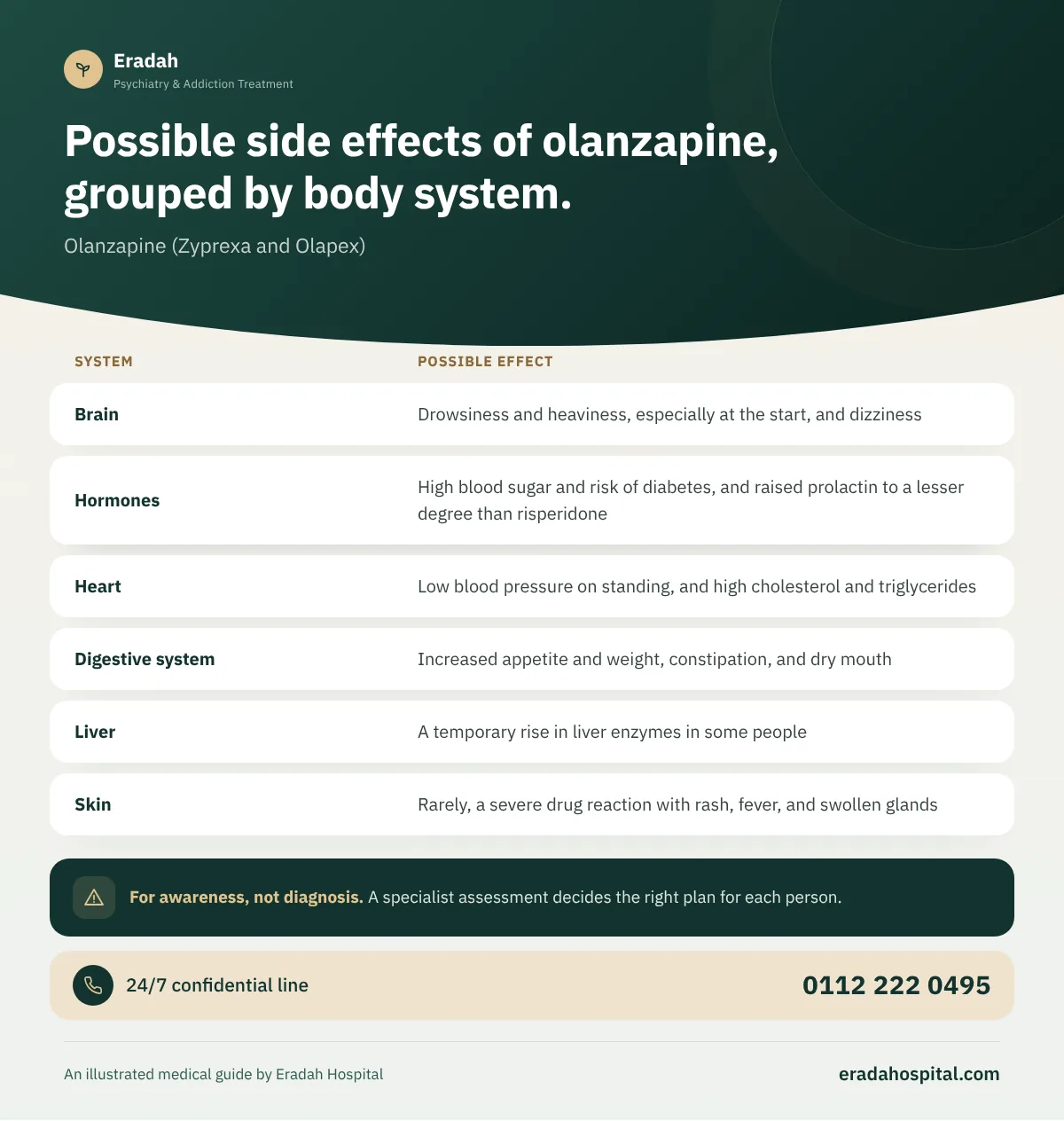
| System | Possible effect |
|---|---|
| Brain | Drowsiness and heaviness, especially at the start, and dizziness |
| Hormones | High blood sugar and risk of diabetes, and raised prolactin to a lesser degree than risperidone |
| Heart | Low blood pressure on standing, and high cholesterol and triglycerides |
| Digestive system | Increased appetite and weight, constipation, and dry mouth |
| Liver | A temporary rise in liver enzymes in some people |
| Skin | Rarely, a severe drug reaction with rash, fever, and swollen glands |
As with other antipsychotics, neuroleptic malignant syndrome and tardive dyskinesia can occur, and its label warns of increased deaths among older adults with dementia. The long-acting injection can rarely cause severe drowsiness and confusion after the injection, so the patient is monitored at the same site after each injection.
When choosing, bear in mind that olanzapine may not be the first choice for someone with obesity or diabetes or a strong family history of them, while the doctor may prefer it for someone who has not responded to other medications. The decision is a balance between benefit and risk, and it is reviewed over time.
Smoking and other interactions
Olanzapine is broken down by a liver enzyme that is stimulated by cigarette smoking, so a smoker may need a different dose, and someone who quits smoking suddenly may see the drug's level rise and drowsiness increase. Tell your doctor about any change in smoking. Fluvoxamine also raises its level, and alcohol, sedatives, and benzodiazepines increase drowsiness and low blood pressure. Pregnancy and breastfeeding should be discussed with the doctor before any decision.
Is olanzapine addictive?
Olanzapine does not cause addiction or compulsive craving. Limited cases of misuse of sedating antipsychotics have been seen in people who use other substances, but this is not a feature of this medication. The real risk lies in stopping suddenly, which can cause insomnia, nausea, sweating, and a return of symptoms, so it is stopped gradually. For people who have both psychosis and substance use, treatment needs a dual diagnosis plan.
When should you see the doctor?
See your doctor if you have extreme thirst and frequent urination, rapid weight gain, fever with stiffness and confusion, a rash with fever, or drowsiness that gets in the way of your day. At Eradah Hospital the medication plan is built with regular physical monitoring, in residential treatment when needed or in outpatient clinics.