Our admissions team is available now, 24/7
Psychiatric Medications Guide

Disulfiram (Antabuse)A medication that does not reduce the desire for alcohol but makes drinking an unpleasant experience: how it works, who it suits, and what families need to know

Reviewed by: Dr. Mahmoud El-Sawy Last updated: October 4, 2026 5 min read
The short answer

Disulfiram (Antabuse) is an approved medication to help with abstaining from alcohol. It works by blocking the breakdown of alcohol in the body, so that if the patient drinks even a small amount, an unpleasant reaction of facial flushing, headache, nausea, vomiting and palpitations appears, and in severe cases it can be dangerous. Its US label carries a boxed warning: it must never be given to a person who is intoxicated or without their full knowledge. A 2014 analysis found that it is effective especially when the patient takes it willingly and under supervision.

  • It is not taken until at least 12 hours have passed since the last drink.
  • The reaction can occur up to two weeks after it is stopped.
  • It does not treat addiction on its own, but supports a complete treatment plan.

“I heard there's a pill that if we put it in his food he'll hate alcohol.” This idea is passed around by many families out of fear and love, but it is one of the most dangerous things that can be done with disulfiram. This medication works when the patient is a partner in the decision, and becomes a danger when it is given secretly.

What is disulfiram (Antabuse)?

Disulfiram is a medication approved by the US Food and Drug Administration for treating alcohol dependence, according to the StatPearls reference, and its best-known international brand name is Antabuse. The US National Library of Medicine (MedlinePlus) classes it among “alcohol deterrents” and stresses that it is not a cure for addiction but discourages drinking. Its availability varies from country to country, so ask your doctor what is available.

How does disulfiram work?

Alcohol is broken down in the body in two stages, and disulfiram blocks the second, so a toxic intermediate substance builds up and causes unpleasant symptoms. The US National Library of Medicine notes that these symptoms begin about 10 minutes after alcohol enters the body and last an hour or more, and include flushing, headache, nausea, vomiting, chest pain, weakness, blurred vision, confusion, sweating, difficulty breathing and anxiety.

The US label adds that in severe cases the reaction can go as far as respiratory depression, circulatory collapse, heart rhythm disturbance, heart attack, loss of consciousness, seizures and death, and that its severity generally corresponds to the amount of the drug and the alcohol.

Is disulfiram effective?

An analysis published in PLoS One in 2014 pooled the results of 22 trials and found that disulfiram was generally better than the comparison. But the advantage appeared only in open-label trials, that is, when the patient knows they are taking the medication, while no benefit appeared in blinded trials. The logical explanation is that its effect depends on the patient knowing the consequence. The researchers noted that 89% of participants were men and that the studies varied widely. That is why the medication works best with a motivated patient and under supervision, for example by taking it in front of a family member by prior agreement.
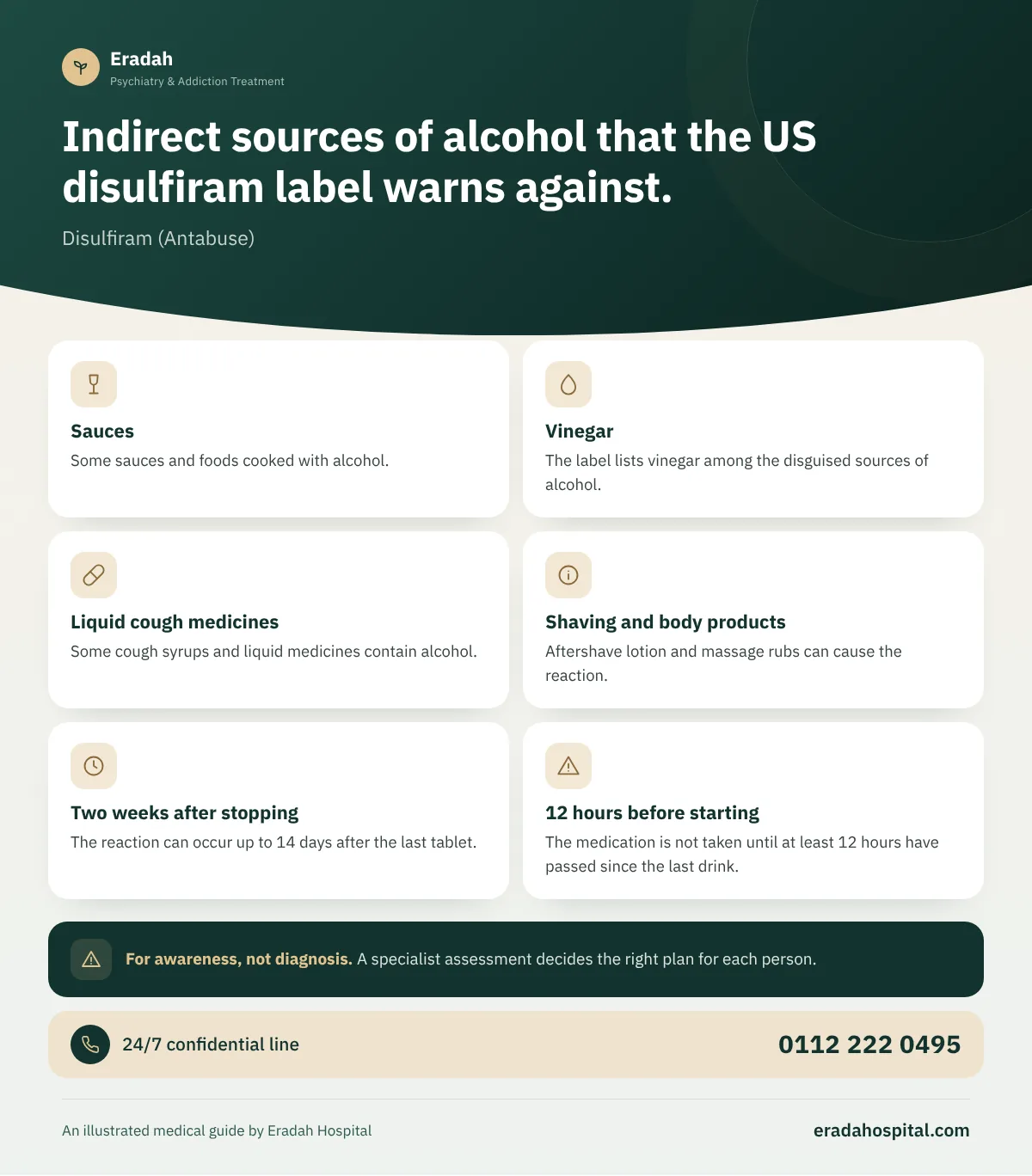
Hidden sources of alcohol to avoid with disulfiram

Sauces

Some sauces and foods cooked with alcohol.

Vinegar

The label lists vinegar among the disguised sources of alcohol.

Liquid cough medicines

Some cough syrups and liquid medicines contain alcohol.

Shaving and body products

Aftershave lotion and massage rubs can cause the reaction.

Two weeks after stopping

The reaction can occur up to 14 days after the last tablet.

12 hours before starting

The medication is not taken until at least 12 hours have passed since the last drink.

Infographic: hidden sources of alcohol with disulfiram: sauces, vinegar, liquid cough medicines, shaving and body products, two weeks after stopping, 12 hours before starting
Indirect sources of alcohol that the US disulfiram label warns against.

Side effects of disulfiram

  • Skin rash or acne.
  • Mild headache.
  • Drowsiness and tiredness.
  • A metallic or garlic-like taste in the mouth.
  • Sexual dysfunction.

Serious symptoms that call for a doctor immediately, according to the US National Library of Medicine, are signs of liver injury: severe tiredness, loss of appetite, vomiting, yellowing of the skin or eyes, dark urine and pale stools. It is usually not suitable for people with severe heart disease, and caution is needed with diabetes, thyroid disease, epilepsy, and kidney and liver disease.

Where disulfiram fits in treating alcohol addiction

Disulfiram does not reduce craving, and it does not treat alcohol withdrawal, which can be dangerous and needs medical supervision. So it comes after detox, within a plan that includes psychological therapy and family support. There are alternatives that work in a different way, such as naltrexone, which reduces the reward from drinking, and the doctor chooses according to the patient's condition and preference, as the guide to addiction treatment medications explains.

Alcohol addiction treatment at Eradah

If your relative refuses treatment, the safe alternative to the “pill in the food” is the proven persuasion approaches in the guide to persuading a person with addiction to accept treatment. At Eradah, treatment begins with detox under medical supervision, followed by the residential program for men, and the doctor decides with the patient on the medications suitable for preventing relapse. The first consultation is free and confidential on 01122220495.

Frequently asked questions

Frequently asked questions about disulfiram

Didn’t find your answer?

Ask a specialist directly. The reply is confidential and carries no commitment.

Ask on WhatsApp
What is the medication Antabuse?

Antabuse is the brand name of disulfiram, a medication that helps with abstaining from alcohol by causing an unpleasant reaction if the patient drinks.

What happens if you drink alcohol with disulfiram?

Facial flushing, headache, nausea, vomiting, palpitations and difficulty breathing, and the reaction can be severe and dangerous in some cases.

Is it permissible to give disulfiram to a person with addiction without their knowledge?

No. The boxed warning in its label prohibits giving it without the patient's full knowledge, because drinking afterward can endanger their life.

How long does the effect of disulfiram last after it is stopped?

The reaction with alcohol can occur up to 14 days after the last tablet, according to its label.

Does disulfiram reduce the desire for alcohol?

No. It does not reduce craving; it deters drinking because of the unpleasant reaction, which is why it succeeds with a motivated patient.

Is disulfiram effective?

A 2014 analysis found it effective especially when the patient knows they are taking it and is under supervision, while no effect appeared in blinded trials.

Does disulfiram harm the liver?

It can rarely cause liver injury, so any yellowing, dark urine or severe tiredness calls for a doctor immediately.

Medical reviewDr. Mahmoud El-Sawy, Consultant Psychiatrist and Addiction Specialist

This page was written by Eradah's editorial team and reviewed by a specialist doctor under the medical review policy. Last reviewed: October 4, 2026. The content is for awareness and does not replace a doctor's consultation.

Need a suitable treatment plan?

Your information is confidential and is not shared with anyone

Call WhatsApp Consultation