Why does alcohol cause addiction?
Alcohol has properties that make it possible to become accustomed to it with repetition, especially with heavy drinking:
It releases dopamine and endorphins, so the brain links drinking with relief or pleasure.
Over time the person needs larger amounts to feel the same effect, so the amount rises gradually without them noticing.
The brain adapts to the presence of alcohol, so tension, tremor and insomnia appear when it is absent.
Because it is legally available in many places, its danger may be underestimated compared with banned substances.
At an advanced stage, the person no longer drinks to seek pleasure but to avoid the unpleasant symptoms that appear when they stop, and the page on alcohol withdrawal symptoms explains this stage in detail.
Many people start with a glass "to relax", then discover years later that they can no longer relax without it.
Is alcohol addiction hereditary?
Genetics plays a large role. The US National Institute on Alcohol Abuse and Alcoholism estimates that genetic factors account for about 60% of susceptibility to alcohol use disorder. This shows in the higher risk among the children and siblings of people with addiction.
But heredity is not destiny. It affects how the body responds to alcohol and the ability to control impulses, and it does not mean a person will inevitably become addicted. Environment, upbringing and family support can reduce this risk considerably.
Anxiety, depression and dual diagnosis
Many people turn to alcohol to ease difficult feelings that were never diagnosed or treated, and this "self-medication" turns into addiction. The conditions most often linked to alcohol addiction include:
- Depression and anxiety disorders, including social phobia.
- Post-traumatic stress disorder (PTSD).
- Bipolar disorder.
- Attention-deficit/hyperactivity disorder (ADHD).
- Sleep disorders and chronic insomnia.
Trauma and life stress
Abuse or neglect in childhood, losing a loved one, divorce, or work pressure and debt all raise the likelihood of addiction. Alcohol gives a temporary feeling of forgetting and emotional numbness, which makes it attractive to people carrying psychological pain that has found no other outlet.
Why does early drinking raise the risk of addiction?
Data from the US National Institute on Alcohol Abuse and Alcoholism indicate that people who began drinking before age 15 were more likely to develop alcohol use disorder later than those who began at 21 or later. The reason is that the adolescent brain has not finished developing, especially the areas responsible for self-control and judging consequences.
Environment and social factors
- Friends who drink regularly: makes drinking seem normal and expected.
- Work or travel environment: jobs tied to late nights, tourism or constant pressure may increase opportunities to drink.
- Family role models: growing up with a heavily drinking parent raises the risk both environmentally and genetically.
- Loneliness and idle time: especially after retirement, living abroad or losing a job.
- Embarrassment about asking for help: stigma leads many people to hide the problem until it worsens.
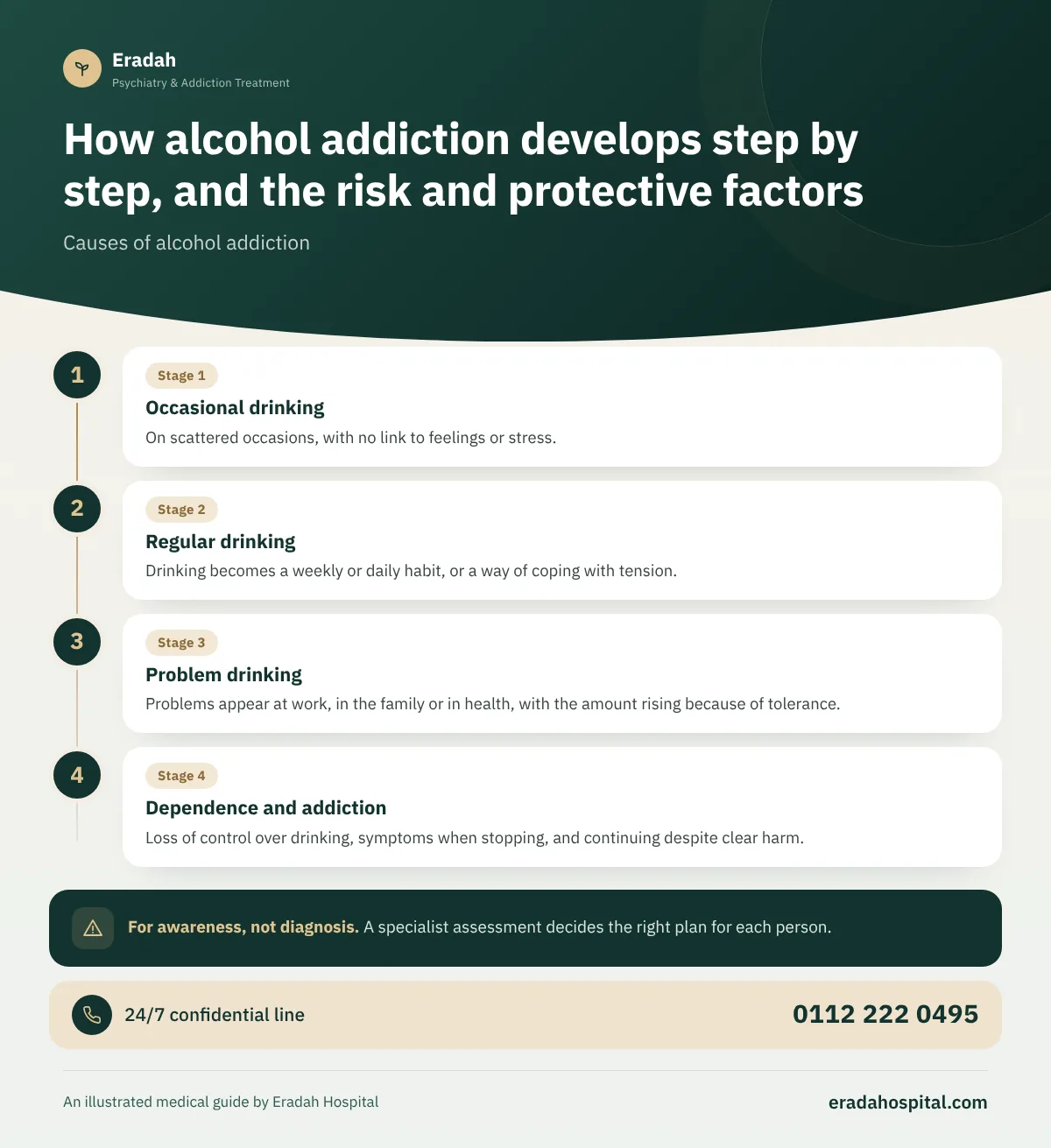
How drinking turns into addiction
- Stage 1Occasional drinking
On scattered occasions, with no link to feelings or stress.
- Stage 2Regular drinking
Drinking becomes a weekly or daily habit, or a way of coping with tension.
- Stage 3Problem drinking
Problems appear at work, in the family or in health, with the amount rising because of tolerance.
- Stage 4Dependence and addiction
Loss of control over drinking, symptoms when stopping, and continuing despite clear harm.
Risk factors versus protective factors
| Factors that raise the risk | Factors that protect against it |
|---|---|
| Family history of addiction | A close-knit family and open communication |
| Starting to drink at an early age | Delaying any experimentation with alcohol and substances |
| Untreated anxiety or depression | Early psychological treatment and skills for coping with stress |
| Trauma and severe life stress | Supportive relationships and a clear purpose in life |
| A setting that accepts heavy drinking | Friends and healthy alternative activities |
Do the causes of alcohol addiction differ between groups?
Curiosity, peer pressure and the wish to belong, with a brain that has not finished developing, so habit forms faster.
A woman's body is often affected by a higher concentration of alcohol, and drinking may be more linked to anxiety, depression and trauma.
Loneliness, retirement and the loss of a spouse, with greater sensitivity to alcohol and its interaction with medicines.
Distance from family, isolation and work pressure in settings where alcohol is easily available.
Myths about the causes of alcohol addiction
| The myth | The truth |
|---|---|
| "Someone who becomes addicted to alcohol has a weak character" | Addiction is an illness that affects successful and strong people, and genetics and psychological and environmental circumstances contribute to it. |
| "Only people who drink strong drinks become addicted" | Addiction is linked to the total alcohol consumed and the pattern of drinking, not to the type of drink. |
| "If he can stop for days, he is not addicted" | Many patients stop for periods and then return to heavy drinking; loss of control does not always mean daily drinking. |
| "Drinking helps with sleep and relaxation" | It eases drowsiness at first but ruins sleep quality and increases anxiety later, which pushes toward more drinking. |
Understanding these facts helps the family treat the patient with compassion, and helps the patient seek treatment without shame, which is the first step toward alcohol addiction treatment.
How can you protect yourself or your children from alcohol addiction?
- Early, honest conversation within the family about alcohol and its harms, without exaggerating or downplaying.
- Pay attention to psychological changes and seek treatment for anxiety and depression early.
- Be a practical role model; children learn from their parents' behavior more than their words.
- Help build a routine of exercise, sleep, activities and healthy relationships.
- Seek specialist consultation at the first sign of loss of control, not after the problem worsens.