Many people hear of naltrexone as a “pill” or an “injection” that stops a drug from having an effect. The idea is right in essence, but the medication's success depends on the timing of starting, commitment, and follow-up, and mistakes can be painful or dangerous.
What is naltrexone?
The MedlinePlus encyclopedia describes naltrexone as an opioid antagonist, used with counseling and social support to help people who have stopped alcohol and opioids reduce craving and control dependence. It comes as tablets, and in some countries there is also a long-acting intramuscular injection. Its brand names include ReVia and Deltrexone. It differs from buprenorphine and methadone in that it is not an opioid at all.
How does naltrexone work?
Naltrexone binds to opioid receptors in the brain and shuts them, so if a person uses heroin, tramadol, or morphine, the substance finds no place to act, and the motivation to repeat the experience disappears. With alcohol, part of the pleasure of drinking is thought to pass through endorphins and opioid receptors, so blocking them reduces the sense of reward and the desire for more.
Uses of naltrexone
- Opioid addiction: after detox is fully complete, to prevent relapse.
- Alcohol addiction: to reduce craving and a return to heavy drinking.
- It does not help with addiction to stimulants, sedatives, or pregabalin, because it does not act on their receptors.
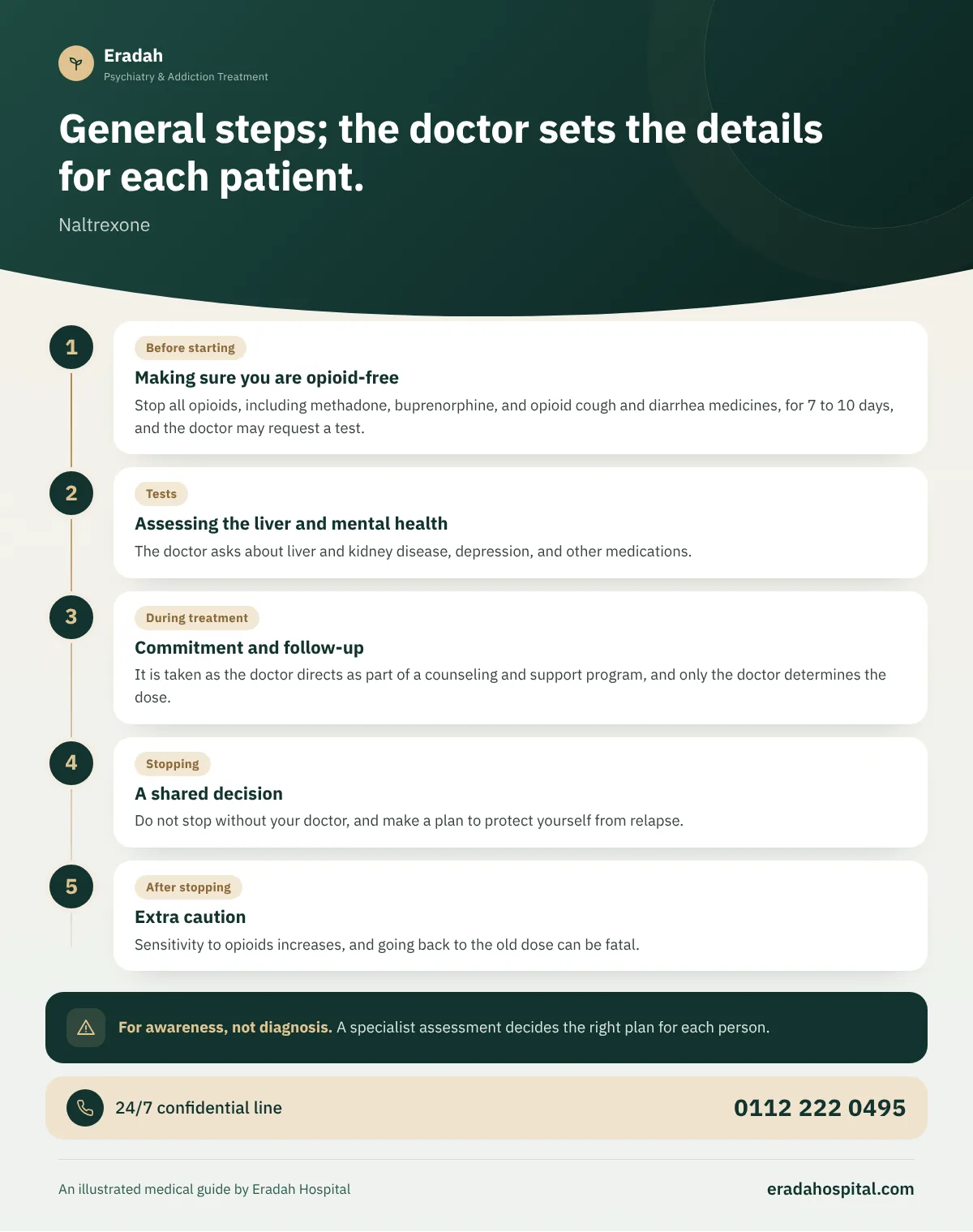
Steps of treatment with naltrexone
- Before startingMaking sure you are opioid-free
Stop all opioids, including methadone, buprenorphine, and opioid cough and diarrhea medicines, for 7 to 10 days, and the doctor may request a test.
- TestsAssessing the liver and mental health
The doctor asks about liver and kidney disease, depression, and other medications.
- During treatmentCommitment and follow-up
It is taken as the doctor directs as part of a counseling and support program, and only the doctor determines the dose.
- StoppingA shared decision
Do not stop without your doctor, and make a plan to protect yourself from relapse.
- After stoppingExtra caution
Sensitivity to opioids increases, and going back to the old dose can be fatal.
Side effects of naltrexone
According to MedlinePlus, common side effects include nausea, vomiting, abdominal pain, diarrhea or constipation, loss of appetite, headache, dizziness, anxiety, nervousness, insomnia or drowsiness, and joint and muscle pain. Symptoms that need a doctor immediately include yellowing of the skin or eyes, dark urine, pain in the upper right abdomen, confusion and hallucinations, or suicidal thoughts.
The doctor pays attention to liver disease, kidney disease, and previous depression, and to pregnancy and breastfeeding, which need special consultation. You must also tell any doctor or dentist that you take it before any surgery, because opioid painkillers will not work as usual.
How effective is naltrexone?
For alcohol, an analysis published in JAMA in 2014 found that treating 12 patients with oral naltrexone prevents one of them from returning to heavy drinking. For opioids the bigger problem is adherence: a 2011 Cochrane review concluded that the tablets did not outperform placebo, with clear weakness in patients staying on them. In a US trial published in 2018, starting the long-acting injection was harder than starting buprenorphine, but once started successfully the results of the two medications were similar.
Is naltrexone addictive?
No. It does not cause euphoria or dependence, and no withdrawal symptoms appear when it is stopped. But the absence of this feeling of comfort may lead some patients to stop it quickly, unlike opioid substitutes. This is why its success is tied to follow-up, family support, and aftercare.
Is naltrexone right for you?
It suits people who have completed detox, have strong motivation and a supportive family, and those who want a non-opioid medication. For people with severe opioid dependence or repeated relapses, buprenorphine may be more suitable. The doctor decides this after assessment, as part of heroin addiction treatment or alcohol addiction treatment at Eradah. Do not start or stop naltrexone without a doctor.