“They told me Prozac lifts your spirits and keeps you happy all the time.” Many myths have surrounded Prozac since it appeared, some exaggerating what it can do and some frightening people for no reason. The truth is that it is a well-studied medication, with clear uses and known side effects, which we explain calmly below.
What is Prozac?
Prozac is the best-known brand name of fluoxetine, and in Egypt a number of generics exist alongside it, with well-known brand names including Philozac, Flutin, Octozac, and Fluzac. It is classed among the antidepressants of the selective serotonin reuptake inhibitor group, and works by preventing the reuptake of serotonin at the ends of nerve cells, which gradually increases its availability in the circuits responsible for mood, anxiety, and repetitive thoughts.
Uses of Prozac
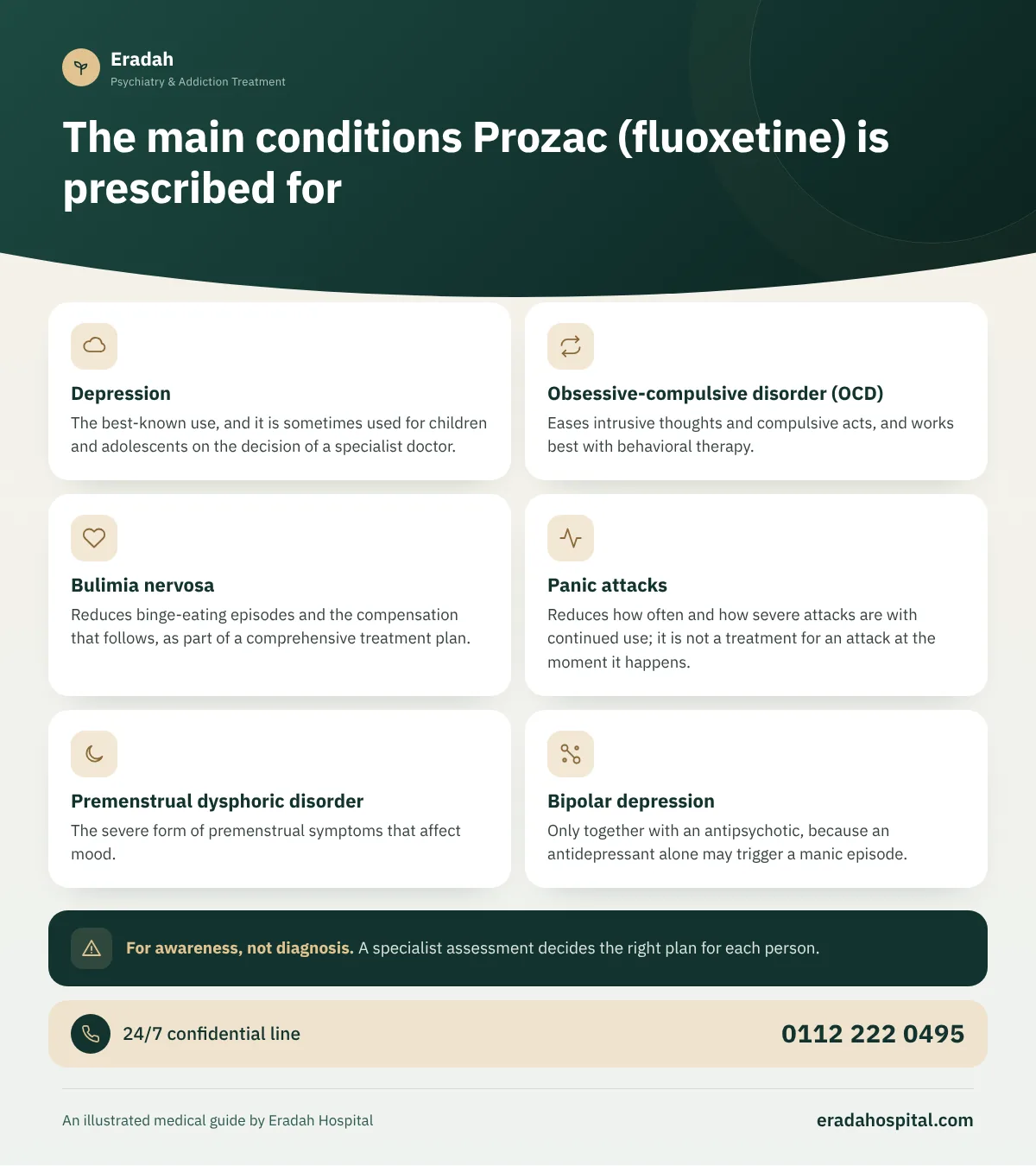
According to the UK's NHS, the US National Library of Medicine, and the StatPearls reference, fluoxetine is used for:
The best-known use, and it is sometimes used for children and adolescents on the decision of a specialist doctor.
Eases intrusive thoughts and compulsive acts, and works best with behavioral therapy.
Reduces binge-eating episodes and the compensation that follows, as part of a comprehensive treatment plan.
Reduces how often and how severe attacks are with continued use; it is not a treatment for an attack at the moment it happens.
The severe form of premenstrual symptoms that affect mood.
Only together with an antipsychotic, because an antidepressant alone may trigger a manic episode.
In Egypt, formulations that combine fluoxetine with olanzapine in one capsule are available. They are prescribed for specific cases decided by the psychiatrist and are not treated as a substitute for Prozac.
When does Prozac start working?
The US National Library of Medicine's MedlinePlus states that feeling the full benefit of fluoxetine may take 4 to 5 weeks or longer. Sleep and energy may begin to improve before mood, while obsessive-compulsive disorder usually takes longer and doses set by the doctor. Continuing is important even after improvement; in depression treatment continues for several months or more.
Side effects of Prozac
- Headache and nausea, and sometimes vomiting.
- Diarrhea or constipation.
- Insomnia or drowsiness, which is why some doctors prefer it taken in the morning.
- Dizziness or blurred vision.
- Changes in weight and appetite.
- Reduced sexual desire or delayed ejaculation.
- Excess sweating.
Rare serious effects, according to the UK's NHS, include serotonin syndrome, manic episodes or unusual overactivity, unexplained bleeding or bruising, severe allergic reaction, and increased suicidal thoughts, especially in young people at the start of treatment.
What sets Prozac apart from others?
Fluoxetine and the substance it produces in the liver stay in the body for a very long time compared with the rest of the group. This has two sides:
- Discontinuation symptoms are often milder: the UK's National Institute for Health and Care Excellence (NICE) notes that fluoxetine's long duration of action sometimes makes stopping it easier than with others, but the decision and method are the doctor's.
- Interactions that extend beyond stopping: MedlinePlus recommends waiting at least 5 weeks after stopping fluoxetine before starting MAOI antidepressants or the drug thioridazine.
- Side effects do not disappear immediately: if a bothersome effect appears, it may continue for days after the drug is stopped.
Prozac drug interactions
Fluoxetine interacts with more medications than some of its peers because it affects liver enzymes that break down other drugs. The most important ones the UK's NHS mentions are: MAOI antidepressants, metoprolol, tamoxifen, blood thinners, anti-inflammatory painkillers, diuretics, buprenorphine, and St. John's wort. To these are added tramadol and stimulant drugs such as ecstasy because of the risk of serotonin syndrome, and alcohol because it increases drowsiness.
Is Prozac addictive? And how is it stopped?
No. Prozac does not cause euphoria or compulsive craving, as explained in the guide on whether psychiatric medications cause addiction. But stopping it suddenly can cause mood swings, irritability, dizziness, numbness, anxiety, and sweating, according to MedlinePlus. So it is stopped with a plan set by the doctor, with follow-up to tell discontinuation symptoms from a return of depression.
When should you ask for help?
Ask for an urgent review if suicidal thoughts appear, or excessive activity and energy with little sleep, or symptoms of serotonin syndrome. And if the person uses narcotic substances or misuses sedatives alongside Prozac, dual diagnosis treatment is the most suitable path. The psychiatry department at Eradah provides a comprehensive assessment of the condition and the medications, with the option of residential treatment when needed.