Is depression treatable? And what is the goal of treatment?
Yes. Depression is one of the mental disorders that respond best to treatment, and the American Psychiatric Association estimates that 70-90% of patients ultimately respond well. The goal goes beyond "feeling a little better": it is to reach full remission, meaning the person returns to their life, work and relationships, and the chance of the illness returning is reduced.
The plan is built after a comprehensive assessment covering the severity of symptoms, the presence of suicidal thoughts, personal and family history, physical illnesses, any substance use, and the patient's own preferences. There is no single treatment that suits everyone.
How does depression treatment differ by severity?
| Severity | Usual options | Notes |
|---|---|---|
| Mild | Individual or group psychotherapy, guided self-help, structured physical activity | Medication is not usually used as a first option unless the patient requests it or there are special reasons |
| Moderate | Structured psychotherapy, or an antidepressant, or a combination of the two | Combining the two is more effective for many people |
| Severe | An antidepressant combined with psychotherapy, with close follow-up | May need a hospital stay or electroconvulsive therapy in certain cases |
| With psychotic symptoms or severe risk | Urgent assessment and a specialist plan that includes additional medications | Safety and immediate care come first |
What types of psychotherapy are used for depression?
Psychotherapy, or "talk therapy," is different from just venting; it consists of structured sessions with goals and scientifically proven techniques, and the World Health Organization lists several types:
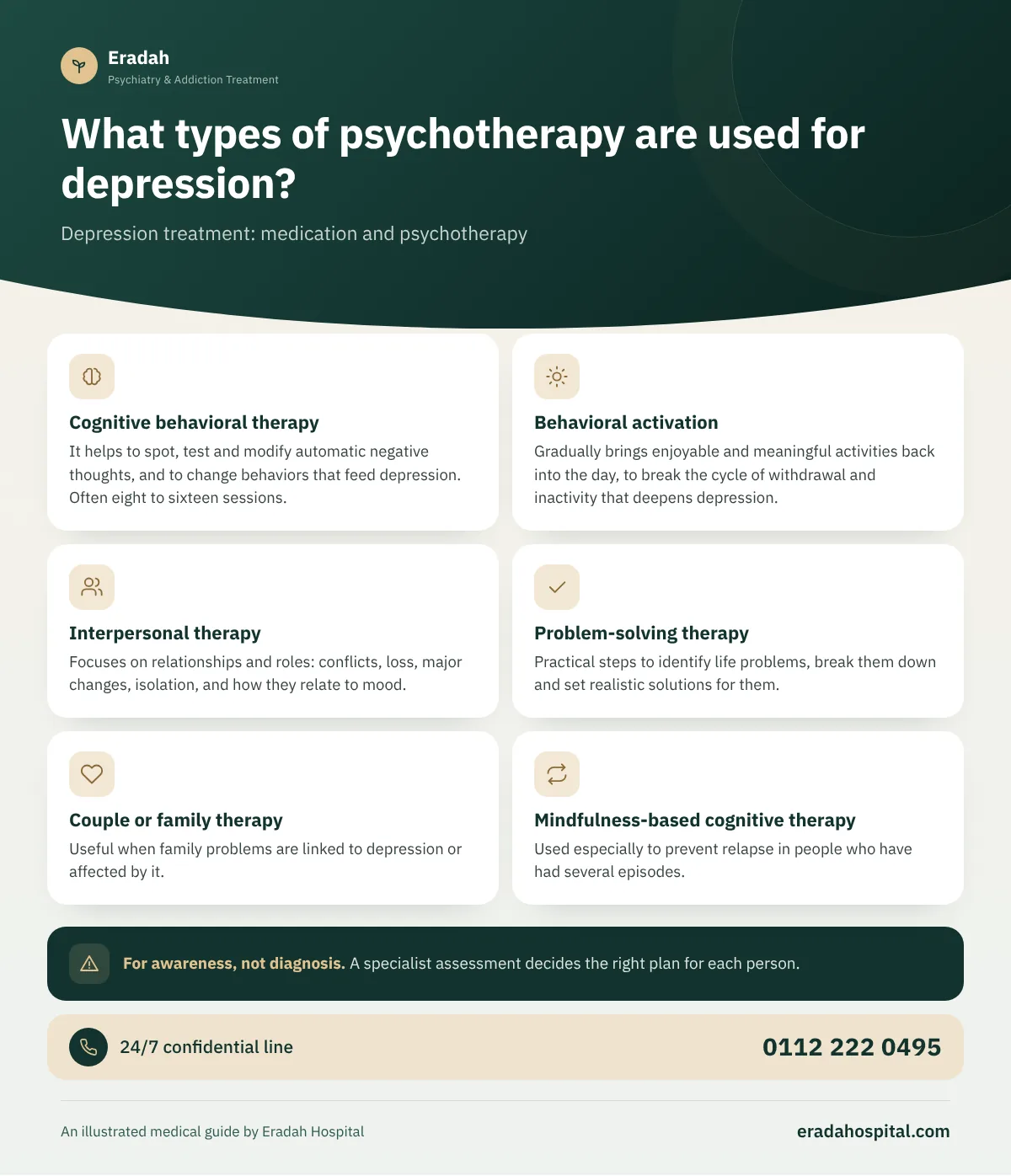
It helps to spot, test and modify automatic negative thoughts, and to change behaviors that feed depression. Often eight to sixteen sessions.
Gradually brings enjoyable and meaningful activities back into the day, to break the cycle of withdrawal and inactivity that deepens depression.
Focuses on relationships and roles: conflicts, loss, major changes, isolation, and how they relate to mood.
Practical steps to identify life problems, break them down and set realistic solutions for them.
Useful when family problems are linked to depression or affected by it.
Used especially to prevent relapse in people who have had several episodes.
Improvement usually begins within weeks of regular sessions, and noticeable improvement is often seen within ten to fifteen sessions. The skills the patient learns stay with them after treatment ends, which lowers the risk of a return.
What types of depression medication are there?
Antidepressants come in several classes that differ in how they work and in their side effects, and the doctor chooses among them according to the patient's condition, other illnesses, medications and previous experiences. We list them here for awareness only, with no doses:
| Category | Examples (generic names) | General notes |
|---|---|---|
| Selective serotonin reuptake inhibitors (SSRIs) | Sertraline, escitalopram, fluoxetine, paroxetine, citalopram | Most often used as a first choice because they are relatively well tolerated |
| Serotonin-norepinephrine reuptake inhibitors (SNRIs) | Venlafaxine, duloxetine | May also help in some types of chronic pain |
| Other antidepressants | Mirtazapine, bupropion, vortioxetine, and others | Each has different advantages and side effects |
| Tricyclic antidepressants | Amitriptyline, clomipramine | Effective but with more side effects, and they need special caution |
| Monoamine oxidase inhibitors (MAOIs) | — | Rarely used now because of their many interactions with foods and medications |
In some cases the doctor adds another medication to strengthen the effect, such as lithium (which requires regular blood tests) or some newer antipsychotics. There is also a nasal spray containing esketamine, approved in some countries for depression that has not responded to other treatments, given only under direct medical supervision.
When do antidepressants start working?
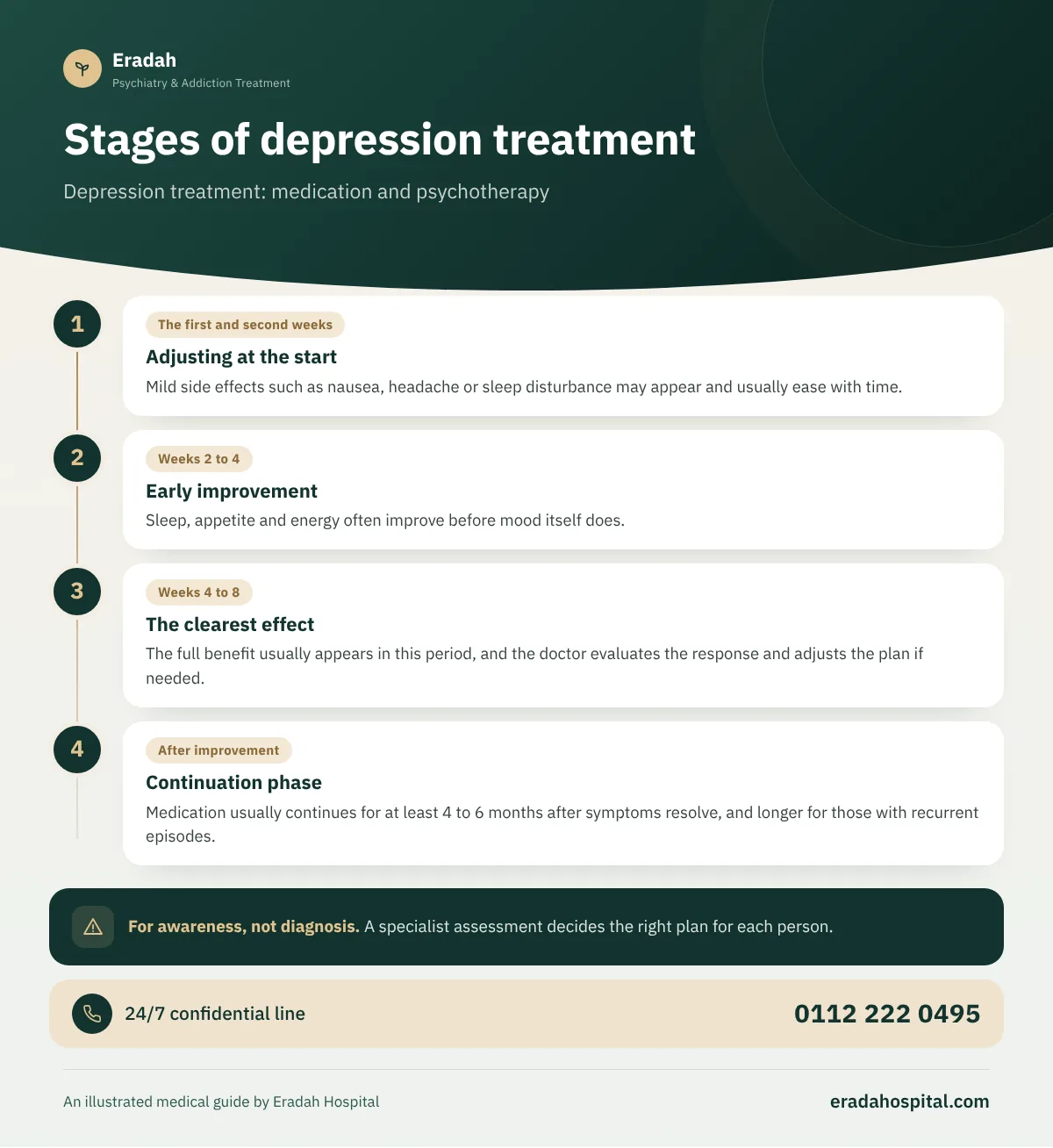
- The first and second weeksAdjusting at the start
Mild side effects such as nausea, headache or sleep disturbance may appear and usually ease with time.
- Weeks 2 to 4Early improvement
Sleep, appetite and energy often improve before mood itself does.
- Weeks 4 to 8The clearest effect
The full benefit usually appears in this period, and the doctor evaluates the response and adjusts the plan if needed.
- After improvementContinuation phase
Medication usually continues for at least 4 to 6 months after symptoms resolve, and longer for those with recurrent episodes.
What are the side effects and important warnings for depression medications?
- Common side effects, often temporary: nausea, headache, sleep disturbance, dizziness, changes in appetite or weight, and effects on sexual desire or performance. Tell your doctor about them instead of stopping the medication.
- Young people under 25: these medications carry a warning about a possible increase in suicidal thoughts or behavior in children, adolescents and young adults, especially in the first weeks or when the dose is adjusted, which is why they need close monitoring by the doctor and family. The World Health Organization recommends against using them to treat depression in children, and using them with extra caution in adolescents and not as a first choice.
- Drug interactions: some painkillers such as tramadol, some migraine medications and herbs such as St. John's wort may interact with antidepressants and cause complications, so tell the doctor everything you take.
- Before starting: the doctor asks about any previous manic episodes, because an antidepressant alone may not suit people with bipolar disorder.
- Pregnancy and breastfeeding: do not stop the medication suddenly when you discover you are pregnant; see your doctor right away to weigh the benefits and risks.
What are electroconvulsive therapy and magnetic stimulation?
Electroconvulsive therapy (ECT) is among the most feared treatments because of how it is portrayed in films, but in reality today it is done under general anesthesia with a muscle relaxant and full medical supervision. It is used in specific situations: very severe depression, depression with psychotic symptoms, refusing to eat and drink, a high risk to life, or when other treatments have not worked, and it is among the fastest-acting treatments in these cases. Its main side effect is a temporary memory disturbance that usually improves within weeks.
Repetitive transcranial magnetic stimulation is a technique that needs no anesthesia; it uses a magnetic field to activate specific areas of the brain over daily sessions for several weeks, and is mostly used for depression that has not responded to medication. Its side effects are usually mild, such as headache and discomfort on the scalp.
What is the role of lifestyle in depression treatment?
Lifestyle does not replace treatment in moderate or severe depression, but it is a key partner in recovery:
- Regular physical activity: brisk walking or any sport you enjoy, done regularly and gradually, is among the most proven helps.
- Regular sleep: fixed times for going to bed and waking up, and less screen time before bed.
- Daily routine: small, clear tasks every day, however simple they seem.
- Connection: a short meeting with a friend or relative is better than complete isolation.
- Food: regular, balanced meals and cutting back on excess caffeine.
- Avoid alcohol, drugs and non-prescribed sedatives: they deepen depression and interfere with treatment.
When does a person with depression need hospital admission?
Most people with depression are treated as outpatients. But a hospital stay may be necessary when there is a high suicide risk, psychotic symptoms, refusal to eat and drink, complete inability to care for oneself, or depression together with an addiction that needs safe detox under medical supervision. Egypt's Mental Health Care Law No. 71 of 2009 protects patients' rights in these situations, and allows involuntary admission only in specific cases and with safeguards.
This is general educational information and not legal advice.
How long does depression treatment last? And how do we prevent relapse?
The journey is usually divided into an acute phase to reach improvement (weeks to a few months), then a continuation phase lasting at least 4 to 6 months after improvement, and then there may be a longer preventive phase for those who have had several or severe episodes. Relapse prevention includes:
- Staying on the plan even after feeling better, and discussing any wish to stop with the doctor.
- Writing an "early-warning plan" with your own first signs (disturbed sleep, withdrawal, irritability) and what you do when they appear.
- Supportive or preventive psychotherapy sessions, especially mindfulness-based therapy.
- Treating any accompanying anxiety, substance use or sleep problem.
How can the family help in depression treatment?
The family is a partner in treatment: by encouraging the patient to keep appointments, helping organize the medication without suffocating monitoring, being patient through the first weeks before the effect appears, and noticing any talk about death. Avoid pressuring him to stop the medication "because he's better now" or because "psychiatric drugs are addictive," as these are among the most common causes of relapse.
Choosing a hospital for depression treatment
When a family looks for a place to treat depression, they are really asking two questions: who will make the plan that fits the severity of the condition, and who will protect the patient if suicidal thoughts appear? Mild depression may need only structured psychotherapy, moderate and severe depression usually need medication that the doctor follows for weeks before its full benefit appears, and some cases require a temporary stay for safety. So look for:
- A psychiatrist who measures severity and asks clearly about suicide at every review, not only the first.
- A therapist who offers cognitive behavioral therapy or behavioral activation in sessions with defined goals.
- Medication review in the first weeks, and adjusting it if the patient does not improve rather than waiting a long time.
- A written safety plan known to the family: warning signs, whom to call, and where to keep anything that could cause harm.
- The ability to admit a patient in cases of psychosis, refusing food or high risk.
At Eradah the psychiatric hospital operates with a doctor and nursing staff present day and night, and the facility is licensed by the Egyptian Ministry of Health and Population. Particular attention is given to those with depression in men, which sometimes appears as anger or substance use.
Depression treatment at Eradah
At Eradah Center for Psychiatry and Addiction Treatment, care begins with a comprehensive assessment by a psychiatrist, followed by an individual plan that combines, as needed, structured psychotherapy and medication follow-up, with special attention to cases in which depression occurs together with addiction. We offer outpatient follow-up or residential care when needed, with complete confidentiality and family involvement with the patient's consent.