“I'm on Lustral and my friend is on Cipralex. Whose medication is stronger?” A frequent question, and the answer is that neither is “stronger” in absolute terms. Below is a detailed explanation of sertraline, then a fair comparison between it and Cipralex.
What is sertraline?
Sertraline is an active ingredient from the antidepressants of the selective serotonin reuptake inhibitor group, and its original brand name in Britain and Egypt is Lustral, made by Pfizer, and in the US Zoloft. Many local generics exist in Egypt, with well-known brand names including Modapex, Serlift, Sertral, and Sicerin. It works by slowing serotonin reuptake, so the regulation of mood, fear, and repetitive thoughts gradually improves.
What sertraline is used for
According to the UK's NHS and the StatPearls reference, sertraline is used for:
- Depression.
- Obsessive-compulsive disorder, and it is used for it in children aged 6 to 17 according to the UK's NHS.
- Panic attacks.
- Post-traumatic stress disorder (PTSD).
- Social phobia.
- Premenstrual dysphoric disorder.
In an analysis published in The Lancet in 2009 comparing 12 modern antidepressants, sertraline and escitalopram were the best in acceptability and tolerability, and the researchers concluded that sertraline may be a suitable choice for starting treatment of moderate to severe depression, given the balance of its efficacy, tolerability, and cost.
When does sertraline start working?
The doctor often starts with a low dose and then raises it after a week or more to reduce side effects, and may increase it later if improvement is not enough. Side effects appear in the first days, and most ease within about two weeks, while clear improvement takes several weeks. In depression, treatment usually continues for several months or more after improvement.
Side effects of sertraline
- Headache and nausea, and sometimes vomiting.
- Diarrhea.
- Dizziness or drowsiness.
- Dry mouth.
- Trouble sleeping.
- Reduced sexual desire or delayed ejaculation.
- Weight gain in some people.
Rare serious effects include severe allergic reaction with throat swelling and difficulty breathing, serotonin syndrome, manic episodes, and increased suicidal thoughts at the start of treatment, especially in young people.
The difference between sertraline and Cipralex
| Sertraline (Lustral) | Escitalopram (Cipralex) | |
|---|---|---|
| Group | Selective serotonin reuptake inhibitor | Selective serotonin reuptake inhibitor |
| Among its uses | Depression, OCD, panic, post-traumatic stress, and social phobia | Depression, generalized anxiety, panic, social phobia and obsessive-compulsive disorder |
| Tolerability | Among the best tolerated in comparative studies | Among the best tolerated in comparative studies |
| Children and teenagers | Used for OCD from age 6 | Approved in the US for depression in adolescents and for generalized anxiety from age 7 |
| Special note | Avoid grapefruit juice | Caution with heart rhythm disorders |
| Breastfeeding | Often used during breastfeeding | Sometimes used after consulting the doctor |
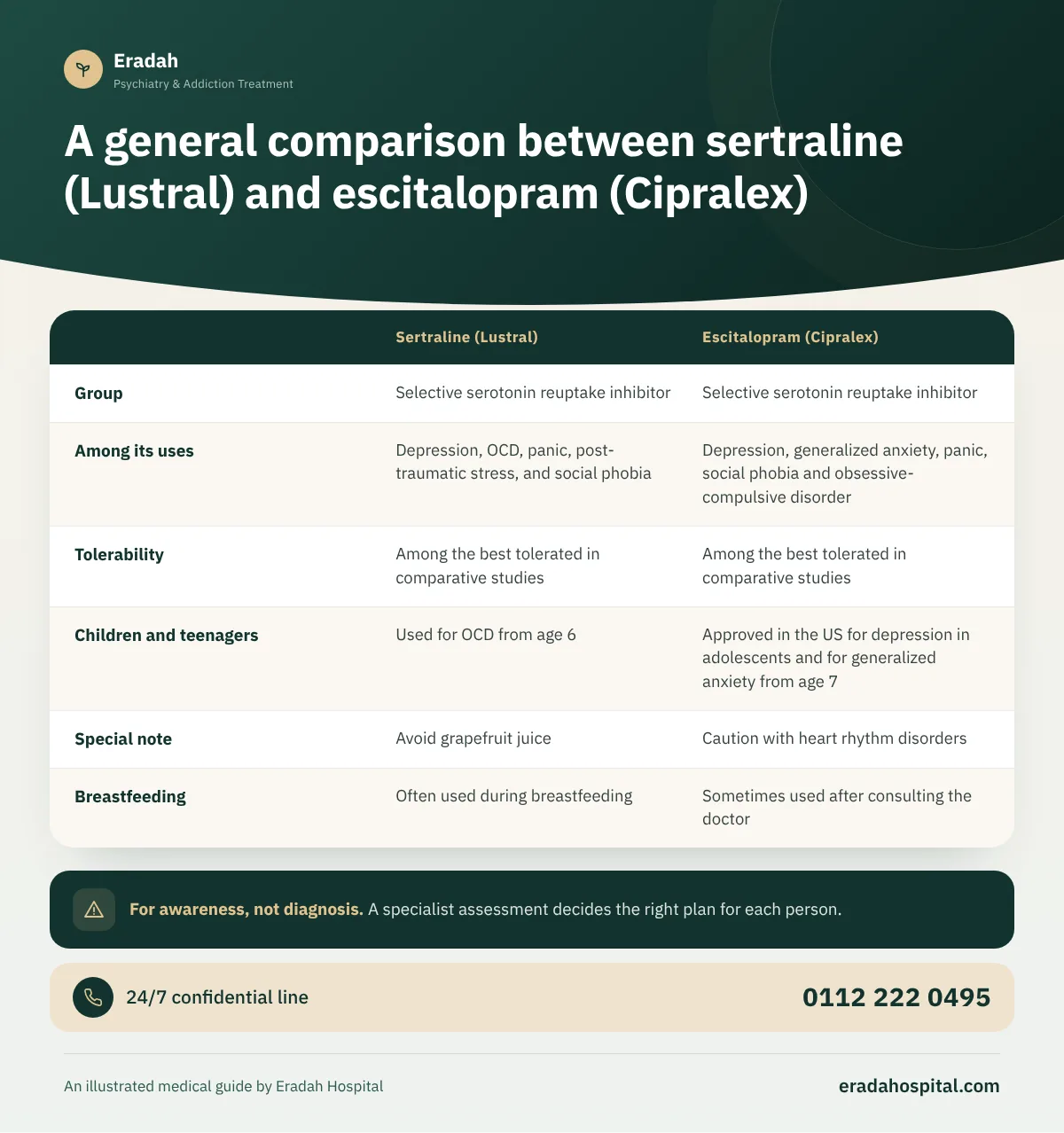
The bottom line is that the two medications are close in effectiveness, and the choice between them depends on the dominant symptoms, accompanying illnesses, other medications, and previous experience. If one does not suit you, that does not mean the other will not.
Interactions, pregnancy, and breastfeeding
- Blood thinners such as warfarin and apixaban, and anti-inflammatory painkillers such as aspirin and ibuprofen: increase the risk of bleeding.
- MAOI antidepressants, tramadol, and St. John's wort: risk of serotonin syndrome.
- Grapefruit juice: the UK's NHS advises avoiding it.
- Alcohol: it may stop the medication from working as it should.
The UK's NHS states that sertraline can often be used during breastfeeding because it passes into milk in small amounts, and that it may be used in pregnancy if needed after discussion with the doctor, which is why it is often mentioned in the treatment of postpartum depression. Caution is needed for anyone with epilepsy, diabetes, heart disease, glaucoma, a bleeding disorder, or a history of mania.
Is sertraline addictive? And how is it stopped?
Sertraline does not cause addiction or euphoria, but the body adapts to it, so stopping it suddenly may cause dizziness, nausea, insomnia, irritability, and sensations like mild electric shocks. So the doctor reduces the dose gradually over weeks or months, and follows up to tell discontinuation symptoms from a return of the illness.
When should you see the doctor?
See your doctor if you do not improve after several weeks, if the side effects are bothersome, or if thoughts of self-harm or excessive energy with little sleep appear. And if anxiety or depression comes together with substance or sedative use, Eradah's dual diagnosis treatment deals with both together, and follow-up can be through outpatient treatment or the psychiatry department depending on the severity of the condition.