“The neurologist prescribed me Tryptizol for headaches, and when I read the leaflet I found it was an antidepressant.” This situation is very common, and it causes needless worry. Tryptizol is a versatile medication, but it is also one that deserves particular respect, and that is what we explain here.
What is Tryptizol?
Tryptizol is a brand name for amitriptyline; in Egypt, Amitriptin is among its equivalents. It is one of the oldest antidepressants, in the tricyclic group. It raises serotonin and norepinephrine, but it also acts on other receptors such as histamine and acetylcholine, which explains the drowsiness, dry mouth and constipation. The StatPearls reference notes that its anticholinergic, antihistamine, and heart and circulatory effects call for careful patient selection and ongoing monitoring.
Uses of Tryptizol
- Depression: the use approved by the US Food and Drug Administration. A 2018 network meta-analysis in The Lancet found amitriptyline to be among the most effective antidepressants, but its side effects often make it a later choice rather than a first one.
- Nerve pain: the UK's National Institute for Health and Care Excellence (NICE) recommends it as one of the first-line options for nerve pain, alongside duloxetine, gabapentin and pregabalin.
- Post-shingles pain: the burning pain that can persist after the infection, according to the US National Library of Medicine.
- Migraine prevention: taken regularly to reduce the number of attacks, not to treat an attack itself.
- Chronic insomnia: the StatPearls reference mentions the use of this class of drugs for chronic insomnia that has not responded to other treatments.
Tryptizol for insomnia: is it the answer?
Many people search for Tryptizol as a sleeping pill because it causes drowsiness. But here the drowsiness is a side effect of a drug with other effects on the heart, blood pressure and memory, not a treatment for the cause of the insomnia. The first treatment for chronic insomnia is cognitive behavioral therapy, as the guide to treating chronic insomnia explains, while this medication is for cases that have not responded to other treatments and is used on a doctor's decision. For someone with insomnia alongside substance use, the insomnia may be part of addiction and withdrawal insomnia and need a different plan.
Side effects of Tryptizol
According to MedlinePlus, the most common are:
- Drowsiness and fatigue.
- Dry mouth and constipation.
- Difficulty urinating.
- Blurred vision.
- Nausea and headache.
- Nightmares.
- Changes in appetite and weight.
- Changes in sexual desire or performance.
- Excess sweating, and unsteadiness or confusion.
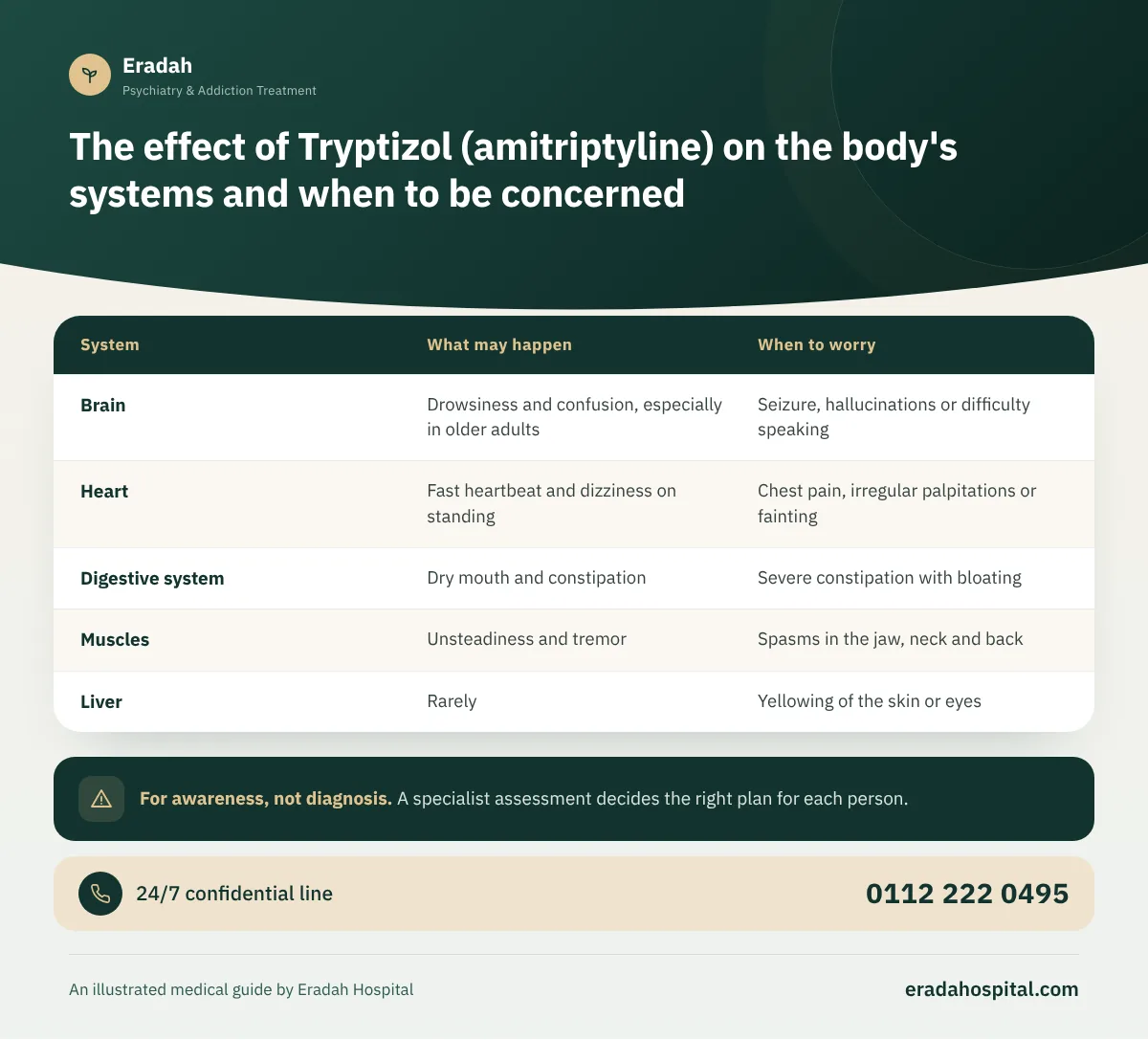
Effect of Tryptizol on the body's systems
| System | What may happen | When to worry |
|---|---|---|
| Brain | Drowsiness and confusion, especially in older adults | Seizure, hallucinations or difficulty speaking |
| Heart | Fast heartbeat and dizziness on standing | Chest pain, irregular palpitations or fainting |
| Digestive system | Dry mouth and constipation | Severe constipation with bloating |
| Muscles | Unsteadiness and tremor | Spasms in the jaw, neck and back |
| Liver | Rarely | Yellowing of the skin or eyes |
Who should avoid Tryptizol? And the key interactions
- People who have recently had a heart attack, since MedlinePlus states the doctor will usually not allow it.
- Older adults over 65, for whom it is often not the safest choice, according to MedlinePlus.
- People with glaucoma, an enlarged prostate, difficulty urinating, epilepsy, an overactive thyroid, diabetes, liver disease or schizophrenia.
- People taking MAOI-type antidepressants or who stopped them within the past two weeks.
- People who drink heavily, because alcohol doubles the drowsiness, and those taking sedatives, sleeping pills or tramadol.
MedlinePlus also warns that children, teenagers and young adults up to age 24 may have more suicidal thoughts at the start of antidepressant treatment, so follow-up is close in the first weeks. In pregnancy and breastfeeding, consult the doctor.
Is Tryptizol addictive? And how is it stopped?
Tryptizol does not cause a “high” or addiction in the usual sense, as the guide Do psychiatric medications cause addiction? explains. But stopping it suddenly can cause symptoms such as nausea, headache and loss of energy, according to MedlinePlus, so it is lowered gradually. Its full benefit in depression may take several weeks or more.
When should you ask for help?
Call an ambulance right away if you suspect an overdose, chest pain, a seizure or fainting, and contact the doctor or the mental health support line 16328 if suicidal thoughts appear. If the medication is being used together with sedatives, alcohol or painkillers to boost the effect, this is a sign that calls for a specialist dual diagnosis assessment, which the Psychiatry Department at Eradah provides confidentially.