What is the link between trauma and addiction?
NIDA reports that many people with PTSD also have a substance use disorder, and that exposure to violence, abuse and neglect raises the risk of addiction, especially for those who experienced them in childhood and adolescence. When the two conditions occur together, it is called dual diagnosis.
The link runs in both directions: trauma pushes people toward substance use in search of relief, while substance use raises the likelihood of new traumatic experiences, such as accidents, violence and dangerous situations, and makes the symptoms of the disorder worse. This is why addiction treatment centers see a large share of patients carrying trauma stories they have never talked about before.
Why do people with trauma turn to substances?
What doctors call "self-medication" is usually an attempt to survive unbearable pain rather than a search for pleasure. The person is looking for:
They drink or take a sedative so they can sleep deeply and not wake up terrified.
Numbing intrusive images and sounds, even if only for a few hours.
Easing the constant tension and being on edge in the body.
Getting through social situations and crowded places.
Sometimes breaking through emotional numbness, especially with stimulants.
At first the substance seems like a "successful solution." Then the body needs larger amounts for the same effect, and the symptoms come back stronger when the effect wears off, so the person returns to the substance again.
Which substances are most closely linked to trauma?
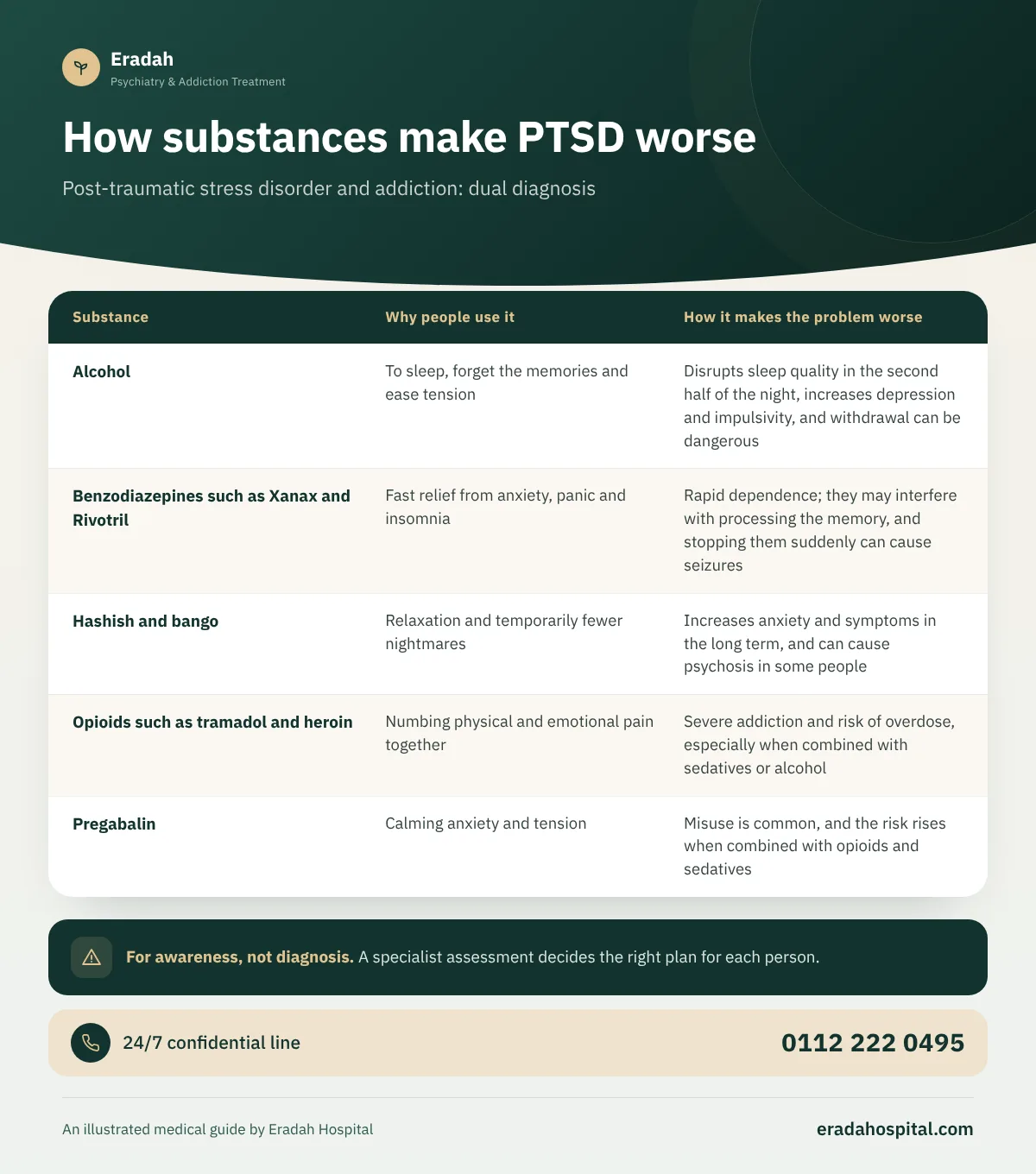
| Substance | Why people use it | How it makes the problem worse |
|---|---|---|
| Alcohol | To sleep, forget the memories and ease tension | Disrupts sleep quality in the second half of the night, increases depression and impulsivity, and withdrawal can be dangerous |
| Benzodiazepines such as Xanax and Rivotril | Fast relief from anxiety, panic and insomnia | Rapid dependence; they may interfere with processing the memory, and stopping them suddenly can cause seizures |
| Hashish and bango | Relaxation and temporarily fewer nightmares | Increases anxiety and symptoms in the long term, and can cause psychosis in some people |
| Opioids such as tramadol and heroin | Numbing physical and emotional pain together | Severe addiction and risk of overdose, especially when combined with sedatives or alcohol |
| Pregabalin | Calming anxiety and tension | Misuse is common, and the risk rises when combined with opioids and sedatives |
Some people with PTSD may turn to stimulants to fight numbness or exhaustion, or to stay alert, but these increase tension, suspiciousness and insomnia, and can lead to psychosis.
How do substances make trauma symptoms worse?
- Blocking natural processing: numbing the memory stops the brain from digesting it, so it stays vivid and sharp.
- Rebound symptoms: when the effect wears off, or during withdrawal, anxiety, insomnia and nightmares increase, and withdrawal symptoms may resemble the hyperarousal itself.
- Worse sleep: alcohol and sedatives produce broken, unrefreshing sleep even though they make you drop off faster.
- Depression and impulsivity: substances increase sadness and recklessness, and using them to manage symptoms is linked to a higher risk of suicidal thoughts.
- New traumas: substance use increases exposure to accidents, violence and dangerous situations.
What signs should cause concern?
- Drinks or takes a sedative every night "so they can sleep."
- The amount has increased, or they now need it at more times during the day.
- Becomes angry or tense when they cannot get the substance, or hides their use.
- Takes sedative medication without a prescription or from more than one doctor.
- Combines alcohol with sedatives or opioids.
- Use increases around an anniversary or news that reminds them of the event.
What is integrated treatment for trauma and addiction?
In the past, some programs required patients to stop using substances completely before any discussion of trauma. Today, guidelines, including NICE, advise that a patient should not be denied trauma treatment simply because of an alcohol or drug problem, and that both conditions should be treated in a coordinated way. Integrated treatment includes:
- Safe withdrawal from substances under medical supervision, especially alcohol and sedatives because of the risk of seizures, along with regulating sleep.
- Stabilization and skills: learning healthy alternatives for coping with memories and cravings, such as "Seeking Safety" programs, which combine trauma and addiction topics.
- Trauma-focused therapy: trauma-focused cognitive behavioral therapy or EMDR once the patient is stable enough, and some programs combine it with addiction treatment from the start.
- Medication: treatment for accompanying depression or anxiety, and medications that support addiction treatment depending on the substance, without resorting to sedatives that cause dependence.
- Relapse prevention: a plan that identifies both trauma triggers and substance use triggers.
Why does treating only one fail?
A person treated for addiction alone who then returns to life with the memories still vivid finds that the reason that drove them to use is still there, so the risk of relapse rises. A person who tries to treat the trauma while deep in substance use struggles to attend sessions and benefit from them. That is why coordination between the two teams, or having both in one place, is the shortest path to recovery.
Why do trauma symptoms get worse when substance use stops?
When the substance that was numbing the memories stops, nightmares, anxiety and hyperarousal return, and may intensify in the first weeks. This is expected and does not mean that stopping was a mistake, but it is one more reason for withdrawal to take place under a team that understands trauma and prepares the patient with calming skills and a sleep plan before and after stopping.
How can the family help?
- Understand that substance use may be a desperate attempt to ease the pain of trauma, without that meaning you accept it.
- Speak calmly about the worry you feel, and avoid accusations and threats in moments of tension.
- Do not keep alcohol or sedatives at home, and do not give your own medication to anyone.
- Encourage a specialist assessment for dual diagnosis, and offer to go along.
- Seek support for yourself too, through family sessions or support groups.
Treating trauma and addiction together at Eradah
Dual diagnosis is the core of our work at Eradah. We start with safe, round-the-clock medically supervised withdrawal when needed, then a program that combines addiction treatment with trauma-focused psychotherapy, appropriate medication for depression or anxiety, a family program, and follow-up after discharge. Learn more about dual diagnosis. All of this is completely confidential.
Suicidal thoughts or danger to self? Get help now
- Talking about wanting to die, or that life is no longer worth living, or that others would be better off without them
- Severe despair and a feeling that the pain will never end, or overwhelming guilt and shame tied to the event
- Saying goodbye to family and friends, or suddenly giving away treasured belongings
- Severe detachment from reality, or reliving the memory as if it is happening now, with agitation that does not settle
- A sudden increase in drinking alcohol or using sedatives or drugs, or dangerous impulsiveness and recklessness
Stay with the person and do not leave them alone, listen calmly without judgment or argument, and ask them directly about their thoughts; asking does not plant the idea. Call ambulance (123) or go to the nearest emergency department, or call the mental health support line 16328, and keep medication and objects that could harm them out of reach until help arrives.
Ambulance 123 Mental health support line 16328