What principles is treatment based on?
Trauma treatment rests on a simple principle: safety first. The therapist works at a pace that suits the patient, explains each step, and respects their right to stop. The aim of treatment is to help the brain put the memory in its proper place, in the past, not to relive the trauma.
- Comprehensive assessment: symptoms, sleep, mood, substance use, personal safety, and any ongoing trauma.
- Psychoeducation: understanding what is happening in the mind and body greatly eases fear and shame.
- Stabilization: calming skills, regulating sleep and reducing substance use before going into the memory.
- Processing: working directly on the memory and the beliefs tied to it in a structured way.
- Rebuilding life: gradually returning to work, relationships and the activities that were avoided.
What is done in the first weeks after the event?
In the first days, people need safety, practical support and information, which is known as "psychological first aid." Mandatory "psychological debriefing" sessions, where everyone is asked to recount the event right after it happens, are not recommended by current guidelines as routine prevention, because they may not help and may increase distress for some people.
When symptoms are mild in the first month, the UK's NICE guidelines recommend active monitoring to make sure they improve. If they are severe or persistent, trauma-focused cognitive behavioral therapy can be started even within the first month.
What is trauma-focused cognitive behavioral therapy?
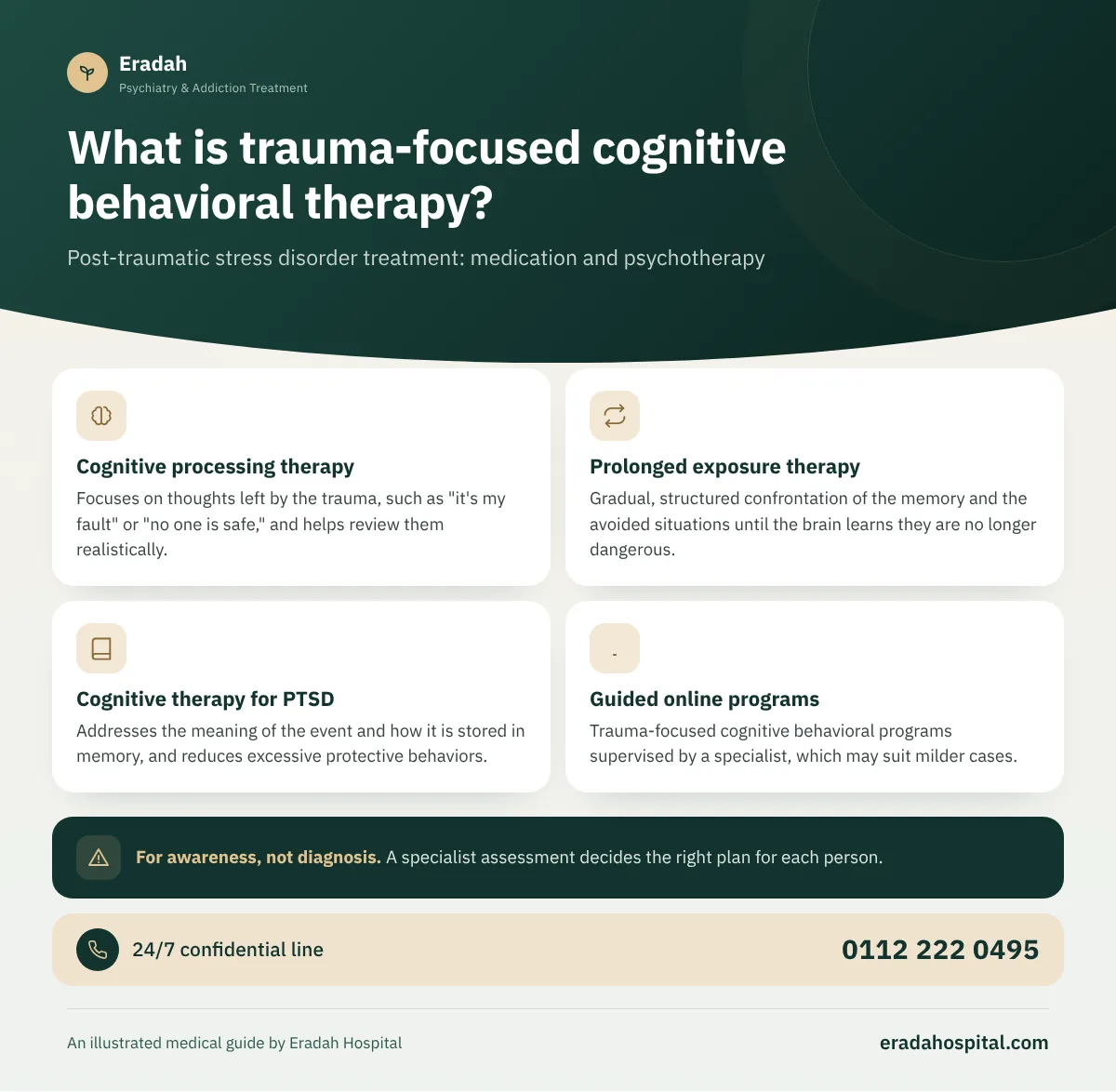
It is a group of structured psychotherapies that have proven effective in many trials, and are recommended as a first-line option by the World Health Organization and NICE guidelines. Their methods differ, but they share the goal of helping the patient face the memory safely and modify the painful beliefs tied to it. The best known are:
Focuses on thoughts left by the trauma, such as "it's my fault" or "no one is safe," and helps review them realistically.
Gradual, structured confrontation of the memory and the avoided situations until the brain learns they are no longer dangerous.
Addresses the meaning of the event and how it is stored in memory, and reduces excessive protective behaviors.
Trauma-focused cognitive behavioral programs supervised by a specialist, which may suit milder cases.
Treatment usually runs for a limited number of weekly sessions over several months, with exercises between sessions. The patient may find it temporarily hard at first; this is expected and the therapist monitors it.
What is EMDR therapy and is it effective?
EMDR stands for Eye Movement Desensitization and Reprocessing. The patient brings up aspects of the memory for short periods while following the therapist's hand movement with their eyes, or receiving another form of alternating stimulation, and then notes what comes to mind. Over the sessions, the memory loses much of its emotional charge.
The World Health Organization recommends it among the proven treatments, and NICE guidelines recommend it for adults, especially when the trauma is civilian rather than combat-related and more than three months have passed since the event. It should only be delivered by a trained and certified therapist.
What is the role of medication in PTSD treatment?
Medication is not the first choice for most patients, but it is helpful for some, especially if the patient prefers medication, if there is severe accompanying depression, or if psychotherapy is not accessible. Medication is not used to prevent the disorder right after an event.
| Category | Examples | Role and key points |
|---|---|---|
| Selective serotonin reuptake inhibitors (SSRIs) | Sertraline, paroxetine | The only two drugs approved by the US FDA for the disorder; they take weeks to show an effect |
| Serotonin-norepinephrine reuptake inhibitors (SNRIs) | Venlafaxine | An alternative recommended by NICE for adults if the patient prefers medication |
| Antipsychotics | Risperidone, for example | Used only after specialist assessment for severe, disabling symptoms that have not responded |
| Nightmare medications | Determined by the doctor | A doctor may use them in some cases; the evidence for them is mixed |
| Benzodiazepines (sedatives) | Xanax, Rivotril, Valium | Not recommended for prevention or treatment; they may hinder recovery and carry a risk of dependence |
How is complex trauma treated?
Complex trauma often needs longer treatment in stages. It begins with a stabilization phase in which the patient learns skills for regulating emotions, coping with dissociation and building trust in the therapeutic relationship, then moves on to processing memories with trauma-focused methods, and then to rebuilding relationships and daily life. NICE advises taking these patients' needs into account by allowing more time and more sessions when needed.
How are children and teenagers treated?
The main treatment for children and teenagers is trauma-focused cognitive behavioral therapy in a form suited to their age, with parents or caregivers taking part in sessions and learning how to support the child at home. EMDR may be used for some older children if they do not benefit from cognitive behavioral therapy. NICE does not recommend medication for prevention or treatment in children and teenagers.
- Play, drawing and stories are tools through which a young child expresses what they cannot say.
- School is an important partner in easing stress and noticing improvement.
- A steady routine, regular sleep and constant reassurance from parents are among the strongest factors in healing.
How long does PTSD treatment take?
- The first weeksAssessment and stabilization
Understanding the symptoms, improving sleep, making a safety plan, and reducing substance use if present.
- About two to four monthsProcessing
Weekly trauma-focused sessions, during which many people begin to see real improvement.
- After the sessions endStabilization
Returning to avoided activities and strengthening skills.
- In the long termFollow-up
Spaced-out sessions when needed, especially around the anniversary of the event or with new stresses.
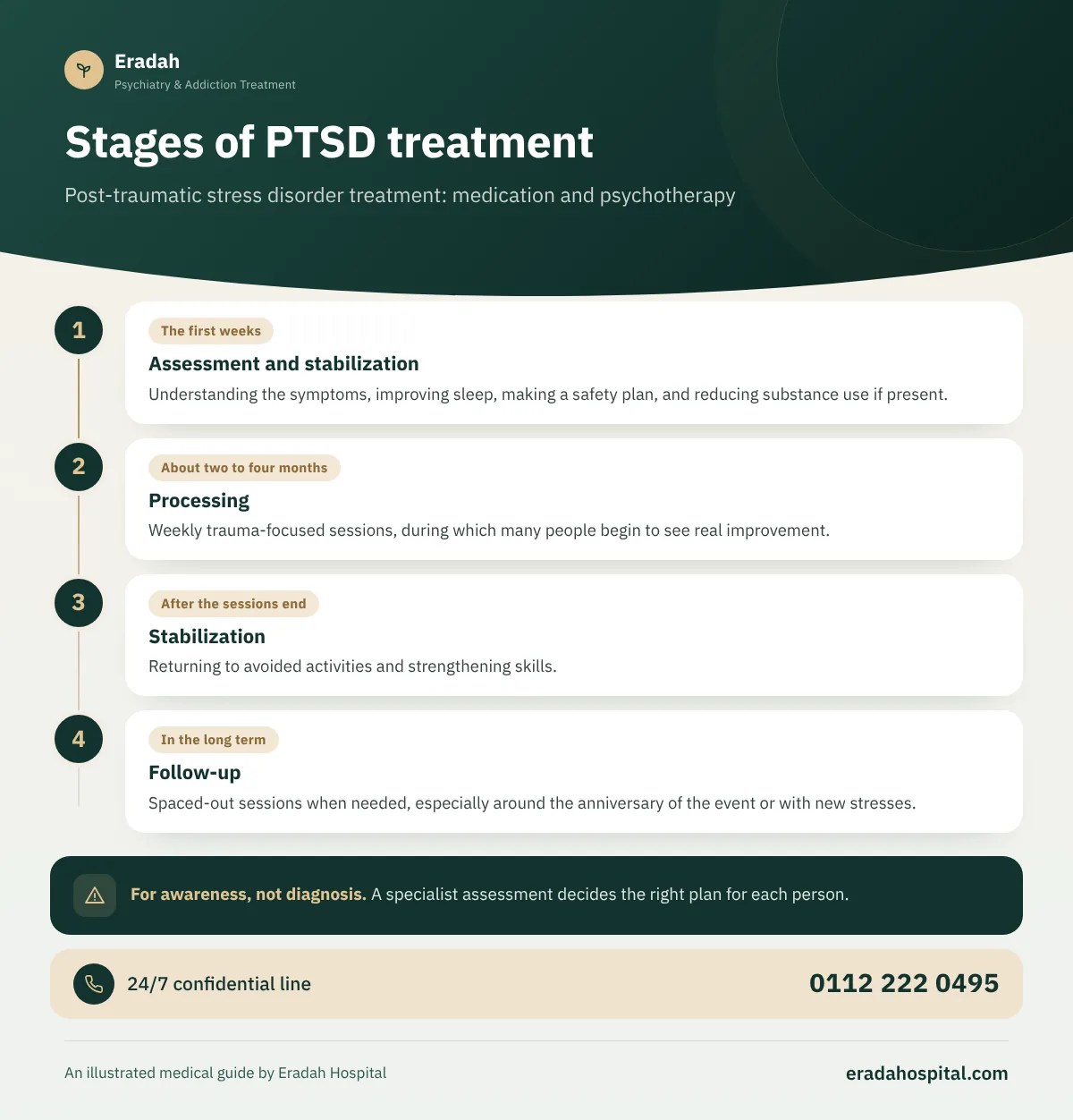
This is an approximate timeline that varies greatly from person to person; complex trauma and accompanying depression or addiction lengthen treatment.
Outpatient or inpatient treatment?
Most trauma patients are treated in outpatient clinics. But inpatient care may be safer in certain situations: serious suicidal thoughts, an addiction that needs safe withdrawal under medical supervision, severe detachment from reality, or an unsafe environment where the patient lives. Egypt's Mental Health Care Law protects the patient's rights in every case.
What helps in daily life alongside treatment?
- Slow breathing and grounding exercises, such as noticing five things you can see around you during a memory episode.
- A steady sleep routine, less caffeine, and avoiding alcohol and sedative substances.
- Regular physical activity eases physical tension.
- Gradually returning to avoided activities in coordination with the therapist.
- Support groups for survivors of similar traumas.
- Limiting exposure to news and violent images during treatment.
How can the family help with treatment?
A family helps when it learns about the disorder, encourages attendance at sessions without pressure, and understands that improvement comes in waves. Attending family education sessions can sometimes help, especially if a partner or children have been affected. It is important that the family not turn into an "investigator" asking about the details of the sessions.
How can symptoms be kept from returning after improvement?
Work with your therapist on a plan that identifies the expected triggers, such as an anniversary, similar news or work stress, the early signs that symptoms are returning, such as disturbed sleep or a return of avoidance, and what you will do when they appear. Returning early for a session or two is far better than waiting.
Choosing a hospital for PTSD treatment
PTSD treatment depends above all on a therapist trained in methods that treat the memory itself, such as trauma-focused cognitive behavioral therapy or EMDR, and not on general supportive sessions or sedatives prescribed to ease anxiety. Many patients first need a stabilization phase, especially those who have experienced repeated trauma. So ask any provider about:
- The name of the trauma-focused treatment method the therapist offers, and their experience in it.
- Assessment of sleep, nightmares, depression, and use of alcohol or substances to numb feelings.
- Medication review when needed, while avoiding reliance on benzodiazepines.
- A clear safety plan if thoughts of self-harm appear during treatment.
- A session pace that respects the patient's readiness, so they are not pushed to tell the details before they are ready.
At Eradah, Dr. Mahmoud El-Sawy leads the medical side, specialists provide individual psychotherapy, and the dual diagnosis program is integrated for those who turned to substances to escape memories, as the page on trauma and addiction explains. The setting is calm, in the midst of a garden, and patient data does not leave it.
PTSD treatment at Eradah
At Eradah we begin with a comprehensive psychological assessment covering trauma, sleep, mood and any substance use, then build an individual plan that combines trauma-focused psychotherapy with medication when needed and a family program. If addiction accompanies the trauma, we treat both together in a single plan. All of this is completely confidential, at a pace that respects the patient's readiness.