Does food addiction cause real harm? A balanced look
Food is not an enemy, and occasional emotional eating usually does no harm. But when loss of control becomes a repeated pattern, psychological, physical and social harms build up, many of them invisible from the outside.
We describe these harms so you can understand why this deserves attention and support, not to frighten or blame. Fear and criticism increase shame, and shame is one of the strongest triggers of emotional eating itself.
Psychological harms: guilt, mood and self-esteem
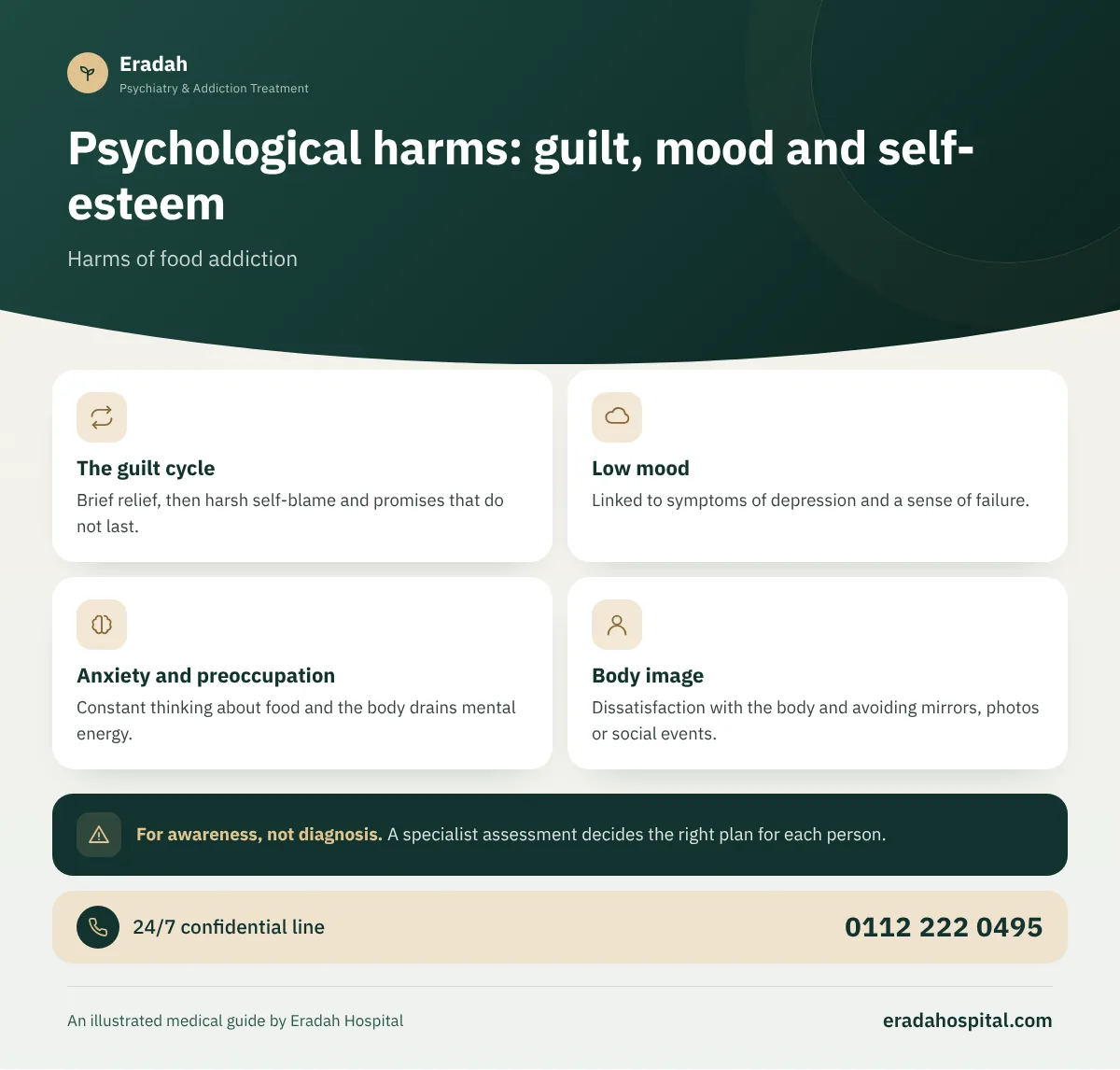
The psychological harms may be the heaviest. The relationship runs in both directions: distress drives eating, and eating that spirals out of control deepens the distress:
Brief relief, then harsh self-blame and promises that do not last.
Linked to symptoms of depression and a sense of failure.
Constant thinking about food and the body drains mental energy.
Dissatisfaction with the body and avoiding mirrors, photos or social events.
Research has found that people who meet the "food addiction" criteria on the Yale scale show higher rates of anxiety, depression and other eating problems. But these are mostly correlational studies that do not establish which comes first, which is why mood is always assessed as part of the plan.
Long-term effects on the body
Physical effects differ from person to person and cannot be judged by body shape alone. But a continuing pattern of overeating ultra-processed foods is linked over the long term to a higher risk of chronic health problems, including:
- Blood sugar disorders, including a higher risk of type 2 diabetes.
- High blood pressure and abnormal blood fats, with the heart risk that follows.
- Digestive problems such as heartburn, reflux and bloating, especially with fast or late eating.
- Tooth decay from frequent sweets and sugary drinks.
- Joint pain, reduced movement and general fatigue.
Sleep, energy and concentration
Heavy eating late in the evening can cause heartburn and discomfort that disrupt sleep, and poor sleep in turn increases cravings the next day, completing a loop that is hard to break. With blood sugar swinging after fast foods, many people feel sluggish and unable to concentrate after eating, which affects study and work.
Effects on study and work
Others may not notice the problem, but the person living with it pays for it every day: repeated mental preoccupation with food breaks concentration, heavy meals bring sluggishness, and late-night eating and staying up bring exhaustion. Some employees or students avoid group lunches or trips for fear of losing control in front of colleagues, and so miss chances for connection and support. As guilt builds, the sense of competence falls, making it harder to start or stick with long tasks.
Stigma and comments about the body: double the harm
In our societies, people's bodies attract plenty of comment in the family, at work and on social media, sometimes in the name of "advice" or "joking". These comments do not help anyone change; they increase shame, secret eating and isolation, and may push people toward risky behaviors such as severe restriction.
Fear of judgment can also delay seeking medical or psychological help. That is why part of treatment is building a kinder relationship with the body, and part of the family's role is to stop hurtful comments completely.
Relationships and social life
A person may avoid gatherings and special occasions for fear of losing control in front of others or of their comments, or withdraw after eating episodes out of shame. Over time social life shrinks, and family arguments about food and eating at home may arise, adding to tension and loneliness, which are among the strongest triggers.
Impact on children and teenagers
In children and teenagers the pattern can affect physical health and growth, self-esteem and relationships with peers, especially with bullying about appearance. Habits formed at this stage also tend to last. Here the child needs calm family support and a medical assessment, not a strict diet or blame.
Financial cost and time
Many people overlook the accumulated cost of repeated orders from delivery apps, fast food and snacks, especially late at night. Preoccupation with food also uses up time and mental energy that could have gone into other activities.
Can it develop into an eating disorder?
For some people the pattern can overlap with one of the formal eating disorders, especially with frequent, intense binge-eating episodes or compensatory behaviors such as deliberate vomiting or prolonged fasting. These disorders have serious physical and psychological complications and need specialist treatment, so these signs should not be ignored or handled with diets alone.
If eating problems come with deep despair or thoughts of self-harm, this deserves help right now: talk to someone you trust, and call the mental health support line 16328 or ambulance (123).
Can the harms of food addiction be avoided?
Yes, and most of them can improve. Sleep and energy improve with regular meals and avoiding late eating; mood and self-esteem improve as the guilt cycle is broken and any depression or anxiety is treated; and physical markers improve with medical follow-up and a more balanced lifestyle. The key is early intervention without blame, and you will find the practical steps on the food addiction treatment page.
Severe despair or worrying physical signs? Get help now
- Talk about wanting to die or intense hatred of oneself or one’s body
- Fainting, severe dizziness, palpitations or an irregular heartbeat
- Repeated deliberate vomiting after eating, or refusing food completely for days
- Collapse and overwhelming shame after repeated eating episodes, with withdrawal from everyone
- Increased use of alcohol, sedatives or medications without a prescription
Stay with the person and listen without commenting on eating or the body; blame now increases the risk. Call the ambulance on 123 or take them to the nearest emergency room for fainting or heart rhythm problems, or call the mental health support line 16328 (24 hours) if there are thoughts of self-harm, and do not leave them alone.
Ambulance 123 Mental health support line 16328