What are the main signs of food addiction?
Food addiction does not show up in a blood test or on a scale, but in a pattern in the relationship with food that repeats and widens over time. The person living with it notices many of the signs before anyone else, while the family may see only a small part.
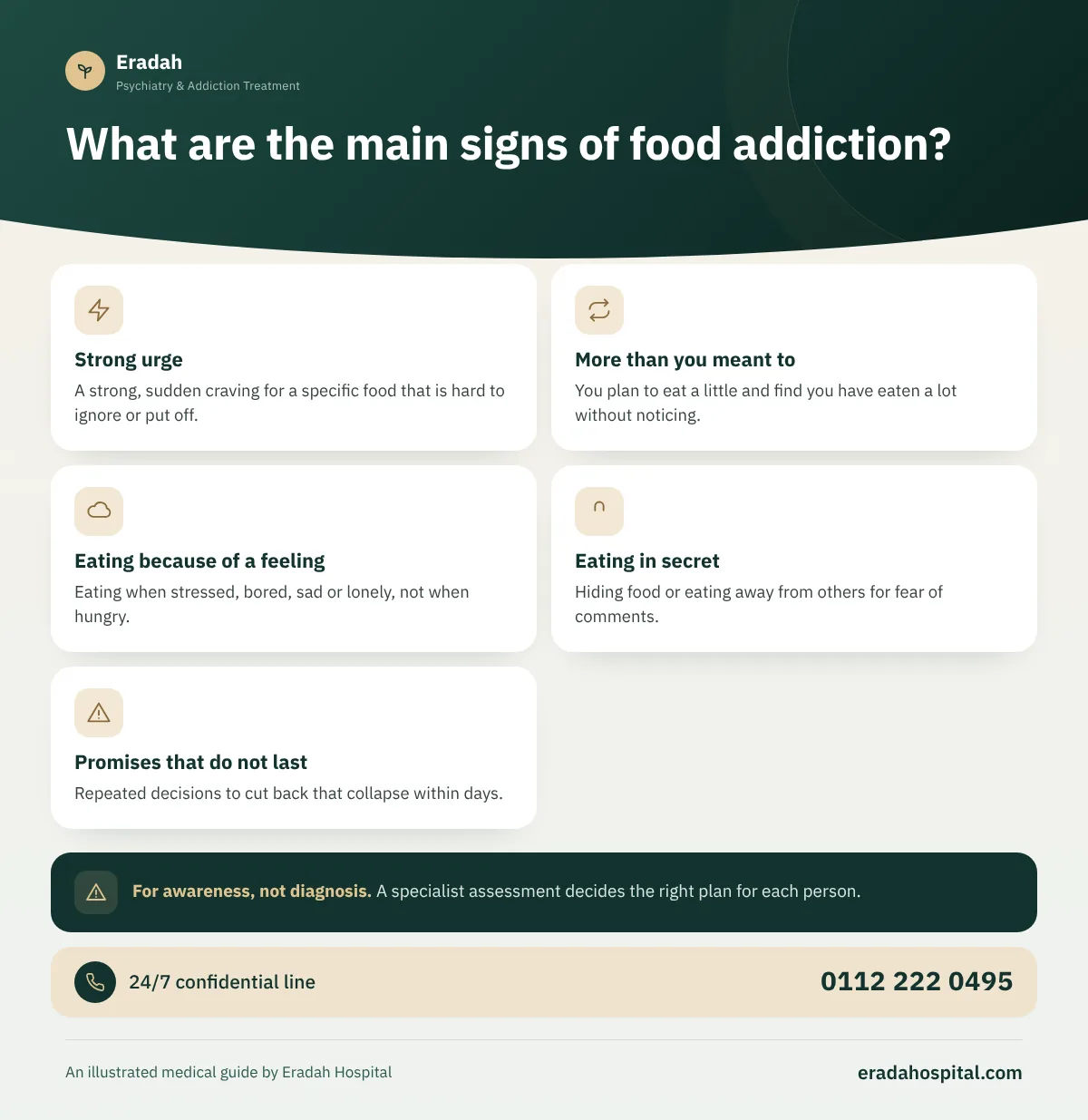
A strong, sudden craving for a specific food that is hard to ignore or put off.
You plan to eat a little and find you have eaten a lot without noticing.
Eating when stressed, bored, sad or lonely, not when hungry.
Hiding food or eating away from others for fear of comments.
Repeated decisions to cut back that collapse within days.
Behavioral signs of food addiction
- Eating fast and without attention, often in front of a screen, without tasting the food.
- Continuing to eat despite feeling full or uncomfortable.
- Seeking a particular food at night, or repeatedly ordering from delivery apps late at night.
- Stockpiling or hiding certain foods, or throwing away packaging so nobody sees it.
- Spending a great deal of time and effort thinking about food or getting it.
- Keeping up the same pattern despite knowing it harms your health or mood.
Psychological signs that go with emotional eating
The accompanying feelings are often the clearest sign, because here food serves an emotional function more than a nutritional one:
- Intense guilt or shame after eating, and harsh self-talk such as "I have no willpower".
- Temporary relief while eating, followed by distress or emptiness.
- A constant preoccupation with food or the body that takes up a large share of your thoughts.
- Tension or irritability when the food you want is not available.
- Avoiding social events for fear of eating in front of others or of their comments.
How can you tell real hunger from an emotional craving in the moment?
When you feel the urge to eat, pause for a moment and ask yourself a few simple questions. This "quick check" does not stop you from eating, but it gives the choice back to you:
- When did I last eat? Do I feel real signs of hunger?
- Do I want one specific food, or would any suitable food do?
- What am I feeling right now: stress? boredom? sadness? tiredness?
- Did the urge come suddenly after a situation or a particular thought?
- How will I feel after eating: full and satisfied, or guilty?
Signs in children and teenagers
In children and teenagers the signs may appear indirectly, and they should be noticed without commenting on the body:
- Taking food or sweets secretly and hiding them in the bedroom or school bag.
- Eating a lot after a hard school day, an argument or bullying.
- Distress or intense crying when a certain food is withheld.
- Eating in front of screens for long periods without paying attention.
- Extreme sensitivity to any talk about food or appearance, or avoiding eating in front of others.
Some of these signs may point to psychological pressure or bullying at school; a child eats to calm down, not because they are "greedy". Asking about their day and feelings is more useful than monitoring and blame.
Signs in adults
In adults the pattern is often tied to work pressure, responsibilities and poor sleep: eating late after a long day, a daily food "reward" after being tired, or grazing at the desk while working. Many notice swinging between periods of strict restriction and periods of overeating, with a constant feeling that their relationship with food is "exhausting".
When do the signs mean more than emotional eating?
Some signs call for a prompt specialist assessment, because they may point to one of the formal eating disorders or to another mental health problem:
| The sign | Why do they matter? |
|---|---|
| Repeated episodes of eating a large amount with complete loss of control | May be one of the formal eating disorders, which need their own treatment |
| Deliberate vomiting or long periods without eating after episodes | A health and psychological warning sign that calls for an urgent assessment |
| A painful, constant preoccupation with food and the body | May be linked to an eating disorder, anxiety or obsessive thoughts |
| Persistent sadness and loss of enjoyment along with changes in eating | May be depression that needs treatment |
| Thoughts of self-harm | Urgent situation: 16328 or 123 |
Self-assessment questions about your relationship with food (not a diagnosis)
Answer honestly, just between you and yourself, these questions about the past six months:
- Do you eat a lot when you are tense, sad or bored, even without hunger?
- Do you sometimes eat far more than you intended?
- Have you tried repeatedly to cut back on certain foods and failed?
- Do you eat in secret or hide what you eat?
- Do you feel intense guilt or shame after eating?
- Does food occupy your thoughts for most of the day?
- Has your relationship with food affected your mood, sleep or social life?
How can a family notice the problem and start the conversation?
Families often notice scattered signs: night eating, hidden packaging, mood swings around food, or avoiding group meals. The key advice is to talk about the person and their feelings, not their plate or weight:
Talk calmly and privately, away from the dinner table or the moment of eating.
"I noticed you've been under pressure lately, how are you doing?" instead of "You eat too much."
No comparisons, no nicknames and no "diet tips"; they increase shame and secret eating.
Offer to go with them to a specialist if they are struggling, and model a calm relationship with food yourself.
To understand why this problem arises in the first place, read the page on the causes of food addiction.
Severe despair or worrying physical signs? Get help now
- Talk about wanting to die or intense hatred of oneself or one’s body
- Fainting, severe dizziness, palpitations or an irregular heartbeat
- Repeated deliberate vomiting after eating, or refusing food completely for days
- Collapse and overwhelming shame after repeated eating episodes, with withdrawal from everyone
- Increased use of alcohol, sedatives or medications without a prescription
Stay with the person and listen without commenting on eating or the body; blame now increases the risk. Call the ambulance on 123 or take them to the nearest emergency room for fainting or heart rhythm problems, or call the mental health support line 16328 (24 hours) if there are thoughts of self-harm, and do not leave them alone.
Ambulance 123 Mental health support line 16328