How can you tell if someone has used bango?
Within minutes of smoking bango, signs begin that last several hours, and they are clearer in someone who is not yet used to it.
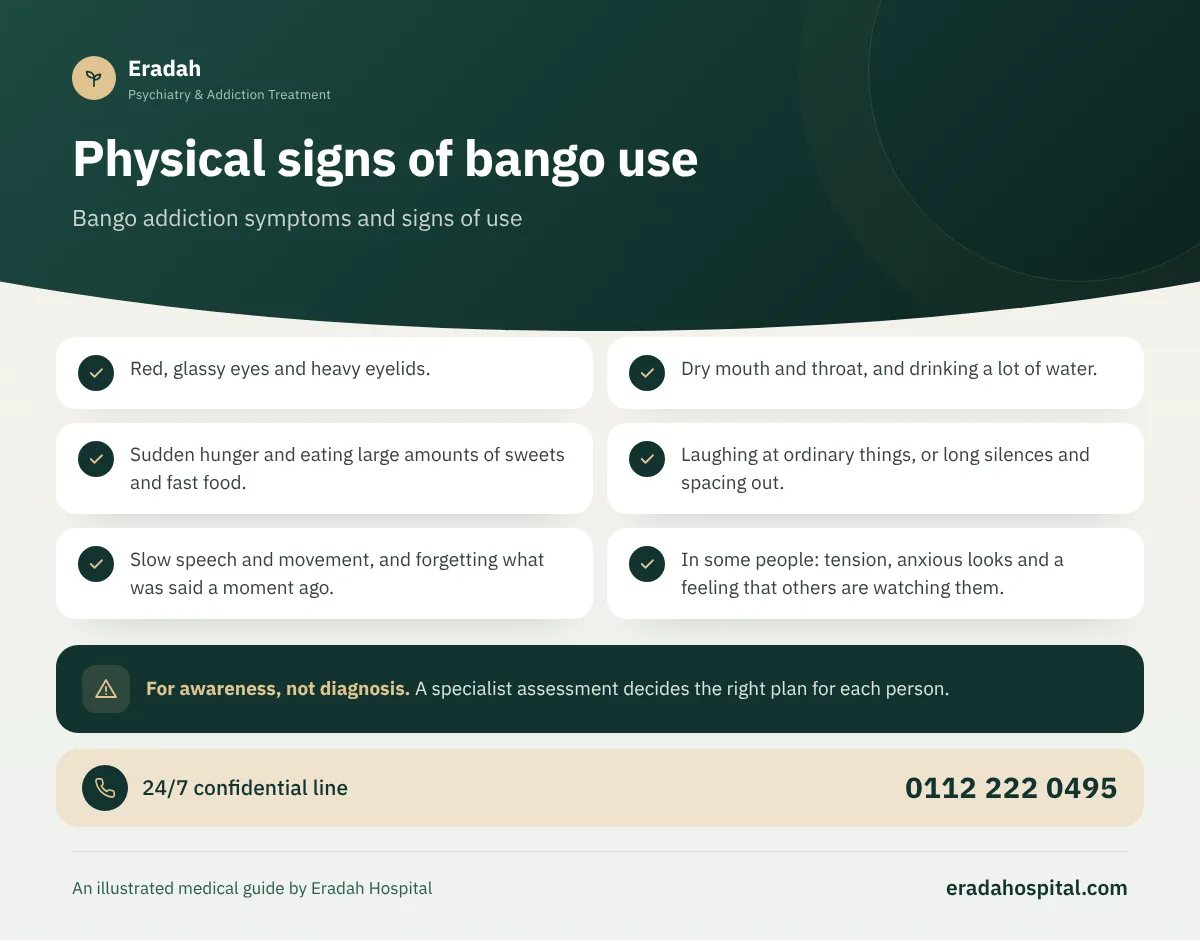
- Red, glassy eyes and heavy eyelids.
- Dry mouth and throat, and drinking a lot of water.
- Sudden hunger and eating large amounts of sweets and fast food.
- Laughing at ordinary things, or long silences and spacing out.
- Slow speech and movement, and forgetting what was said a moment ago.
- In some people: tension, anxious looks and a feeling that others are watching them.
Traces of bango a family may find
Because bango is herbal, it leaves more visible physical traces than many other substances. Finding any of these does not prove addiction, but it calls for a calm conversation:
Crumbs of green or brown herb, and small seeds or thin stems in pockets, drawers or the car.
Thin rolling papers, hand-rolled cigarette butts, herb grinders and small bags.
A pungent smell like burning grass that clings to clothes, curtains and hair.
Excessive use of perfume, incense, eye drops and chewing gum, and opening windows.
Behavioral changes that point to regular use
- A clear change in sleep schedule: staying up until dawn and sleeping until the afternoon.
- A decline in school or work, and forgotten responsibilities.
- A new circle of friends and meetups in unfamiliar places.
- A constant, unexplained need for money.
- Apathy, low enthusiasm and constant boredom with usual activities.
- Marked irritability if they cannot go out or their money is cut off.
When does bango use become addiction?
Doctors call bango addiction “cannabis use disorder,” and it is diagnosed when at least two of 11 signs are present within a year, with severity rising as the number grows. The most important of these signs, in plain language, are:
- Uses more, or for longer, than intended.
- Has tried to cut down or stop and could not.
- Spends a lot of time getting it, using it or recovering from its effects.
- Feels cravings and thinks about it constantly.
- Has neglected study, work or duties because of it.
- Continues despite the problems it has caused in relationships.
- Has given up hobbies and activities they used to enjoy.
- Has used in dangerous situations such as driving.
- Continues despite knowing it harms their mental or physical health.
- Needs more to get the same effect.
- Has unpleasant symptoms when stopping.
This is an awareness summary and does not replace a medical assessment. The symptoms that appear after stopping are covered in detail on the page about hashish and bango withdrawal symptoms.
Physical signs that appear with long-term daily use
- Chronic cough and phlegm, and sometimes shortness of breath on exertion, especially in people who mix it with tobacco.
- Constant fatigue and daytime sluggishness despite sleeping for long hours.
- Weight changes due to disturbed appetite.
- Yellowed fingers or teeth from the smoke, and a constant smell in clothes.
- In some chronic users: repeated bouts of vomiting relieved by hot showers, a condition that needs a doctor.
Why does a person who uses bango deny having a problem?
Denial is a common part of addiction, and it is stronger with bango in particular because of its image as a “mild” and “natural” substance. The person compares themselves with people who use heroin or Strox and convinces themselves they are fine. Understanding this helps the family avoid arguing over “is he addicted or not,” and focus instead on the concrete changes in his life and health.
How do you tell bango use from Strox use?
The appearance may be similar, but the effect is very different. This distinction matters because Strox may need urgent medical intervention:
| The sign | Bango | Strox |
|---|---|---|
| Speed and intensity of effect | Gradual and usually moderate | Sudden and violent |
| Consciousness | Aware, but slow and spaced out | May go rigid, lose consciousness, or seem completely “detached” |
| Movement | Slowness and relaxation | Seizures, abnormal movements or agitation |
| Behavior | Laughter, calm or anxiety | Aggression or strange, dangerous behavior |
| Vomiting | Uncommon with occasional use | Common |
Worrying psychological signs
Parents may notice sharp mood swings between calm during the effect and irritability afterward, or a growing tendency to withdraw. More concerning is unfounded suspicion toward the family, talk of people watching them, or hearing voices. These are signs of psychosis that need urgent psychiatric assessment, and the chance of them rises with strong strains and daily use.
Signs in school and university students
At school age, the signs often show up first in performance: frequent absences, sleeping in class or lectures, a sudden drop in grades, neglected homework, and complaints from teachers. A student may turn to bango on the pretext of easing exam stress, and it ends up becoming an obstacle to them.
How should a family respond when they suspect use?
- Gather your observations calmly, and do not base your judgment on a single sign.
- Talk to him when he is sober and calm, and start with concern, not interrogation.
- Explain your worry about sprayed herbs and about the effect on his health and studies.
- Set clear boundaries, agreed upon, inside the home.
- Offer a confidential consultation with a specialist, and request one yourselves as a family if he refuses.
- Watch for urgent danger signs and call emergency services if they appear.
When does a person who uses bango need emergency care? Call ambulance (123) immediately
- Severe panic, hallucinations, or suspicion and aggression that do not settle
- Chest pain, a strong pounding heartbeat or fainting
- Continuous vomiting with signs of dehydration such as intense thirst and passing little urine
- Seizures, rigidity or sudden loss of consciousness, signs that the herbs may be sprayed with a synthetic substance such as Strox
- A child who swallowed or was exposed to a cannabis product and seems very drowsy, unsteady or is having trouble breathing
Call ambulance (123) and stay with the person. If they are vomiting or unconscious, place them on their side (recovery position) so they do not choke, and keep what is left of the substance or its packaging to show the medical team. Do not use any home remedies.
Call the ambulance 123