Do hashish and bango really have withdrawal symptoms?
Yes. Cannabis withdrawal is a recognized diagnosis in the DSM-5, and it appears in many people who use hashish or bango daily or almost daily over a long period. Hashish and bango contain the same substance, THC, so the withdrawal symptoms from both are the same.
The cause of withdrawal is that the brain adapted to the presence of THC and reduced the number and sensitivity of cannabinoid receptors. With abrupt stopping, this system needs weeks to regain its balance, and during this period disturbances in mood, sleep, and appetite appear. The receptors begin to recover within days to weeks of abstinence.
What are the symptoms of hashish and bango withdrawal?
Marked quickness to react and sharp responses to small things.
General tension and unease, and sometimes tightness in the chest.
Difficulty sleeping and frequent waking, and vivid, strange, disturbing dreams.
Eating less and sometimes weight loss during the first days.
Low mood and apathy, and a strong craving to use.
Headache, sweating, mild tremor, abdominal pain, and chills or a slight rise in temperature.
How long do hashish withdrawal symptoms last? The timeline
- Days 1-3The start
Irritability, anxiety, difficulty sleeping, and craving appear, and appetite gradually decreases.
- Days 2 – 6The peak
The most intense stage of withdrawal: marked insomnia, disturbing dreams, quickness to react, and sometimes headache, sweating, and abdominal pain.
- Week 2Gradual improvement
Most symptoms settle and eating gradually returns, with some irritability and craving remaining.
- After two weeksLate stage
Most symptoms go away, but insomnia and disturbing dreams may continue for several weeks in some chronic users.
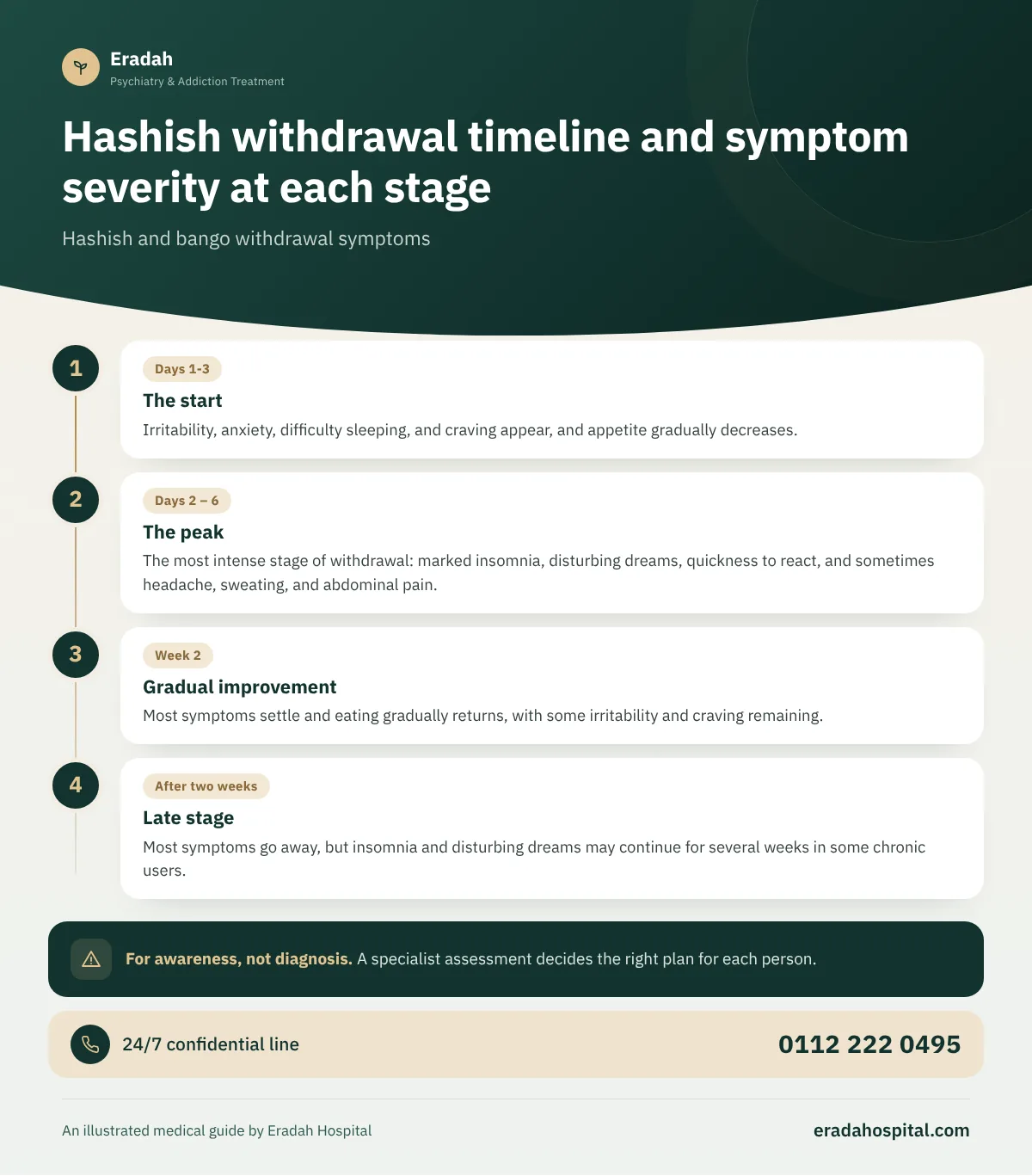
Durations are approximate and vary from person to person depending on the duration and frequency of use, the potency of the substance, and the psychological state.
Why does the severity of withdrawal differ from person to person?
- Duration and frequency of use: daily use over years causes more severe withdrawal than occasional use.
- Potency of the substance: types higher in THC are linked to clearer symptoms.
- Psychological state: previous anxiety and depression make the first days harder.
- Other substances: tobacco mixed with hashish adds nicotine withdrawal symptoms, and alcohol and sedatives add other risks.
- Environment and support: a supportive family and an organized daily routine ease the symptoms and shorten their duration.
Is hashish withdrawal dangerous?
Hashish and bango withdrawal on its own is not usually life-threatening, and doesn't cause convulsions the way alcohol or sedative withdrawal can. But taking it lightly is a mistake; the severity of the psychological symptoms and insomnia pushes many people back to use within days, or to replacing hashish with another substance such as alcohol or sedative pills.
| The situation | Level of risk | What is needed |
|---|---|---|
| Withdrawal from hashish or bango alone in a psychologically healthy person | Low physically, high in risk of relapse | Outpatient follow-up and psychological support |
| Depression, severe anxiety, or thoughts of self-harm | High | Urgent psychiatric assessment, and inpatient care may be needed |
| Use together with alcohol, sedatives, or tramadol | High | Medical supervision, because withdrawal from these substances can be dangerous |
| A history of psychosis or hallucinations | High | Close follow-up by a psychiatrist |
Why do insomnia and dreams continue after withdrawal ends?
THC suppresses the dreaming stage of sleep, and when use stops this stage returns strongly for a while, so vivid, disturbing dreams and sometimes nightmares appear. The natural sleep system also needs time to work without relying on the substance. That is why sleep disturbance may continue for several weeks in some chronic users, and improves gradually with healthy sleep habits and medical support if needed.
Does hashish withdrawal need medical supervision?
Most cases can be handled with outpatient follow-up, but medical supervision makes a clear difference to success rates. The doctor assesses the psychological state, detects any accompanying disorder such as depression or anxiety, and may prescribe temporary treatment for bothersome symptoms such as insomnia depending on the case. There is no medication approved specifically for cannabis withdrawal, and no sleeping pill or sedative may be used without a prescription; some carry a risk of a new addiction.
- Initial assessment: to learn the duration of use, other substances, and the psychological state.
- Symptom treatment: organizing sleep and handling anxiety at the doctor's discretion.
- Early psychological support: sessions that help get past the craving and understand triggers.
- Referral to full treatment: because withdrawal is the start of addiction treatment and is not enough on its own.
How does the family help during withdrawal?
- Expect irritability and don't take it personally; it is a temporary symptom.
- Provide a calm environment and a fixed sleep routine, and cut back on stimulants in the evening.
- Encourage light, frequent eating, fluids, walking, and exercise.
- Keep your son away from friends and places linked to use as far as possible.
- Praise every day that passes without use, and avoid reminding him of old mistakes.
- Watch his mood seriously, and ask for help immediately at any talk of self-harm.
How do you deal with the urge to go back?
Craving is a wave that rises and then falls, and it usually lasts minutes, not hours, if the person doesn't act on it. What helps get past it is changing location immediately, calling a supportive person, doing a short physical activity, and reminding oneself of the reasons for stopping, written in advance. With every wave that is passed, the next one weakens.
Practical tips to ease withdrawal symptoms
- Daily physical activity improves mood and sleep and eases tension.
- Sleeping and waking at fixed times, and avoiding long daytime naps.
- Reducing caffeine and stimulant drinks, especially after mid-afternoon.
- Breathing and relaxation exercises when craving or anxiety intensifies.
- Writing down the triggers that provoke craving and discussing them with the therapist.
Hashish withdrawal in teenagers
Withdrawal symptoms in a teenager may show up as severe irritability, quarrels with parents, and a temporary decline in concentration and sleep, and parents think of it as “bad manners” or stubbornness. Understanding the nature of these symptoms helps the family be patient with them, while setting calm, clear limits and using a therapist who works with the family and the son together.
What comes after withdrawal ends?
The end of the physical symptoms doesn't mean the end of the addiction; craving, triggers, and habits linked to use remain, and behavioral psychological therapy and relapse prevention programs deal with them. The details are on the page about hashish and bango addiction treatment.
When does a person who uses hashish need emergency care? Call ambulance (123) immediately
- A severe panic attack that does not settle, or psychosis: hallucinations, intense suspicion, incoherent speech or aggression
- Chest pain, severe palpitations or fainting
- Repeated vomiting that does not stop, with signs of dehydration: intense thirst, passing little urine and dizziness on standing
- Seizures, loss of consciousness or sudden agitation, especially if the substance is suspected of being mixed with a synthetic drug such as Strox
- A child swallowing any product containing cannabis: extreme drowsiness, unsteadiness or difficulty breathing
Call ambulance (123) and do not leave the person alone. If they are vomiting or have lost consciousness, place them on their side (recovery position) so they do not choke, and tell the paramedics honestly what was taken so they can choose the right treatment. Do not use any home remedies.
Call the ambulance 123