Coffee dependence or caffeine addiction?
“I'm not addicted, I just can't work without it.” That sentence may be perfectly true. Caffeine dependence means the body has become used to caffeine and needs it to function normally, while addiction means losing control and continuing despite clear harm.
The DSM-5 diagnostic manual formally recognizes caffeine withdrawal, while proposing criteria for “caffeine use disorder” that need further research, as a review published in 2014 explains. The review notes that many people find it hard to accept that such a common substance could cause disordered behavior, but the evidence indicates that some people are genuinely psychologically and physically dependent on it.
Signs of caffeine dependence
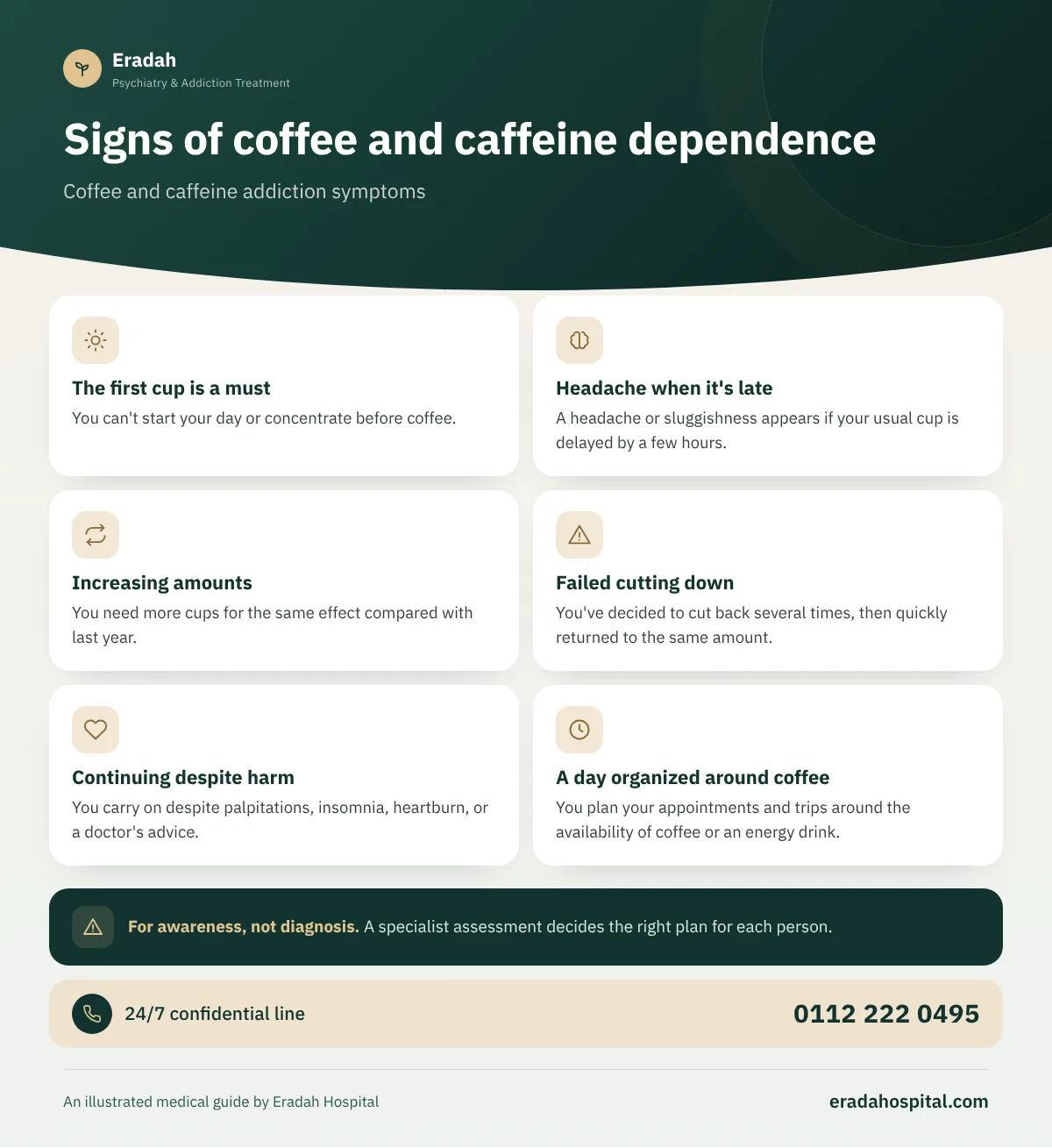
You can't start your day or concentrate before coffee.
A headache or sluggishness appears if your usual cup is delayed by a few hours.
You need more cups for the same effect compared with last year.
You've decided to cut back several times, then quickly returned to the same amount.
You carry on despite palpitations, insomnia, heartburn, or a doctor's advice.
You plan your appointments and trips around the availability of coffee or an energy drink.
Symptoms of caffeine overuse
These symptoms differ from the signs of dependence; they appear when the amount exceeds what your body can tolerate, and MedlinePlus lists them:
- Palpitations and a racing heartbeat.
- Anxiety, nervousness, and restlessness.
- Difficulty sleeping or broken sleep.
- Shaky hands.
- Nausea, which may go as far as vomiting.
- Frequent urination.
What do studies say about people who seek help?
In a study published in 2012 of 94 people seeking treatment for problematic caffeine use, they consumed an average of about 548 mg a day, and coffee was their main source in 50% and soft drinks in 37%. Of them, 88% reported earlier serious attempts to change, and 43% had been advised by a doctor or specialist to cut down or stop caffeine.
| Criterion | Percentage |
|---|---|
| Withdrawal on stopping | 96% |
| Persistent desire or failed attempts to control use | 89% |
| Continuing despite knowing of physical or psychological problems caused by caffeine | 87% |
The most common motive for change was health, for 59% of them, while 35% said they did not want to be dependent on a substance. These figures come from a group seeking treatment, not from coffee drinkers in general.
Quick questions to assess your relationship with caffeine
- Do you get a headache or feel sluggish if you miss your usual cup?
- Have you tried to cut down more than once without success?
- Do you carry on despite insomnia, palpitations, or heartburn that you know caffeine makes worse?
- Has a doctor advised you to cut down and you couldn't?
- Do you gradually increase the amount over time?
Two or more “yes” answers do not mean a diagnosis, but they suggest that caffeine controls you more than you control it, and that a structured reduction plan is worth trying.
Symptoms that may be wrongly blamed on caffeine
| Symptom | Other possible explanations |
|---|---|
| Palpitations | A heart rhythm disorder, an overactive thyroid, or anxiety attacks. |
| Chronic insomnia | Insomnia disorder, depression, anxiety, or irregular sleep habits. |
| Daily headache | Migraine, tension headache, or overuse of painkillers. |
| Tremor | Anxiety, other medications, or neurological causes that a doctor will assess. |
When do you need a doctor?
- Frequent or irregular palpitations even with small amounts.
- Insomnia or anxiety that persists despite cutting down on caffeine.
- A daily headache that does not improve when you regulate your caffeine.
- Pregnancy, heart disease, or high blood pressure along with difficulty cutting down.
- Using caffeine tablets or powders, or energy drinks, in large amounts.
The next step: structured reduction
Changing this habit is possible without great discomfort. In a randomized trial published in 2019, a written guide to gradual reduction over six weeks, with no counseling sessions, succeeded in lowering caffeine consumption and the distress linked to it, and the improvement lasted after 20 weeks. You will find a practical plan for cutting down on caffeine without headaches in caffeine withdrawal symptoms.
Danger signs after too much caffeine: call the ambulance (123) immediately
- Chest pain, or a very fast or irregular heartbeat
- Seizures or loss of consciousness
- Repeated vomiting with agitation, confusion or severe tremor
- Difficulty breathing or fainting
- Taking a large amount of concentrated caffeine tablets or powder, especially in a child or teenager
Call the ambulance on 123 immediately. If the person is unconscious but breathing, place them on their side so they don’t choke on vomit, stay with them and don’t leave them alone, don’t give them any stimulant drink or home remedy, and keep the product container or the tablets to show the paramedics.
Call the ambulance 123