Why do caffeine withdrawal symptoms happen?
“First day of vacation, a terrible headache, and I don't get why.” Many people go through this without linking it to the coffee they didn't drink at the usual time. A brain that has grown used to having adenosine blocked every day adapts to the presence of caffeine, and when caffeine suddenly disappears, adenosine goes back to working unimpeded, so fatigue and headache appear more intensely than usual.
A 2004 review by Juliano and Griffiths explains that avoiding these symptoms is a main reason people keep consuming caffeine every day; in other words, part of our “love” for the morning cup is really an escape from the headache of its absence. The DSM-5 diagnostic manual formally recognizes caffeine withdrawal as a diagnosis.
What are the symptoms of caffeine withdrawal?
The same review analyzed 57 experimental studies and 9 surveys, and established ten symptoms as confirmed withdrawal symptoms, and three others as probable:
The best-known symptom, which occurred in about 50% in the experimental studies.
Exhaustion, low energy and vitality, and reduced alertness.
Depressed mood and reduced contentment, irritability, and a short temper.
Difficulty concentrating and a feeling that your mind is foggy or “not clear.”
Flu-like symptoms, and sometimes nausea or vomiting.
Pain or stiffness in the muscles in some people.
In the experimental studies, about 13% of participants had symptoms severe enough to cause marked distress or interfere with daily functioning, and the severity and likelihood of symptoms rose with the usual daily amount.
Caffeine withdrawal timeline
- 12 – 24 hoursThe start
Headache and sluggishness usually begin the day after the last cup.
- 20 – 51 hoursThe peak
The worst headache, drowsiness, and low mood, often on the second day.
- After the peakEasing
Symptoms ease gradually and energy returns day by day.
- Up to 9 daysThe end
Symptoms usually end within two to nine days.
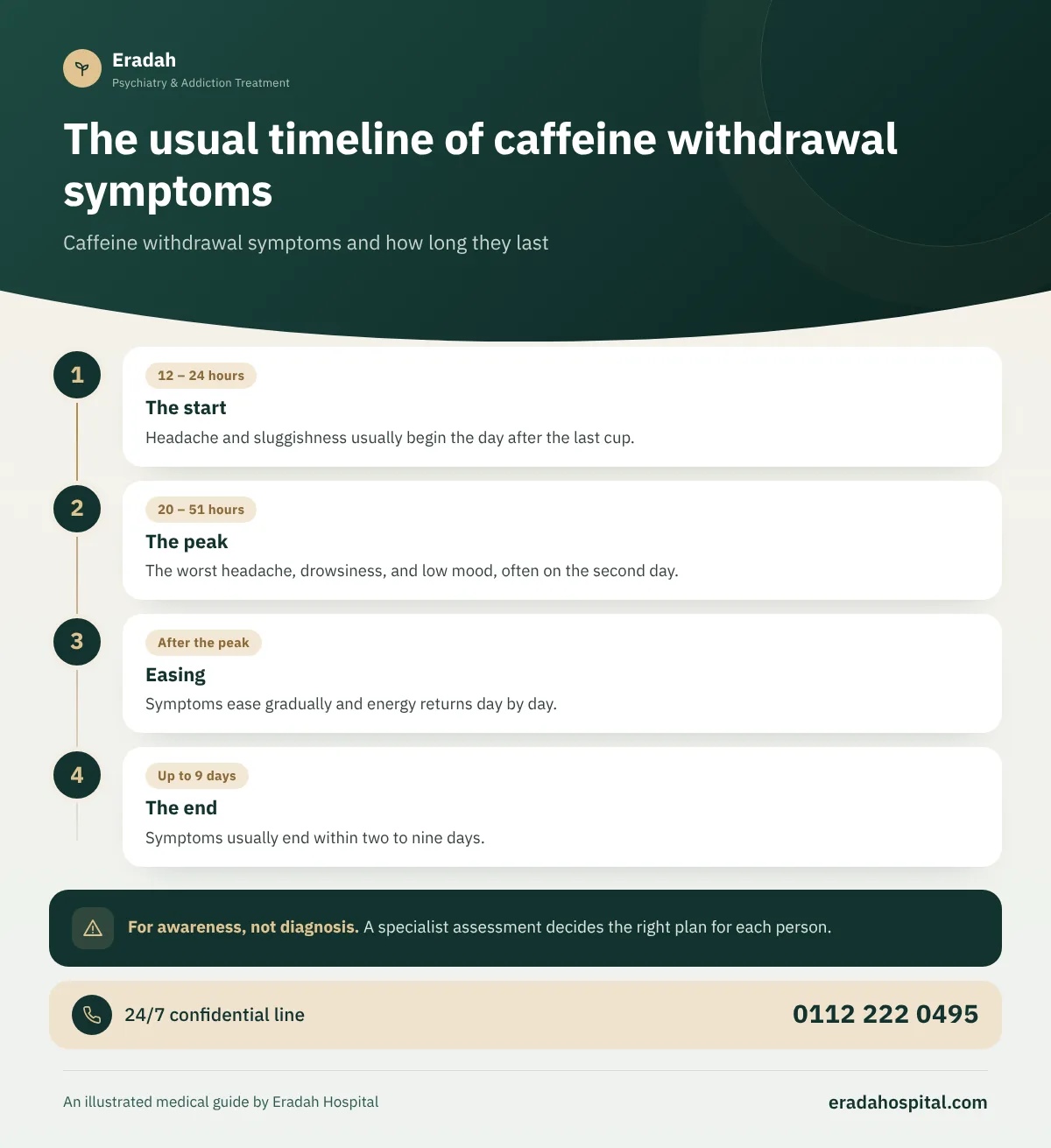
The figures come from the 2004 review by Juliano and Griffiths, and they vary from person to person according to the usual amount and the length of use.
The headache from quitting coffee: why it happens and when it appears
A withdrawal headache is usually spread across the whole head, begins gradually a day after stopping, and eases if the person goes back to caffeine, which leads many people to think coffee “treats” headaches, when in fact it is preventing a headache caused by its own absence. This headache often appears when someone stops suddenly without planning: fasting, fasting before surgery, or days off when you wake up later and have your first cup later.
Is caffeine withdrawal dangerous?
The US Food and Drug Administration says caffeine withdrawal is not considered dangerous, but it can be unpleasant. The important exception is that some headaches are not withdrawal: a sudden, very severe headache, or one accompanied by fever, a stiff neck, or weakness on one side of the body, needs emergency care right away, whatever your relationship with coffee.
How do you cut down on caffeine without a headache?
The FDA and MedlinePlus advise gradual reduction rather than stopping suddenly. In a randomized trial published in 2019, a written guide to gradual reduction over six weeks succeeded in lowering consumption and the distress linked to it, and the results lasted after 20 weeks. Here is a practical plan inspired by this principle:
- Know your real amount: record all your caffeine sources for three days, including tea, cola, energy drinks, and medications.
- Set a goal and a timeframe: several weeks to reach the amount you want, not a single day.
- Cut back one small step every few days: one cup fewer, or a smaller cup, then wait until your body settles.
- Substitute rather than delete: mix regular coffee with decaf, or switch from coffee to tea.
- Move your last cup earlier: better sleep lowers your need for caffeine in the morning.
- Help your body: enough sleep, water, and light movement when the sluggishness comes.
| Aspect | Stopping suddenly | Gradual reduction |
|---|---|---|
| Headache | Common and peaks on the second day | Much milder or absent |
| Effect on work | May disrupt two or three days | Less effect on performance |
| Likelihood of going back | High, to escape the headache | Lower, because the change is tolerable |
| Duration | A few days | Several weeks |
Should I take a painkiller for a withdrawal headache?
Be aware that some painkillers and cold remedies sold without a prescription contain caffeine themselves, as MedlinePlus notes, so they may delay withdrawal rather than treat it. Ask the pharmacist about the medicine's ingredients, follow its leaflet, and don't make a painkiller a daily habit. Anyone taking long-term medication should ask their doctor first.
Who needs special care when stopping?
- Pregnant women: cutting down on caffeine is a healthy step, but it is best done gradually, and any severe headache should be discussed with the doctor.
- People with migraine: a withdrawal headache can blend with their attacks, so they need a plan with their doctor.
- People in recovery from addiction: sluggishness and low mood can be a trigger, so slow reduction within a sleep and activity plan is preferable.
- People in precision work, or drivers: plan the first days away from tasks that need high concentration.
After withdrawal ends: what to expect
After a few days, energy levels return to normal, and many people notice that their sleep has become deeper and their mornings no longer hang on a cup. If tiredness or low mood lasts for weeks, the cause may be insufficient sleep, depression, or another health problem that caffeine was masking, and it deserves assessment. You can learn more about your relationship with coffee in coffee addiction symptoms.
Warning signs: when is a headache more than caffeine withdrawal? Call an ambulance (123)
- A sudden, very severe headache, like “the worst headache of your life”
- A headache with fever and a stiff neck or a skin rash
- A headache with weakness or numbness on one side of the body, or difficulty speaking or seeing
- Confusion, severe drowsiness, or seizures
- Chest pain or shortness of breath
These signs are not consistent with ordinary caffeine withdrawal and may point to an emergency. Call an ambulance on 123 immediately and stay with the person; if they lose consciousness but are breathing, place them on their side, and tell the paramedics about every medication they have taken.
Call the ambulance 123