Short-term harms of excess caffeine
A day may begin with one cup, then a cup at work, then an energy drink in the afternoon, and the body starts sending its signals one after another. The MedlinePlus medical encyclopedia states that too much caffeine can cause:
- A fast heartbeat.
- Anxiety and nervousness.
- Trouble sleeping.
- Nausea and vomiting.
- Restlessness and being unable to sit still.
- Shaky hands.
- Frequent urination.
How does caffeine harm sleep?
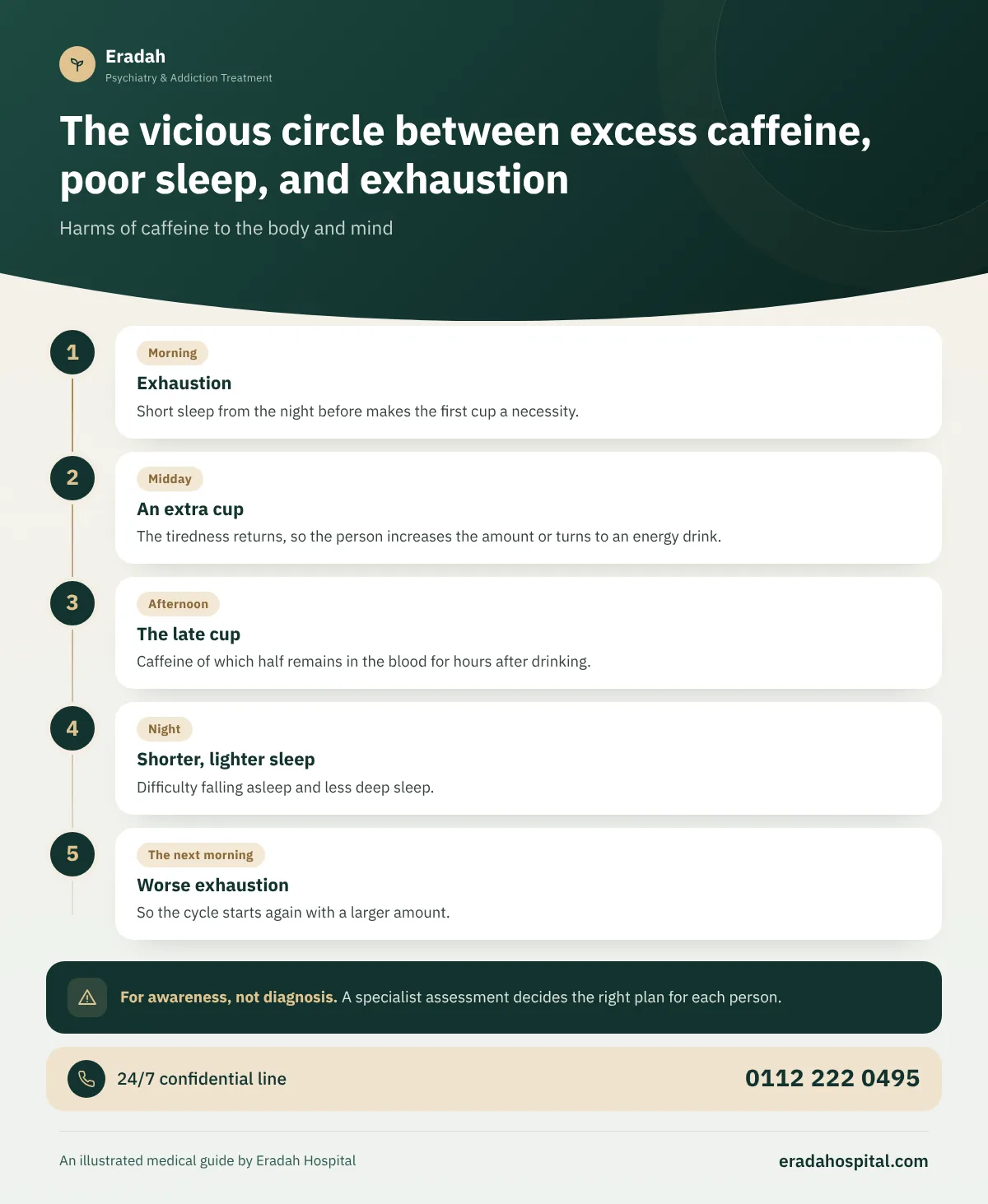
Sleep pays the biggest price for caffeine. In a pooled analysis of 24 studies published in 2023 in the journal Sleep Medicine Reviews, caffeine reduced total sleep time by 45 minutes and sleep efficiency by 7%, lengthened the time to fall asleep by 9 minutes, and shortened deep sleep. The researchers concluded that a standard cup of coffee should be drunk at least about 8.8 hours before bedtime to avoid a loss of sleep time.
- MorningExhaustion
Short sleep from the night before makes the first cup a necessity.
- MiddayAn extra cup
The tiredness returns, so the person increases the amount or turns to an energy drink.
- AfternoonThe late cup
Caffeine of which half remains in the blood for hours after drinking.
- NightShorter, lighter sleep
Difficulty falling asleep and less deep sleep.
- The next morningWorse exhaustion
So the cycle starts again with a larger amount.
If insomnia continues even after caffeine is controlled, it may have other causes that need assessment, as we explain in insomnia.
Harms of caffeine to the body's systems
| System | Possible harms |
|---|---|
| Brain | Anxiety, nervousness, and insomnia, and a headache when the usual cup is delayed in people used to it. |
| Heart | A fast pulse and palpitations, and a dangerous rhythm disturbance in toxicity. |
| Digestive system | Nausea and vomiting with large amounts; people with reflux and ulcers are advised to cut down. |
| Kidneys | Increased urine output and frequent urination. |
| Muscles | Tremor and restlessness, and seizures in severe toxicity. |
MedlinePlus adds that very large amounts may interfere with calcium absorption, which may weaken bones, and that caffeine may be linked to fibrocystic breast pain in some women.
Caffeine, anxiety, and palpitations
Caffeine is a stimulant that raises alertness, which in people prone to anxiety can turn into nervousness and palpitations resembling the symptoms of an anxiety attack. That is why MedlinePlus advises those prone to nervousness or anxiety to cut down. A person may fall into a cycle in which they interpret caffeine-induced palpitations as danger, which increases their anxiety. If sudden attacks of fear with palpitations and shortness of breath recur, look into panic disorder or generalized anxiety, and seek a medical assessment to rule out heart causes.
Harms of energy drinks
According to the US Food and Drug Administration, energy drinks generally contain between 54 and 328 mg of caffeine in a roughly 473 ml (16 oz) container. MedlinePlus states that these drinks often contain large amounts of caffeine and other stimulants that may cause sleep disturbance, nervousness, and stomach upset, and that the American Academy of Pediatrics discourages children and adolescents from having them.
Caffeine toxicity: when does it become life-threatening?
It is rare for someone to reach toxicity from coffee alone, but the danger is real with concentrated powders and tablets. The US Food and Drug Administration estimates that taking about 1,200 mg quickly can cause seizures. In the largest published analysis of caffeine poisoning cases, covering 216 documented cases and published in 2025, seizures and certain types of dangerous rapid heart rhythm were linked to worse outcomes, and dialysis was an effective way to remove caffeine in severe cases.
Caffeine, pregnancy, and breastfeeding
The UK's National Health Service (NHS) and the European Food Safety Authority (EFSA) recommend that pregnant women not exceed 200 mg of caffeine a day from all sources, and the NHS notes that too much has been linked to a higher chance of miscarriage and stillbirth. The same recommendation applies to breastfeeding women, according to EFSA. The official caffeine citrate leaflet also notes that newborns eliminate caffeine very slowly compared with adults.
Caffeine interactions with medications
MedlinePlus notes that many medications interact with caffeine, and a scientific review published in 2018 explains that a single liver enzyme called CYP1A2 handles the conversion of about 95% of caffeine, and that many drugs affect it. So ask your doctor or pharmacist about caffeine when starting any new medication, and never start or stop any medication without a doctor.
Is caffeine always harmful?
No. Moderate amounts raise no safety concerns for most healthy adults, according to EFSA and the FDA, and they increase alertness and reduce drowsiness. The problem lies in three things: large amounts, late timing that steals sleep, and concentrated products. If you feel you cannot control the amount despite these harms, read about the symptoms of coffee addiction.
Danger signs after too much caffeine: call the ambulance (123) immediately
- Chest pain, or a very fast or irregular heartbeat
- Seizures or loss of consciousness
- Repeated vomiting with agitation, confusion or severe tremor
- Difficulty breathing or fainting
- Taking a large amount of concentrated caffeine tablets or powder, especially in a child or teenager
Call the ambulance on 123 immediately. If the person is unconscious but breathing, place them on their side so they don’t choke on vomit, stay with them and don’t leave them alone, don’t give them any stimulant drink or home remedy, and keep the product container or the tablets to show the paramedics.
Call the ambulance 123