What are the physical signs of codeine use?
These signs usually appear within hours of use, and become clearer as the amount increases:
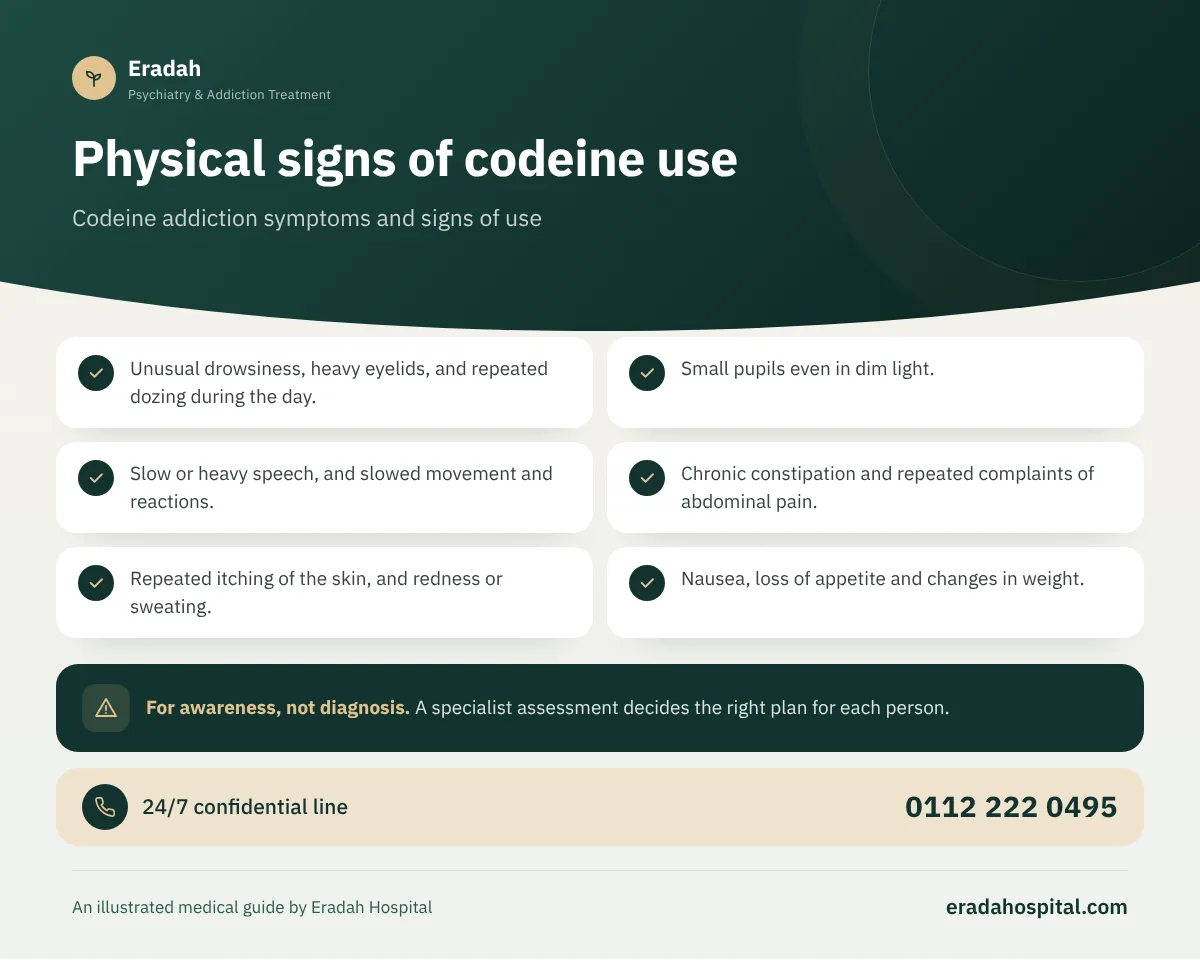
- Unusual drowsiness, heavy eyelids, and repeated dozing during the day.
- Small pupils even in dim light.
- Slow or heavy speech, and slowed movement and reactions.
- Chronic constipation and repeated complaints of abdominal pain.
- Repeated itching of the skin, and redness or sweating.
- Nausea, loss of appetite and changes in weight.
What are the behavioral signs of codeine addiction?
Because codeine is a medicine, its clearest signs are often tied to how it is obtained and handled:
Empty painkiller boxes or cough syrup bottles in the room, bag or car, in quantities that do not fit a real illness.
Getting the medicine from different places or seeing more than one doctor for the same complaint.
A prescription finishing before it is due, and repeated excuses about the medicine being lost or misplaced.
Hiding medicines, getting angry when asked about them, and lying about the amount.
- A decline in school or work performance and frequent absence.
- Giving up hobbies and activities they used to enjoy.
- Money or medicines disappearing from the home.
- A change of friends or spending long periods alone.
What are the psychological signs?
The family may notice a clear swing in mood: calm and cheerfulness after use, then tension, irritability and anxiety when the medicine is late. Over time a general flatness appears, along with less interest and weaker concentration and memory, and symptoms of depression may appear that need a separate assessment.
How can you tell if your child is misusing cough syrup?
Misuse of cough syrups is common among teenagers and young adults, and its signs can be mistaken for tiredness or laziness:
- Repeated cough syrup bottles when they don’t have a cough.
- Severe drowsiness, slow speech and confusion after coming home.
- Talk or social media content glorifying “syrup” or using street names for it.
- Soft drinks or juices in unusual colors in hidden cups or bottles.
- Increasing tooth decay and persistent dry mouth.
How is codeine addiction diagnosed?
Codeine addiction is diagnosed medically as “opioid use disorder” under the DSM-5 criteria, which look at the pattern of use over twelve months. In brief, the criteria include:
| Area | Examples |
|---|---|
| Impaired control | Using a larger amount or for longer than intended, failed attempts to cut down, and craving |
| Social harm | Neglecting work, study or family, and giving up activities |
| Risky use | Continuing despite physical or psychological harm, or in dangerous situations such as driving |
| Pharmacological signs | Tolerance and withdrawal symptoms (not counted if use is as prescribed and under supervision) |
The severity of the disorder is rated by the number of criteria met: mild, moderate or severe. Diagnosis is for the specialist doctor alone and cannot be judged from a list on the internet.
Is everyone who depends on codeine addicted?
Not necessarily. A patient who uses codeine for a period as prescribed may develop normal physical dependence that causes symptoms on sudden stopping, without having an addiction. Addiction is marked by compulsive craving, loss of control and continued use despite harm. In either case sudden stopping is not advised; a gradual reduction under medical supervision is needed. To learn what happens after stopping, see the page on what happens after stopping codeine.
How can you tell codeine from other substances?
| Substance | Distinctive signs |
|---|---|
| Codeine | Drowsiness, small pupils and constipation, with packs of cough medicines or painkillers |
| Tramadol | Similar opioid signs, and sometimes insomnia and irritability, with a risk of seizures with overuse |
| Heroin | Stronger opioid signs, with drug-use equipment and sometimes marks on the skin |
| Pregabalin and sedatives | Unsteadiness, slurred speech and drowsiness, usually without clearly small pupils |
| Stimulants | The opposite picture: excess activity, dilated pupils, insomnia and eating little |
Questions to help you review your relationship with codeine
If you use codeine and wonder whether it has gotten out of control, these questions are not a diagnosis, but they help you see the picture clearly before talking to the doctor:
- Do you use the medicine for longer or in larger amounts than the doctor prescribed?
- Do you take it to calm down, to sleep, or to escape pressures unrelated to pain?
- Have you tried to cut down or stop and been unable to?
- Do you feel intense anxiety when the medicine is close to running out?
- Have you hidden your use from your family or your doctor?
- Do you keep using it even though it causes you health problems, or problems at work or in the family?
If your answer is “yes” to more than one question, the best step is an honest talk with a doctor specialized in addiction treatment. Asking for help early makes treatment shorter and easier, and everything you tell the doctor stays confidential.
Signs that are easy to overlook in older adults
In older adults, the signs of codeine misuse may be put down to aging, so no one notices them. They include: excess daytime drowsiness, repeated falls, forgetfulness and confusion, severe constipation, and insisting on one particular painkiller and no other. Any sudden change in awareness or breathing in an older person taking opioid painkillers deserves urgent medical review, especially if they also take sleeping pills or anxiety medication.
How do you talk to someone you suspect is addicted to codeine?
- Choose a calm time when they are alert, not right after use and not during an argument.
- Start with specific things you have observed, and express your worry without labels or accusations.
- Listen more than you talk; many started with real pain and feel ashamed.
- Offer practical help: an appointment with a specialist doctor or a call to a treatment center.
- Do not threaten a punishment you don’t intend to carry out, and don’t give up if they refuse the first time.
Signs of codeine overdose: call an ambulance (123) immediately
- Extreme drowsiness or loss of consciousness, with no response to calling or touch
- Very slow, shallow or irregular breathing
- Pupils that are extremely small, like pinpoints
- Blue lips and fingernails and cold skin
- Gurgling sounds or unusual snoring during sleep
Call an ambulance at 123 immediately, place the person on their side (recovery position) so they do not choke, and stay with them until help arrives. Naloxone, a drug that reverses the effects of opioids, is available in emergency care. Tell the medical team the name of the medicine and whether it contains paracetamol, because liver damage from it can appear later.
Call the ambulance 123