What makes codeine addictive?
Part of the codeine is converted to morphine, which binds to opioid receptors, releasing dopamine in the reward circuits and giving a feeling of calm, relaxation and relief from worries. The brain quickly learns to link this feeling with the drug and asks for it again.
With repetition two things happen: tolerance, meaning the need for a larger amount to get the same effect, and physical dependence, meaning unpleasant symptoms appear when the drug runs low. At this point many people continue using not to seek relief but to escape withdrawal.
How does codeine addiction begin with a prescription?
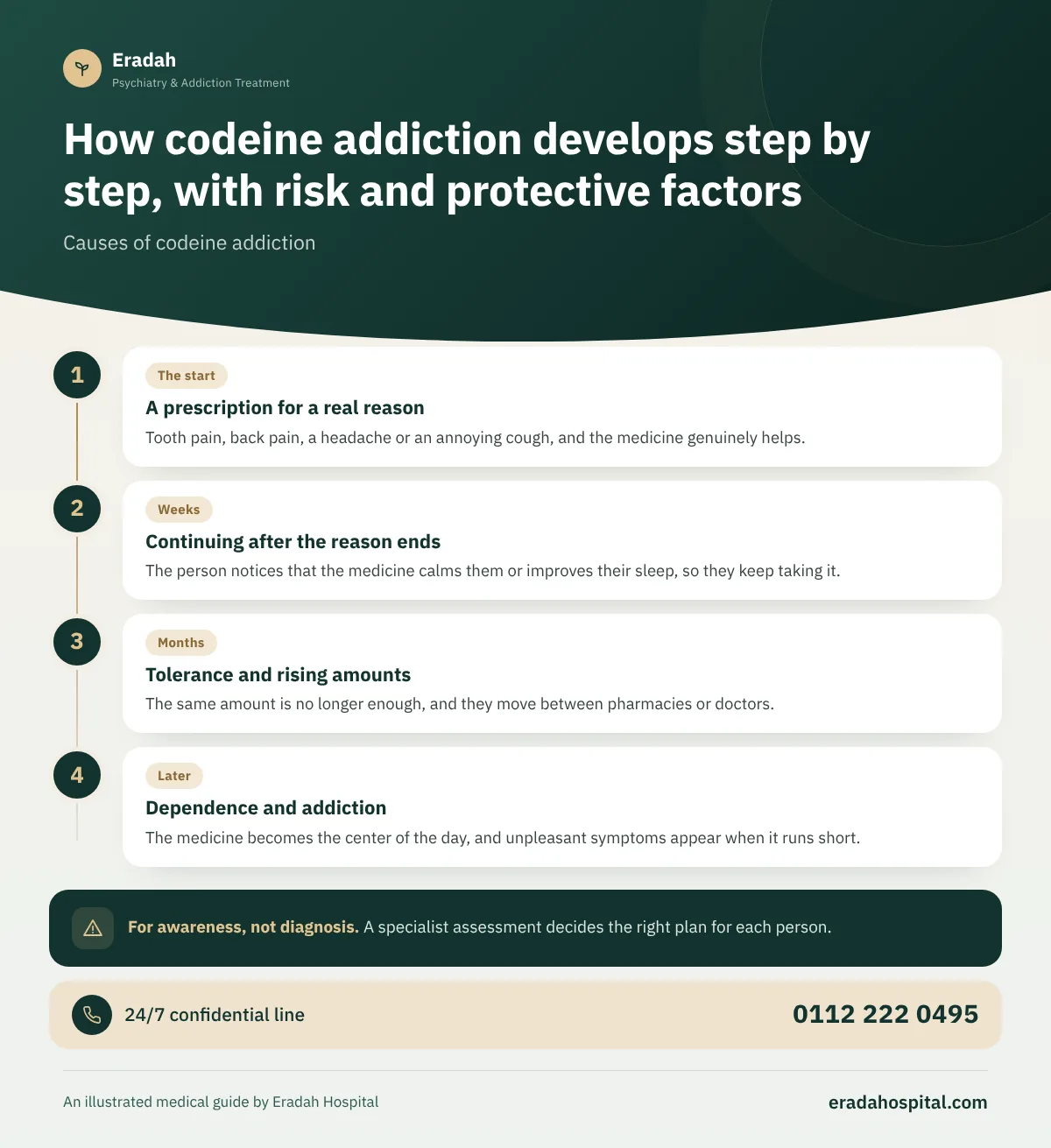
Unlike many drugs, dependence on codeine in many cases begins with legitimate use:
- The startA prescription for a real reason
Tooth pain, back pain, a headache or an annoying cough, and the medicine genuinely helps.
- WeeksContinuing after the reason ends
The person notices that the medicine calms them or improves their sleep, so they keep taking it.
- MonthsTolerance and rising amounts
The same amount is no longer enough, and they move between pharmacies or doctors.
- LaterDependence and addiction
The medicine becomes the center of the day, and unpleasant symptoms appear when it runs short.
Why are chronic pain and headaches linked to codeine addiction?
A person with chronic pain or recurrent headaches lives with daily suffering, and codeine eases it temporarily. But repeated use can cause rebound headaches and increased sensitivity to pain, so it seems to the person that they need the drug more, while the drug itself has become part of the problem.
That is why treatment is not just stopping codeine; the original pain must be treated by alternative means, or the patient returns to it at the first bout of pain.
Why are teenagers and young adults drawn to cough syrups?
- The impression of safety: a syrup from the pharmacy seems less dangerous than “drugs.”
- Peer influence and social media: some songs and trending content glorify cough syrup misuse.
- Seeking calm or escape: from study pressure or family problems.
- Little awareness of the ingredients: many do not know that the syrup contains an opioid and a sedating antihistamine.
Do anxiety and depression play a role in codeine addiction?
Yes, a major one. Many people who come to depend on codeine discovered that it eased tension or helped them sleep, so it became a way of dealing with difficult feelings. Related disorders include generalized anxiety, depression, post-traumatic stress disorder (PTSD) and chronic insomnia.
This situation is called dual diagnosis, and treating it means dealing with the psychiatric disorder and the addiction together, because treating one without the other raises the chance of relapse.
Does genetics play a role?
Research indicates that genetics explains a large share of vulnerability to addiction in general, so people with first-degree relatives with addiction are more likely to develop it. For codeine specifically there is an additional genetic factor: differences in CYP2D6 enzyme activity change how strongly the drug acts. People who convert it quickly feel a stronger effect, while slow converters may increase the amount, seeking relief that does not come.
What are the environmental and social factors?
Having the medicine at home or having it dispensed without scrutiny makes it easier to start and to continue.
Friends or family members who misuse medications make it seem normal.
Childhood trauma, loss and ongoing stress raise the risk.
Starting in adolescence raises the chance of addiction because the brain is still developing.
Risk factors versus protective factors
| Factors that raise risk | Protective factors |
|---|---|
| Chronic pain or recurrent headaches without a comprehensive treatment plan | Regular medical follow-up and a pain management plan |
| Untreated anxiety, depression or insomnia | Early psychological treatment and skills for coping with stress |
| Family history of addiction | Family awareness of the risks and open conversation |
| Previous use of other substances | Supportive, meaningful activities and relationships |
| Medication available at home without oversight | Storing medications safely and disposing of leftovers |
Stages of codeine addiction development
- Medical use: for a real reason and by prescription.
- Misuse: exceeding the duration or amount, or using it to calm down.
- Tolerance and dependence: rising amounts and symptoms when it runs short.
- Addiction: compulsive use despite harm, and loss of control.
The earlier the problem is discovered, the easier the treatment. Learn about the signs of codeine addiction that families may notice.
Who is most at risk of codeine addiction?
There is no single “type” of person who becomes addicted to codeine, but clinical experience and research point to groups at higher risk than others, who deserve special attention from doctors and families:
- People with chronic pain: such as back pain, joint pain and migraine, especially if opioid painkillers continue for months without review.
- People with a history of other substances: such as alcohol, cannabis or sedatives, even if they have stopped.
- Teenagers and university students: because of easy access to cough syrups, peer influence and study pressure.
- Healthcare workers: because of their closeness to medications, easy access and work pressure.
- People with chronic insomnia or anxiety: because they may find that the medicine calms them and helps them sleep.
How can we reduce the risk of codeine addiction?
- Use codeine for the shortest possible time and only by prescription, and ask the doctor about non-opioid alternatives.
- Tell the doctor about any personal or family history of addiction or psychiatric disorders before the medicine is prescribed.
- Do not use the medicine to calm tension or improve sleep; these are symptoms that deserve their own treatment.
- Dispose of leftover medicine after treatment ends rather than keeping it at home.
- If you find yourself thinking about the medicine a lot or eagerly waiting for the next dose, talk to your doctor early.