What are the short-term harms of codeine?
Even with medical use, codeine can cause unpleasant side effects, and they become much more severe with overuse or use for a purpose other than the medical one:
- Drowsiness, slowed thinking and poor concentration, which raise the risk of road and workplace accidents.
- Nausea, vomiting and dizziness, especially in the first days.
- Constipation, the most common of its side effects.
- Itching, sweating and dry mouth.
- Slow breathing, which can progress to stopping with overuse or when mixed with sedatives or alcohol.
Why are combination products more dangerous than they look?
Most people who misuse codeine do not take it on its own, but in tablets or syrups that contain other substances. When a person raises the amount seeking the codeine effect, they raise the amount of the accompanying substances too, and these have harms of their own:
| Accompanying substance | Organ affected | The risk |
|---|---|---|
| Paracetamol | Liver | Liver damage that can be severe or fatal, and its first symptoms may be mild or delayed |
| Ibuprofen or aspirin | Stomach, intestines and kidneys | Ulcers, bleeding and perforation of the stomach, reduced kidney function, and disturbed blood salts |
| Sedating antihistamines in cough syrups | Brain and heart | Severe drowsiness, confusion and irregular heartbeat, and they add to respiratory depression |
| Caffeine in some products | Heart and nerves | Palpitations, insomnia and tension with overuse |
Long-term harms of codeine to the body
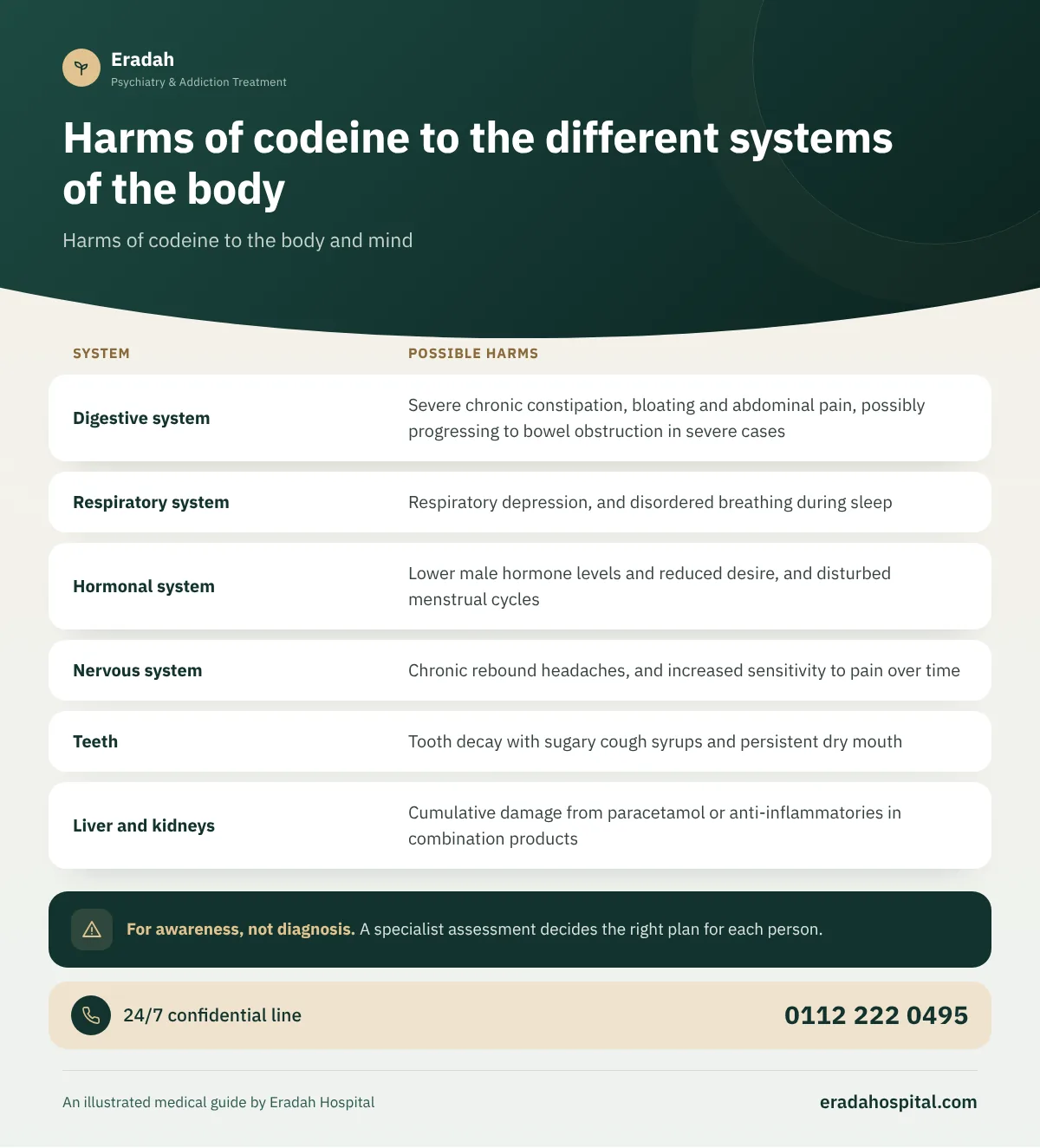
With repeated use over months or years, harms build up in different systems:
| System | Possible harms |
|---|---|
| Digestive system | Severe chronic constipation, bloating and abdominal pain, possibly progressing to bowel obstruction in severe cases |
| Respiratory system | Respiratory depression, and disordered breathing during sleep |
| Hormonal system | Lower male hormone levels and reduced desire, and disturbed menstrual cycles |
| Nervous system | Chronic rebound headaches, and increased sensitivity to pain over time |
| Teeth | Tooth decay with sugary cough syrups and persistent dry mouth |
| Liver and kidneys | Cumulative damage from paracetamol or anti-inflammatories in combination products |
Does codeine cause headaches instead of treating them?
Yes, it can. Repeated use of painkillers, codeine especially, can cause what is known as “medication-overuse headache,” in which the headache returns whenever the drug wears off, so the person takes more, and the headache worsens. This cycle is one of the most common ways a simple painkiller turns into dependence.
Getting out of this cycle is possible, but it needs a doctor to set up a plan to reduce the medicine and treat the original cause of the headache, because stopping suddenly can cause a temporary severe headache and withdrawal symptoms.
Harms of codeine to the brain and mental health
Mood swings, flatness and depression with long-term use, and anxiety that intensifies between doses.
Slowed thinking and weaker memory and concentration, which affect study and work.
Broken, unrefreshing sleep, and disordered breathing during sleep.
Tolerance that drives up the amount, then physical and psychological dependence that is hard to break without help.
If the person already has depression or anxiety, they may use codeine to calm themselves, and the two problems become entangled. This is known as dual diagnosis and needs treatment for both conditions together.
What is the danger of mixing codeine with other substances?
Mixing codeine with other depressant substances multiplies their effect on breathing, and is one of the most common causes of unintentional overdose:
- Alcohol: multiplies drowsiness and respiratory depression, and increases paracetamol’s harm to the liver.
- Benzodiazepines such as Xanax and Rivotril: a dangerous combination for breathing.
- Pregabalin and sleeping pills: add to the sedation and confusion.
- Other opioids such as tramadol: accumulating opioid effect and risk of overdose.
Who is most at risk from the harms of codeine?
- Children and teenagers: especially ultra-rapid converters, which is why its use in them has been restricted. Teenagers are also more likely to misuse cough syrups.
- Pregnant women: regular use during pregnancy may cause a withdrawal syndrome in the newborn. Do not stop suddenly without a doctor; the doctor will set a safe plan for mother and baby.
- Breastfeeding women: the resulting morphine may pass to the infant through breast milk.
- Older adults and people with liver, kidney or lung disease: more sensitive to respiratory depression and to the drug building up.
Common myths about the harms of codeine
| The myth | The truth |
|---|---|
| Codeine is a weak opioid, so it can’t cause harm | Overuse or mixing with sedatives can depress breathing, and combination products add harm to the liver and stomach |
| If it comes from the pharmacy, it’s safe | Safety depends on the prescription, the duration and the follow-up, not on where the medicine is dispensed |
| Cough syrup doesn’t cause addiction | Misuse of codeine-containing cough syrups is a recognized form of addiction worldwide |
| Constipation and headache are passing symptoms unrelated to the medicine | Both can be a direct effect of long-term use and deserve a visit to the doctor |
Do the harms of codeine go away after stopping?
Most improve gradually: digestion and sleep regulate, rebound headaches recede, and mood and concentration return over weeks to months. Damage to the liver or kidneys or stomach ulcers need separate follow-up and treatment, which is why treatment begins in the codeine treatment plan with comprehensive tests.
Signs of codeine overdose: call an ambulance (123) immediately
- Extreme drowsiness or loss of consciousness, with no response to calling or touch
- Very slow, shallow or irregular breathing
- Pupils that are extremely small, like pinpoints
- Blue lips and fingernails and cold skin
- Gurgling sounds or unusual snoring during sleep
Call an ambulance at 123 immediately, place the person on their side (recovery position) so they do not choke, and stay with them until help arrives. Naloxone, a drug that reverses the effects of opioids, is available in emergency care. Tell the medical team the name of the medicine and whether it contains paracetamol, because liver damage from it can appear later.
Call the ambulance 123
18Social and financial harms
Because codeine is dispensed by pharmacies, a person dependent on it may move between doctors and pharmacies and live in constant worry about running out. This is followed by absence from work or school, strained family relationships, and legal problems when it is obtained without a prescription. Some people dependent on it also move over time to stronger opioids.