What is codeine?
Codeine, known scientifically as methylmorphine, is one of the natural alkaloids found in the sap of the opium poppy, alongside morphine, but it is much weaker. Most of the codeine used in medicine today is made by chemically processing morphine.
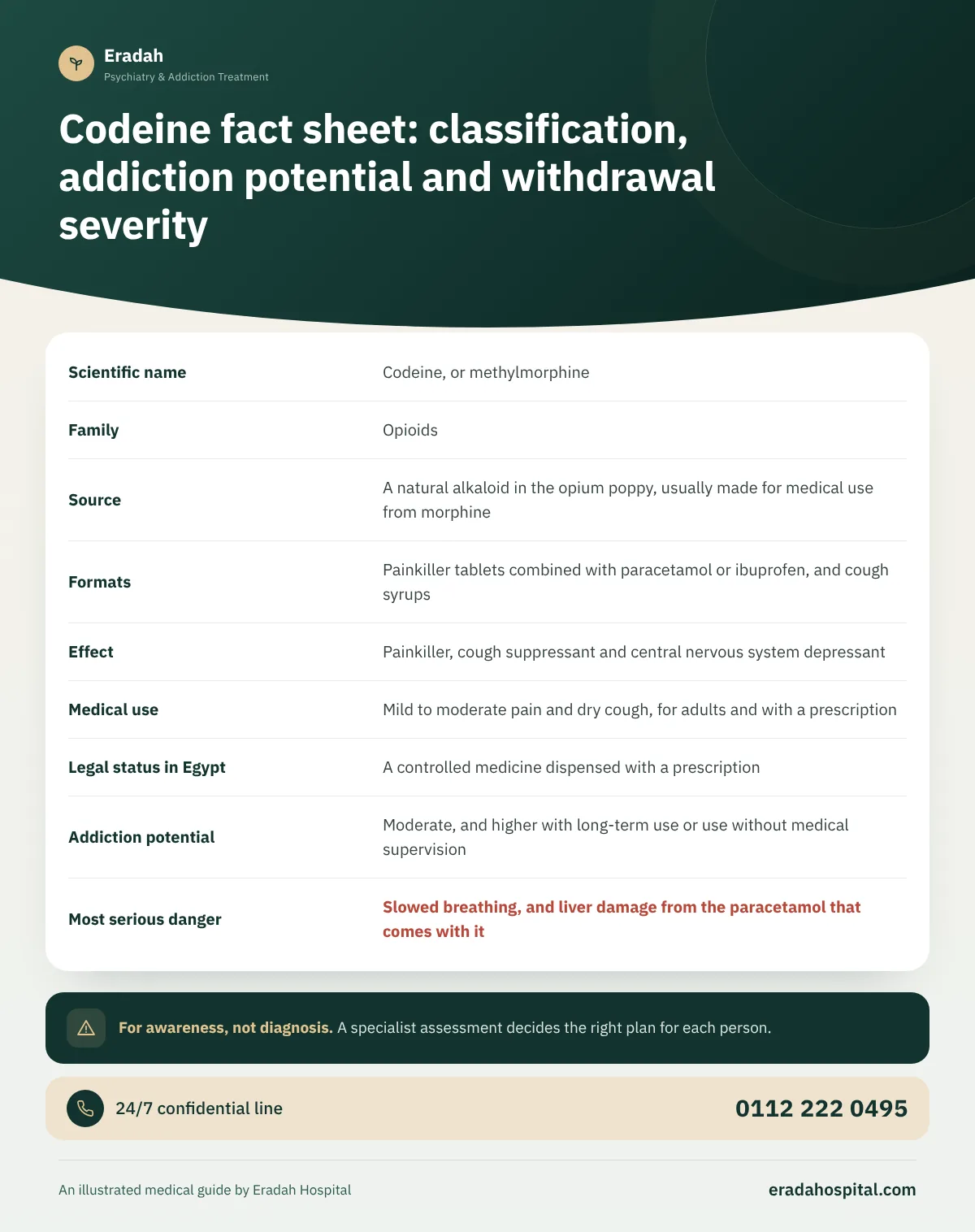
Codeine has been used for more than a century as a painkiller and cough suppressant, and it is one of the oldest and most widely used opioid medicines in the world. Because it is considered a “weak opioid,” many people assume it is completely safe, and that very impression is one of the reasons it gets misused.
Codeine belongs to the opioid family, along with morphine, heroin, tramadol and fentanyl. All of them act on opioid receptors in the brain and spinal cord. They differ in strength, how quickly they reach the brain and how long they last, but not in the nature of the risk.
Where is codeine found? Forms and products
Codeine is rarely dispensed on its own. It is usually part of combination products, which means some people take it without realizing it is an opioid:
One of its best-known forms, known internationally as co-codamol. The particular danger is that taking too much adds paracetamol’s damage to the liver on top of the harm from the opioid.
These combine an opioid painkiller with an anti-inflammatory drug, and taking too much can harm the stomach and kidneys.
Some dry-cough syrups contain codeine, sometimes together with a sedating antihistamine. This is the form most associated with misuse among young people.
In some countries these are prescribed for moderate pain, diarrhea or cough, under medical supervision.
How does codeine affect the brain and body?
Codeine is what is called a prodrug: in its original form it has little effect, and the liver has to convert it into a more active substance. An enzyme in the liver called CYP2D6 converts a small part of it into morphine, and this morphine is responsible for most of its pain-relieving effect.
- In the pain centers: the resulting morphine binds to opioid receptors and reduces the sensation of pain.
- In the brainstem cough center: it suppresses the cough reflex, which is why it is used in dry-cough medicines.
- In the reward circuits: it releases dopamine, causing relaxation, calm and sometimes euphoria. This effect is what drives some people to repeat it.
- In the breathing center: it slows breathing, which is the most dangerous effect when too much is taken or when it is mixed with sedatives.
Why does codeine affect people differently?
The activity of the CYP2D6 enzyme varies greatly between people because of genetics. Some people are “poor metabolizers” and get almost no benefit from codeine, while “ultra-rapid metabolizers” convert it into morphine faster and in larger amounts than usual, even when they take it as prescribed.
| Metabolizer type | What happens? | The risk |
|---|---|---|
| Poor | Little of it is converted to morphine | Weak pain relief, and the person may increase the amount on their own |
| Normal | Expected conversion | The usual side effects of opioids |
| Ultra-rapid | More morphine forms, and faster, than expected | Risk of slowed breathing even when taken as prescribed |
Does codeine have a medical use?
Yes. Codeine has legitimate medical uses, including relieving mild to moderate pain when ordinary painkillers are not enough, calming a troublesome dry cough and, in some countries, treating diarrhea. However, current medical guidelines limit its use to the shortest possible time, and for many patients they prefer other options for cough.
- Use it only with a prescription and only for the length of time your doctor sets.
- Do not combine it with alcohol, sedatives or sleeping pills without medical approval.
- Do not stop suddenly after long-term use; your doctor will set a plan to reduce the dose gradually.
- Do not share your medicine with anyone, and keep it away from children.
If you notice that you need the medicine for longer than your doctor said, or that you take it to calm down rather than because you are in pain, this is a sign worth discussing openly with your doctor.
The legal status of codeine in Egypt
In Egypt, codeine is a controlled medicine, and products containing it are dispensed only with a prescription, under the rules of the Ministry of Health and the Egyptian Drug Authority. Possessing or dealing in it outside this medical framework falls under Law No. 182 of 1960 on drug control. The Fund for Drug Control and Treatment of Addiction offers free, confidential treatment through hotline 16023.
This is general educational information and not legal advice.
How does codeine differ from other opioids?
| Substance | Nature | Relative strength | Use |
|---|---|---|---|
| Codeine | Natural alkaloid / medicine | Relatively weak | Combination painkillers and prescription cough medicines |
| Tramadol | Synthetic / medicine | Weak to moderate | Prescription painkiller, often misused in Egypt |
| Morphine | Natural alkaloid / medicine | Strong | Severe pain in hospitals |
| Heroin | Semi-synthetic / illegal | Very strong | No permitted medical use in Egypt |
| Fentanyl | Synthetic / medicine | Extremely strong | Anesthesia and severe pain under close supervision |
Codeine being relatively weak does not mean it carries no risk. Taking too much, or mixing it with sedatives, can slow breathing, and some people who become dependent on it move on to stronger opioids over time.
Codeine guide: everything you need to know
We have gathered everything about codeine into 6 pages, each answering one question in detail. Choose what you are looking for:
Harms of codeine
From slowed breathing and chronic constipation to liver damage from the accompanying paracetamol and stomach bleeding from ibuprofen, plus its effect on mood and pregnancy.
Causes of codeine addiction
How does a cough medicine or prescription painkiller turn into dependence? The role of chronic pain, anxiety, depression, genetics and easy access.
Symptoms of codeine addiction
The physical and behavioral signs a family may notice, and the diagnostic criteria for opioid use disorder.
Codeine withdrawal symptoms
They begin within hours of the last use and resemble withdrawal from other opioids, though they are often milder. The timeline, and when medical supervision is needed.
Treatment of codeine addiction
From assessment and gradual dose reduction or detox to supportive medications, psychotherapy and pain management without opioids.
How long codeine stays in the body
How long it remains in urine, blood, saliva and hair, and why it may show up on a test as morphine.
What should a family do if they suspect codeine misuse?
Many cases of codeine dependence start with a genuine prescription for tooth pain, back pain or recurring headaches, so they should not be treated as a scandal. What matters most is calm observation and a conversation without accusation:
- Observe without suffocating surveillance: repeated packs of cough medicine or painkillers, or moving between pharmacies and doctors.
- Choose a quiet time to talk, and express your worry about their health rather than your anger at their behavior.
- Do not ask them to stop suddenly on their own after long-term use; suggest seeing a specialist doctor.
- At any sign of severe drowsiness or slow breathing, call an ambulance immediately.
Sources: UNODC World Drug Report 2025, and the StatPearls review on codeine.
Signs of codeine overdose: call an ambulance (123) immediately
- Extreme drowsiness or loss of consciousness, with no response to calling or touch
- Very slow, shallow or irregular breathing
- Pupils that are extremely small, like pinpoints
- Blue lips and fingernails and cold skin
- Gurgling sounds or unusual snoring during sleep
Call an ambulance at 123 immediately, place the person on their side (recovery position) so they do not choke, and stay with them until help arrives. Naloxone, a drug that reverses the effects of opioids, is available in emergency care. Tell the medical team the name of the medicine and whether it contains paracetamol, because liver damage from it can appear later.
Call the ambulance 123