Why do codeine withdrawal symptoms happen?
With repeated use the brain adapts to the presence of the opioid. It reduces its own natural production of endorphins and changes how sensitive its receptors are. When use stops suddenly this balance is disrupted and the nervous system becomes overactive, producing symptoms that look like the opposite of the drug's effects: anxiety instead of calm, diarrhea instead of constipation, and body aches instead of pain relief.
Codeine withdrawal timeline
- Within hours to a dayThe start
Anxiety and tension, frequent yawning, runny nose and watery eyes, sweating, and a craving for the drug.
- Days 2-3The peak
Muscle and bone aches, chills, nausea, vomiting, diarrhea, abdominal cramps, severe insomnia, and dilated pupils.
- Days 4-7Easing
Physical symptoms ease gradually, while fatigue and disturbed sleep and mood remain.
- Weeks to monthsThe prolonged phase
Insomnia, anxiety, low energy, and episodes of craving that stress or pain may trigger.
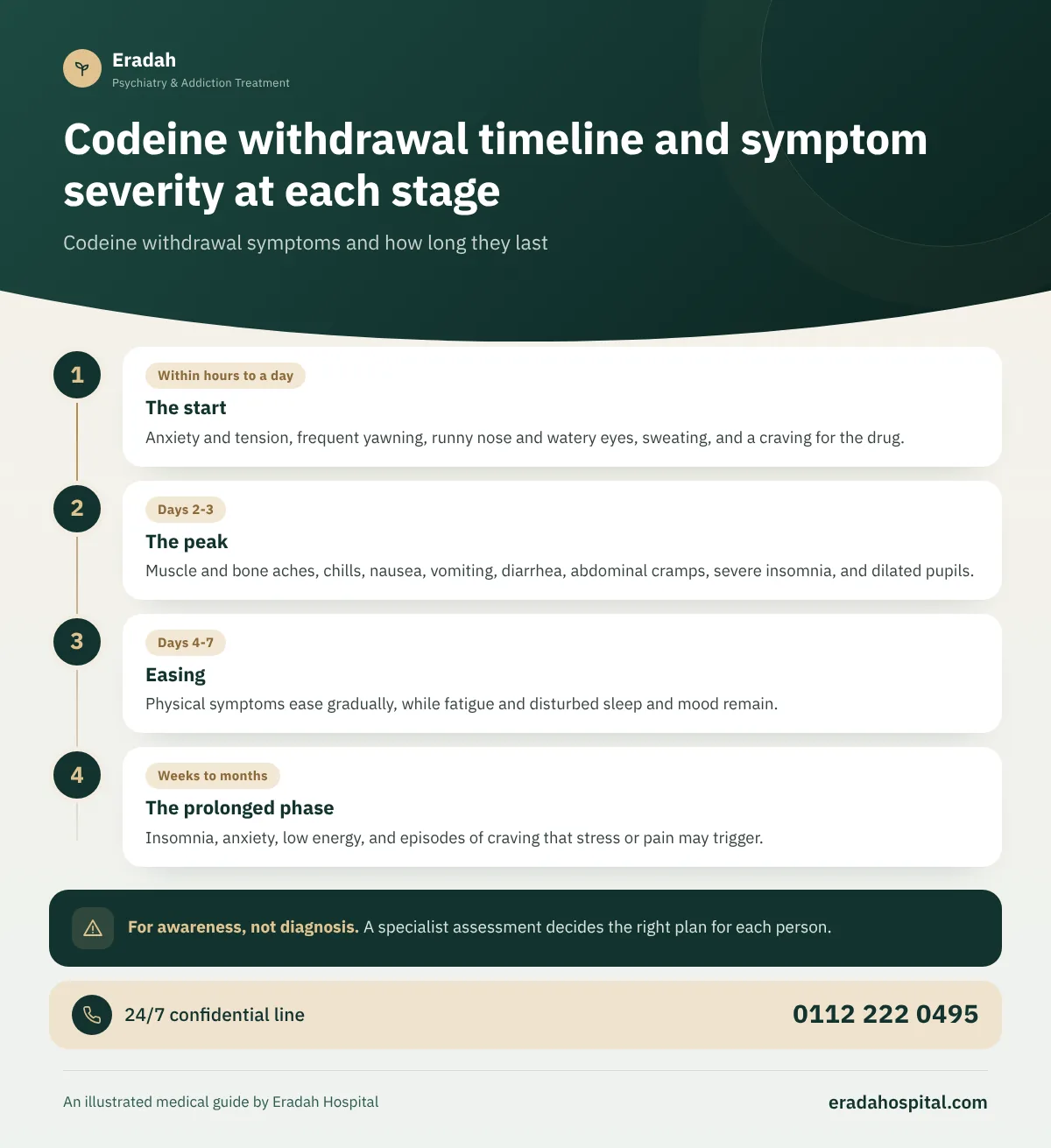
Durations are approximate and vary from person to person depending on how long and how much was used, the type of product, and general health.
What are the symptoms of codeine withdrawal?
| Type | Symptoms |
|---|---|
| Physical | Sweating, chills, runny nose, tearing, muscle and joint aches, yawning, dilated pupils |
| Digestive | Nausea, vomiting, diarrhea, abdominal cramps, loss of appetite |
| Psychological | Anxiety, irritability, tension, low mood, craving for the drug |
| Sleep | Severe insomnia, broken sleep, and disturbing dreams |
| Pain | Return of the original pain or a severe headache, especially in people with medication-overuse headache |
Is codeine withdrawal dangerous?
Codeine withdrawal rarely threatens life directly in an otherwise healthy person, but it is not without risks. Severe vomiting and diarrhea can cause dehydration and a salt imbalance, especially in older adults and people with heart or kidney disease. In addition, craving and intense discomfort lead many people to go back to using within days.
What determines the severity and length of withdrawal?
- Length of use: the longer it has been, the more severe and longer-lasting the symptoms.
- Amount: large amounts cause more severe withdrawal.
- Abrupt or gradual stopping: gradual tapering greatly eases symptoms.
- Other substances: using sedatives or alcohol at the same time complicates withdrawal.
- Mental health: anxiety and depression make symptoms harder to bear.
- How quickly codeine is converted: the amount of morphine produced differs from person to person, and the level of dependence differs with it.
Why is supervised gradual tapering preferred?
Medical guidelines recommend against stopping codeine suddenly after regular use. Instead, it should be reduced gradually over weeks according to a plan set by the doctor. Medical supervision also makes it possible to:
- Ease symptoms with supportive medication suited to each person.
- Monitor dehydration and salts in people with severe vomiting or diarrhea.
- Manage the underlying pain by alternative means so the person does not go back to the drug.
- Assess mental health and prevent relapse during the hardest days.
- Safely manage withdrawal from any other substances used at the same time.
And do not try to change or stop a medication prescribed to you without going back to your doctor.
What are prolonged withdrawal symptoms?
After the acute phase ends, some people have milder but exhausting symptoms for weeks or months: insomnia, anxiety, mood swings, difficulty enjoying things, and episodes of craving. This phase is normal and temporary, but it is one of the highest-risk periods for relapse, which is why psychological support continues after detox ends.
Codeine withdrawal in pregnancy and in newborns
A pregnant woman who uses codeine regularly is advised not to stop suddenly on her own, because acute withdrawal can put stress on the pregnancy. The safe route is to tell both her obstetrician and a doctor who specializes in addiction, so they can set up a suitable plan together. A baby born to a mother who used codeine regularly may also have withdrawal symptoms such as constant crying, difficulty feeding and tremors, and will then need monitoring in the hospital.
How does codeine withdrawal differ from withdrawal from other opioids?
| Substance | Onset of symptoms | Typical severity |
|---|---|---|
| Codeine | Within hours to a day | Often mild to moderate |
| Tramadol | Within hours to a day | Moderate, and may come with unusual anxiety and tingling |
| Heroin | Within a few hours | Severe, with a rapid peak |
| Methadone | After a day or more | Lasts longest and eases more slowly |
This comparison is approximate and for illustration only; the actual experience varies from person to person.
Common myths about codeine withdrawal
- "Codeine is weak, so there is no withdrawal": not true; regular use over a long period causes real withdrawal that can be very unpleasant.
- "Stopping suddenly is faster and better": stopping suddenly makes symptoms more severe and a return to the drug more likely; gradual tapering under medical supervision usually works better.
- "After a week it's all over": the physical symptoms settle within days, but cravings and disturbed sleep and mood can last for weeks.
- "You can swap it for another painkiller from the pharmacy": replacing one opioid with another without a doctor transfers the dependence rather than treating it, and may increase the risk.
- "Home remedies are enough": no home remedy treats withdrawal; fluids and rest help but do not replace a medical assessment.
How can the family support someone going through withdrawal?
- Encourage them to stop under medical supervision, not alone at home.
- Provide a calm environment, plenty of fluids, and light food.
- Understand that irritability and insomnia are part of withdrawal, not part of their personality.
- Keep any remaining medication out of the home after consulting the doctor.
- Watch for any signs of severe depression or worrying thoughts, and seek help immediately.
Withdrawal is only the first step. Learn about the stages of codeine addiction treatment after detox.
Signs of codeine overdose: call an ambulance (123) immediately
- Extreme drowsiness or loss of consciousness, with no response to calling or touch
- Very slow, shallow or irregular breathing
- Pupils that are extremely small, like pinpoints
- Blue lips and fingernails and cold skin
- Gurgling sounds or unusual snoring during sleep
Call an ambulance at 123 immediately, place the person on their side (recovery position) so they do not choke, and stay with them until help arrives. Naloxone, a drug that reverses the effects of opioids, is available in emergency care. Tell the medical team the name of the medicine and whether it contains paracetamol, because liver damage from it can appear later.
Call the ambulance 123