Physical signs of gabapentin misuse
These signs appear while the drug is acting, and are clearer with large amounts or when it is mixed with other substances:
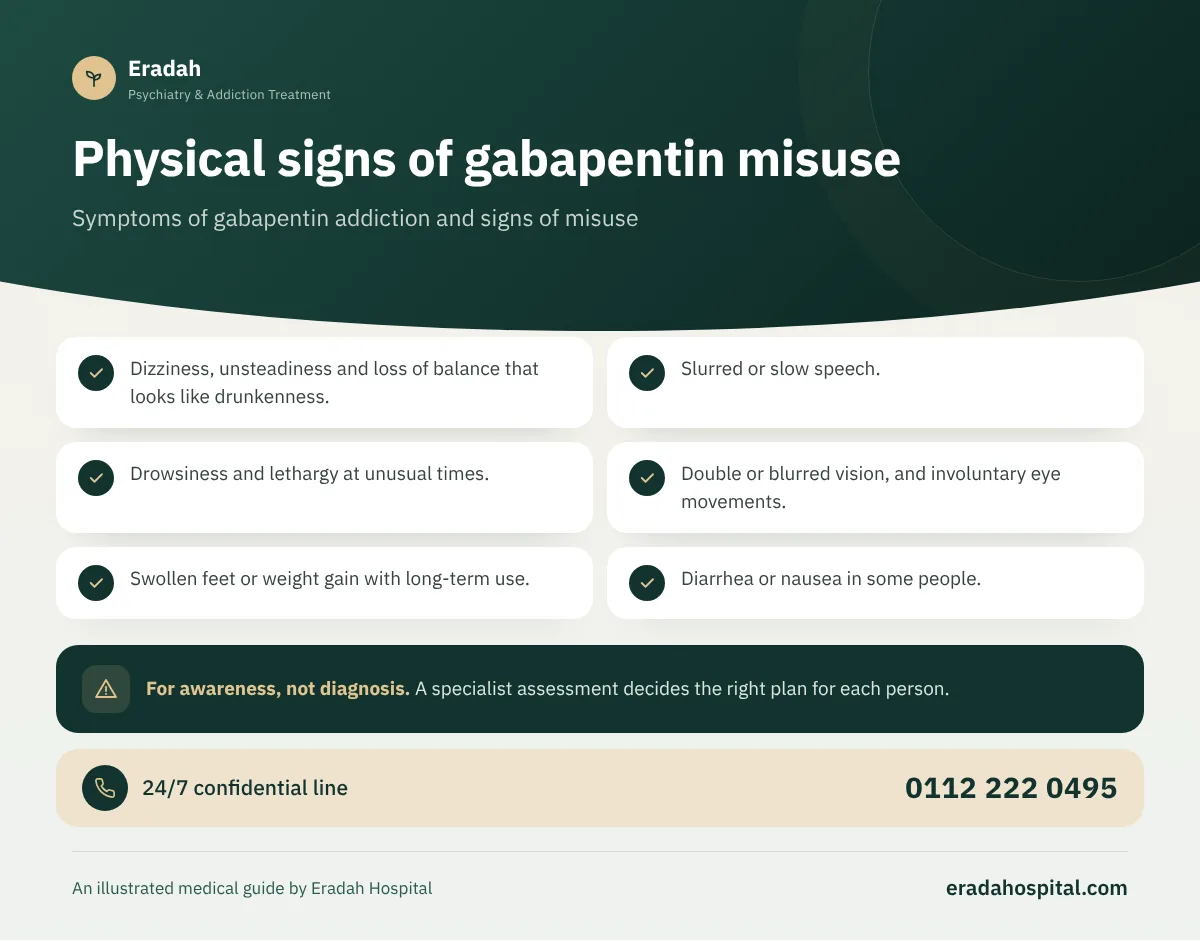
- Dizziness, unsteadiness and loss of balance that looks like drunkenness.
- Slurred or slow speech.
- Drowsiness and lethargy at unusual times.
- Double or blurred vision, and involuntary eye movements.
- Swollen feet or weight gain with long-term use.
- Diarrhea or nausea in some people.
Behavioral signs
- Running out of pills before the expected date and asking for more early.
- Multiple prescriptions from more than one doctor or pharmacy.
- Keeping many strips of pills, or empty ones, in different places.
- Having tramadol, opioids or sedatives with it at the same time.
- Neglecting work, school or family responsibilities.
- Asking for money often or spending that cannot be explained.
Psychological signs
- Excessive calm or an unusual "flatness" of emotions while under the effect.
- Irritability and anxiety when the next dose is delayed.
- Mood swings, and loss of interest in hobbies and relationships.
- Poor concentration and memory that people around them notice.
Is having gabapentin a sign of opioid use?
Not always, but it deserves attention. Studies show that gabapentin misuse is far more common among people who use opioids, who take it to strengthen the effect of opioids or ease their withdrawal. So if you find gabapentin strips together with tramadol or other painkillers without a prescription, the situation needs a prompt specialist assessment, because this particular combination raises the risk of breathing stopping.
Signs that may show up at work or school
- Slowness in completing tasks and unusual mistakes in work the person normally does well.
- Drowsiness or zoning out during meetings or lectures.
- Repeated minor accidents or falls because of poor balance.
- Frequent absences or lateness, especially on days when the pills run out.
- Declining grades or evaluations with no clear reason.
How do you tell gabapentin apart from other substances?
| Substance | Pupils | Walking and speech | Distinguishing sign |
|---|---|---|---|
| Gabapentin | Usually normal | Unsteadiness and slurred speech | Double vision and dizziness |
| Pregabalin | Usually normal | Unsteadiness and slurred speech | More obvious euphoria and relaxation |
| Tramadol | Constricted | Normal or slow | Sweating, itching and tremor |
| Benzodiazepines | Usually normal | Slowness and unsteadiness | Severe drowsiness and memory gaps for events |
Because the signs are similar, it cannot be judged by looking alone; confirmation comes from a medical assessment and the dedicated test.
A patient who takes gabapentin by prescription: when should we worry?
Dizziness and drowsiness can be ordinary side effects in a patient who follows the prescription exactly, especially at the start of treatment. But some signs show that use has gotten out of control:
- Increasing the amount or number of doses without consulting the doctor.
- Using it for euphoria, sleep or to calm anxiety rather than for pain or epilepsy.
- Getting it from sources other than the treating doctor.
- Combining it with opioids or sedatives without the doctor's knowledge.
Signs specific to teenagers and young adults
A recent scientific review noted a growing trend of gabapentinoid misuse among teenagers. Signs worth attention when they occur together include: nerve medications disappearing from the home medicine cabinet, unsteady walking or slurred speech with no explanation, a sudden drop in school performance, and new friends along with excessive secrecy.
Signs that call for emergency care immediately
Deep sleep in which the person does not respond to being called or touched, especially if opioids or sedatives are involved.
Shallow or irregular breathing, or blue lips.
Swelling of the face, lips or throat with difficulty swallowing or breathing.
In these cases, call the ambulance on 123 immediately, and tell them everything you know about the substances the person took.
Things that may catch a family's attention
Finding certain things can be a sign worth noticing without being conclusive proof: many strips of Neurontin or gabapentin without a prescription, empty strips in different places, pills without packaging, or their presence alongside tramadol or sedatives. Quietly note what you find, and seek specialist advice before confronting the person.
Common misconceptions about signs of substance use
| The common belief | The truth |
|---|---|
| "Unsteadiness always means drinking alcohol" | It can be a sign of gabapentin, pregabalin or sedatives, and a medical assessment determines the cause. |
| "Their test is negative, so they are not using" | Gabapentin does not show up on the routine test at all. |
| "It's a prescribed drug, so it can't be misused" | A prescription does not prevent misuse if the amount increases or the purpose changes. |
When does use become addiction? Diagnostic criteria
Doctors use the DSM-5 diagnostic criteria to diagnose sedative, hypnotic or anxiolytic use disorder. It includes eleven criteria within a year, among them:
- Using in larger amounts or for longer than intended.
- Unsuccessful attempts to cut down.
- A strong craving for it.
- Neglecting responsibilities at work or at home.
- Continuing despite clear health or social problems.
- Giving up important activities because of use.
Tolerance and withdrawal symptoms are not counted toward the criteria in a patient who takes the medication under proper medical supervision, because they are an expected physical adaptation.
How do you talk to someone who is misusing gabapentin?
- Choose a quiet time when they are not under the influence.
- Start with your concern, not accusation: "I've noticed you're unsteady and sleeping a lot, and I'm worried about you."
- Ask about other medications they take, especially painkillers and sedatives.
- Offer a clear step: seeing a doctor or a confidential consultation.
- Do not encourage them to stop suddenly on their own, especially if they have epilepsy or are mixing it with other substances.
For the symptoms that follow stopping, see the page on gabapentin withdrawal symptoms.
Signs of gabapentin poisoning or overdose: call an ambulance (123) immediately
- Extreme drowsiness, or difficulty waking the person, with no response to calling
- Slow, shallow or irregular breathing, especially if the medicine was mixed with tramadol, opioids, sedatives or alcohol
- Blue or pale lips and fingernails
- Very slurred speech, or double vision with severe unsteadiness and inability to stand
- Sudden swelling of the face, lips and throat with difficulty swallowing or breathing
Call an ambulance at 123 immediately, place the person on their side so they do not choke, give them nothing by mouth, stay with them until help arrives, and keep the medicine packs they took to show the doctor. If opioids are part of the mixture, the emergency team may use naloxone to reverse their effect.
Call the ambulance 123