What are the physical signs of inhaling kolla?
Because the effect is so brief, the clearest signs are the traces the substances leave on the body and clothing:
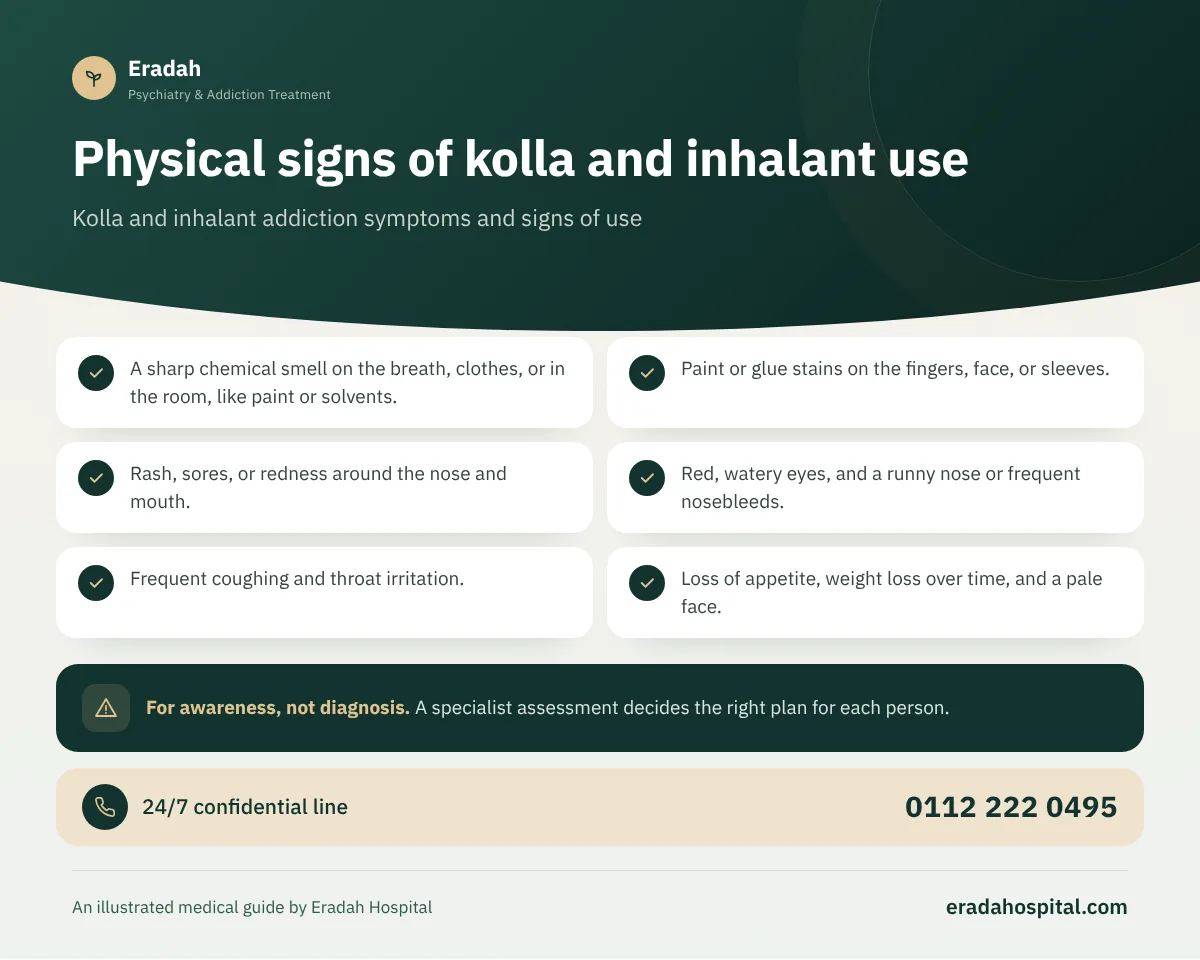
- A sharp chemical smell on the breath, clothes, or in the room, like paint or solvents.
- Paint or glue stains on the fingers, face, or sleeves.
- Rash, sores, or redness around the nose and mouth.
- Red, watery eyes, and a runny nose or frequent nosebleeds.
- Frequent coughing and throat irritation.
- Loss of appetite, weight loss over time, and a pale face.
What does a person look like under the influence of inhalants?
The effect of inhalants resembles alcohol intoxication, but it starts quickly and wears off within minutes, and it may be repeated several times in a short period:
Dizziness, staggering, unsteadiness, and slowed reactions.
Slurred speech that runs together or is hard to understand.
A vacant stare, confusion, and drowsiness, and hallucinations may appear.
Nausea, vomiting, headache, and a rapid pulse.
What are the behavioral and school signs?
With repeated use, changes in behavior and schoolwork appear, which may be the first thing a parent or teacher notices:
- Irritability, mood swings, and flaring up over small things.
- A sudden drop in grades, poor concentration and memory, and skipping school.
- Withdrawing from the family and spending long periods outside the home or in an enclosed space.
- New friends who are older or unknown to the family.
- Neglecting personal hygiene and appearance.
- Frequent lying and hiding personal belongings.
What clues might you find at home?
- Unexplained shortages of household products with a strong smell, or empty containers of them in unusual places.
- Items hidden in the child's room or bag that give off a chemical smell for no clear reason.
- A persistent chemical smell in the room with no obvious cause.
A single clue does not necessarily mean substance use; many children use adhesives for school projects. What matters is a cluster of signs together with a clear change in behavior.
Signs that may appear in younger children
Some children start experimenting at a young age, and their signs are sometimes different or milder, so watch for the following:
- Frequent headaches, nausea, or dizziness with no clear medical cause.
- A chemical smell on the hands or clothes after coming back from play or school.
- Unusual sleepiness in the daytime, or spacing out and difficulty paying attention.
- An unexplained interest in household chemical products, or asking for them with various excuses.
- A sudden change of friends, or spending long periods in enclosed places away from adults.
These signs can have other causes, but when they keep recurring they deserve attention and a calm conversation, and a visit to the pediatrician if you are in doubt.
How do you tell kolla inhalation from other substances?
| Substance | Smell | Most distinctive sign | Duration of effect |
|---|---|---|---|
| Inhalants | Sharp chemical smell | Stains and rash around the mouth and nose, and dizziness that passes quickly | Minutes |
| Alcohol | Smell of alcohol | Staggering and slurred speech | Hours |
| Hashish | A distinctive smoke smell | Red eyes, laughter, and hunger | Hours |
| Sedatives and tramadol | Usually no smell | Drowsiness and slow speech | Hours |
When does inhaling become addiction?
Medical diagnostic guides such as the DSM-5 and ICD-11 describe an "inhalant use disorder" when inhaling is repeated and causes clear harm or distress over a year. Its signs, in brief:
- Inhaling more often or for longer than intended.
- Unsuccessful attempts to stop.
- Spending a great deal of time obtaining the substances or recovering from their effects.
- Strong cravings to inhale.
- Declining performance at school, work, or in responsibilities.
- Continuing despite family and social problems.
- Giving up important activities.
- Inhaling in dangerous situations.
- Continuing despite physical or psychological problems caused by inhaling.
- Tolerance: needing more to get the same effect.
When the person stops, symptoms such as irritability, sleep disturbance, nausea, and sweating may appear. You can find how to deal with them on the page Kolla and Inhalant Addiction Treatment.
How do you talk to your child if you suspect inhalant use?
- Calm down first; anger and panic do not help, and chasing them while they are under the influence is a danger to their heart.
- Wait until the effect has completely worn off, and choose a private place and a suitable time.
- Start with what you noticed rather than an accusation: "I noticed a chemical smell and stains on your clothes, and I'm worried about you."
- Explain simply that these substances can stop the heart even after one use, without exaggerating or trying to frighten them.
- Ask what drives them to do it: peer pressure, boredom, sadness, or a problem at school.
- Agree on a clear step, such as visiting a doctor or a psychologist, and follow up with them patiently.
The school's role in early detection
Teachers and social workers see the child for many hours every day, and they may notice the smell, the stains, or the drop in schoolwork before the family does. The right approach is calm communication with the family and referring the child to psychological and social support, avoiding public embarrassment in front of classmates or punishment alone, because stigma pushes the child to hide and keeps them away from help.
Danger signs with kolla and inhalants: call ambulance (123) immediately
- Loss of consciousness, or no response to calling or touch
- Difficulty breathing, or breathing that is very slow or has stopped
- Chest pain, or a fast or irregular heartbeat
- Seizures
- Vomiting with severe confusion, or pallor and blue lips
Call ambulance (123), move the person into fresh air and remove the source of the fumes, and place them on their side if they are unconscious but breathing. Do not frighten, chase or shout at them, because a sudden emotional shock can cause a fatal heart rhythm disturbance. Stay with them calmly until help arrives.
Call the ambulance 123