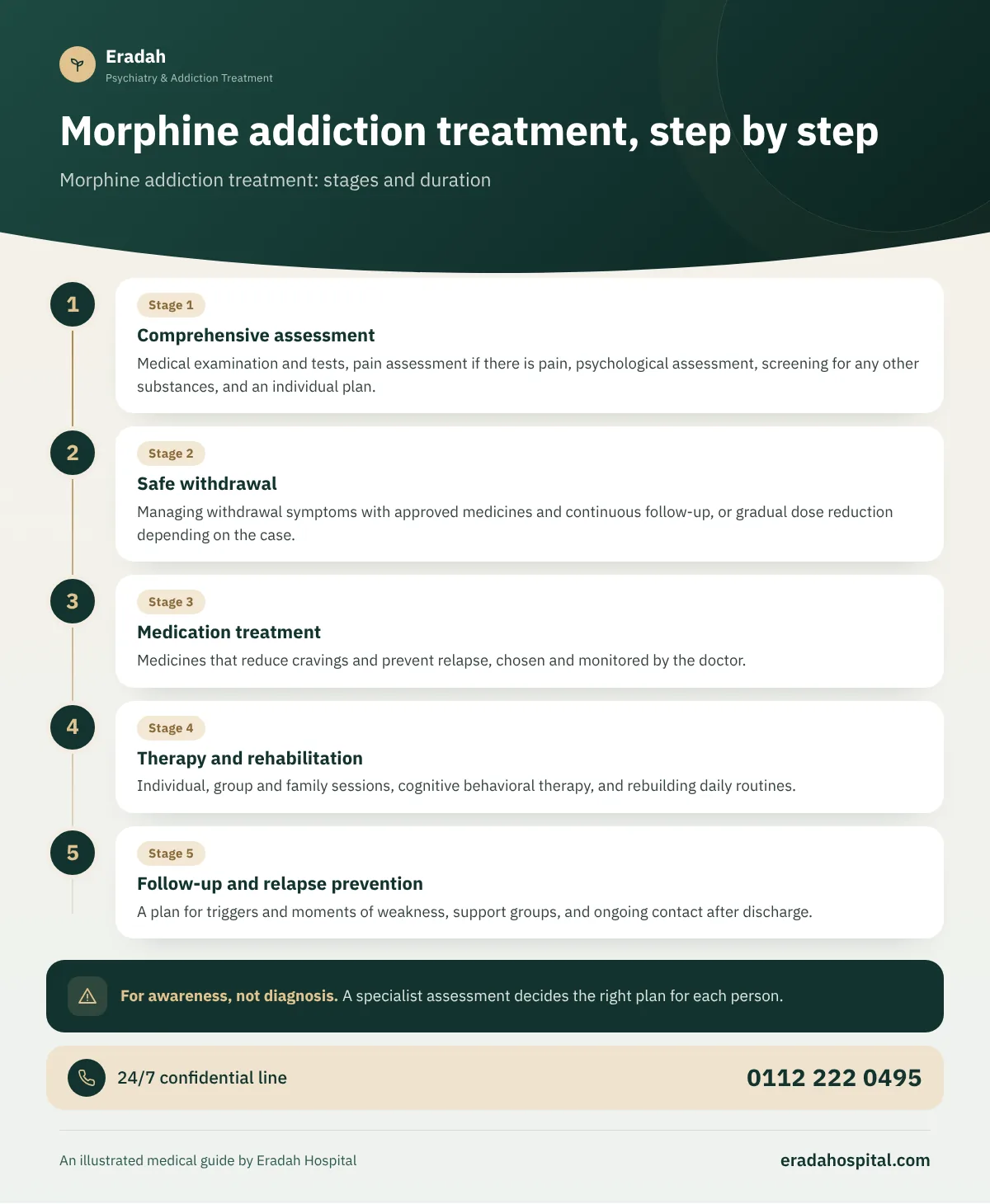
Stages of morphine addiction treatment
- Stage 1Comprehensive assessment
Medical examination and tests, pain assessment if there is pain, psychological assessment, screening for any other substances, and an individual plan.
- Stage 2Safe withdrawal
Managing withdrawal symptoms with approved medicines and continuous follow-up, or gradual dose reduction depending on the case.
- Stage 3Medication treatment
Medicines that reduce cravings and prevent relapse, chosen and monitored by the doctor.
- Stage 4Therapy and rehabilitation
Individual, group and family sessions, cognitive behavioral therapy, and rebuilding daily routines.
- Stage 5Follow-up and relapse prevention
A plan for triggers and moments of weakness, support groups, and ongoing contact after discharge.
Why is morphine addiction treated differently from others?
Many people who become addicted to morphine started it for real pain, and some still have that pain. That is why simply stopping morphine is not enough; the assessment must answer important questions: Is there still pain that needs treatment? Is there accompanying depression or anxiety? Is the person using other substances? And are they a healthcare worker, which would call for a safe return-to-work plan?
Morphine withdrawal: the first step, not the last
The aim of withdrawal is to stop morphine with the least suffering and risk. It may be done by gradual reduction or with medicines that ease withdrawal. But withdrawal alone does not treat addiction: the brain remains primed for cravings, and the reasons that led to use are still there. Stopping at withdrawal without treatment raises the risk of relapse and of overdose once tolerance has dropped.
Medicines used to treat morphine addiction
International medical guidelines rely on three main medicines for treating opioid dependence, and the doctor chooses the suitable one according to the case:
| Medicine | How it works | When it is used |
|---|---|---|
| Buprenorphine | Acts partially on opioid receptors, easing withdrawal and cravings with a higher safety ceiling | Withdrawal or maintenance |
| Methadone | A long-acting opioid that prevents withdrawal and cravings without euphoria | Maintenance treatment programs under strict supervision |
| Naltrexone | Blocks opioid receptors, so the effect of morphine is cancelled if it is used | After withdrawal is fully complete, to prevent relapse |
Other medicines may be used to ease particular symptoms during withdrawal, such as anxiety, sweating, cramps and insomnia, along with medicines to treat accompanying depression or anxiety. No medicine should be started or stopped without a doctor, and we do not state doses because they differ from one patient to another.
The alternative pain plan
If there is real pain, leaving the patient without pain relief is one of the main causes of relapse. That is why the treatment team works with pain specialists or the relevant specialty to set up an alternative plan that may include:
Other pain-relief medicines chosen by the doctor according to the type of pain.
Exercises and movement rehabilitation that reduce pain and improve function.
Help with living with chronic pain and reducing its impact on life.
Regular reassessment of the cause of the pain and adjustment of the plan as things develop.
Psychological and behavioral therapy
- Cognitive behavioral therapy: to understand the triggers and thoughts linked to use and to build alternatives.
- Group therapy: to share the experience with others on the same journey.
- Family therapy: to rebuild trust and teach the family how to support without enabling use.
- Dual diagnosis treatment: to treat accompanying depression, anxiety or trauma within the same plan.
How long does morphine addiction treatment take?
| Stage | Approximate duration |
|---|---|
| Withdrawal | Usually 5 to 10 days; gradual reduction may take longer |
| Residential treatment and rehabilitation | From 4 to 12 weeks or more |
| Outpatient treatment | Several months |
| Follow-up and relapse prevention | At least a year, and it may extend longer |
The time frames are approximate and are set by the treatment team according to each patient’s progress. Staying in treatment for long enough is one of the most important factors in success.
Residential treatment or outpatient treatment?
Residential treatment is usually advised in cases of severe dependence, an accompanying mental health condition, morphine mixed with sedatives or alcohol, failed previous attempts, or when the person’s environment makes the medicine easy to get. Outpatient treatment may suit some stable cases with strong family support and commitment to follow-up.
Preventing relapse after morphine treatment
- Know your personal triggers: pain, stress, insomnia, and particular places or people.
- Tell any doctor or hospital about your history with morphine before any operation or pain treatment.
- Stay with the medication and follow-up, without stopping on your own.
- Attending support groups for people in recovery.
- Build a healthy routine of sleep, activity and supportive relationships.
How do you choose a morphine addiction treatment center?
- A psychiatrist specialized in addiction treatment, and round-the-clock medical supervision during withdrawal.
- The ability to coordinate with pain or oncology doctors when there is real pain.
- A genuine psychological and family treatment program, not detox alone.
- A clear follow-up plan after discharge.
- Official licensing, with respect for confidentiality and patient dignity.
Choosing a hospital for morphine addiction treatment
Morphine addiction treatment has a dangerous moment that many people overlook: a few days after stopping, the body’s tolerance to opioids falls, so if the patient goes back to the same old amount they may suffer a life-threatening overdose. In addition, some patients started morphine for real pain that is still there. So the right place is one that sees clearly what comes after withdrawal and handles pain well. Check these points:
- Does the team discuss with you the risk of overdose after tolerance drops, and write it into the discharge plan?
- Is the patient offered medication treatment for opioid use disorder, decided by the doctor according to their case, rather than withdrawal alone?
- Does the team contact the pain or oncology doctor if there is a medical reason for the use?
- Is there a special plan for healthcare workers who handle morphine in their jobs?
- Is there follow-up after discharge with set appointments?
At Eradah, opioid withdrawal takes place under the uninterrupted observation of a doctor and nurses, and the relapse prevention program continues after discharge. To begin, send a WhatsApp message or call 01122220495 at any time, or fill in the contact request form. The first consultation is free and confidential, and residential treatment with us is for men only.
Morphine addiction treatment at Eradah
At Eradah we start with a comprehensive assessment of the addiction, the pain and the mental health, followed by safe withdrawal under round-the-clock medical supervision, then a program that combines medication, psychological and family treatment, an alternative pain plan when needed, and follow-up after discharge, with complete confidentiality from the first call.