Short-term harms of morphine
These harms may appear within minutes to hours, even with medical use, and increase with large amounts:
- Drowsiness, slowed thinking and movement, and poor concentration.
- Nausea, vomiting and dizziness, especially at the start of use.
- Itching and skin flushing caused by the release of histamine.
- Low blood pressure, especially when standing up suddenly.
- Difficulty urinating and urinary retention in some patients.
- Respiratory depression, with greater risk in the first days and when the amount is increased.
Respiratory depression: the most serious harm of morphine
Morphine acts on the breathing centers in the brainstem, slowing breathing and reducing the body's response to low oxygen. In medical use this is carefully monitored, but outside supervision it can silently progress to breathing stopping. The risk rises in the following situations:
- Large amounts, or crushing extended-release tablets.
- Mixing with sedatives, sleeping pills, pregabalin or alcohol.
- Lung disease and sleep apnea.
- Older people and those with kidney failure.
- Returning to use after a break during which tolerance fell.
Long-term harms of morphine on the body
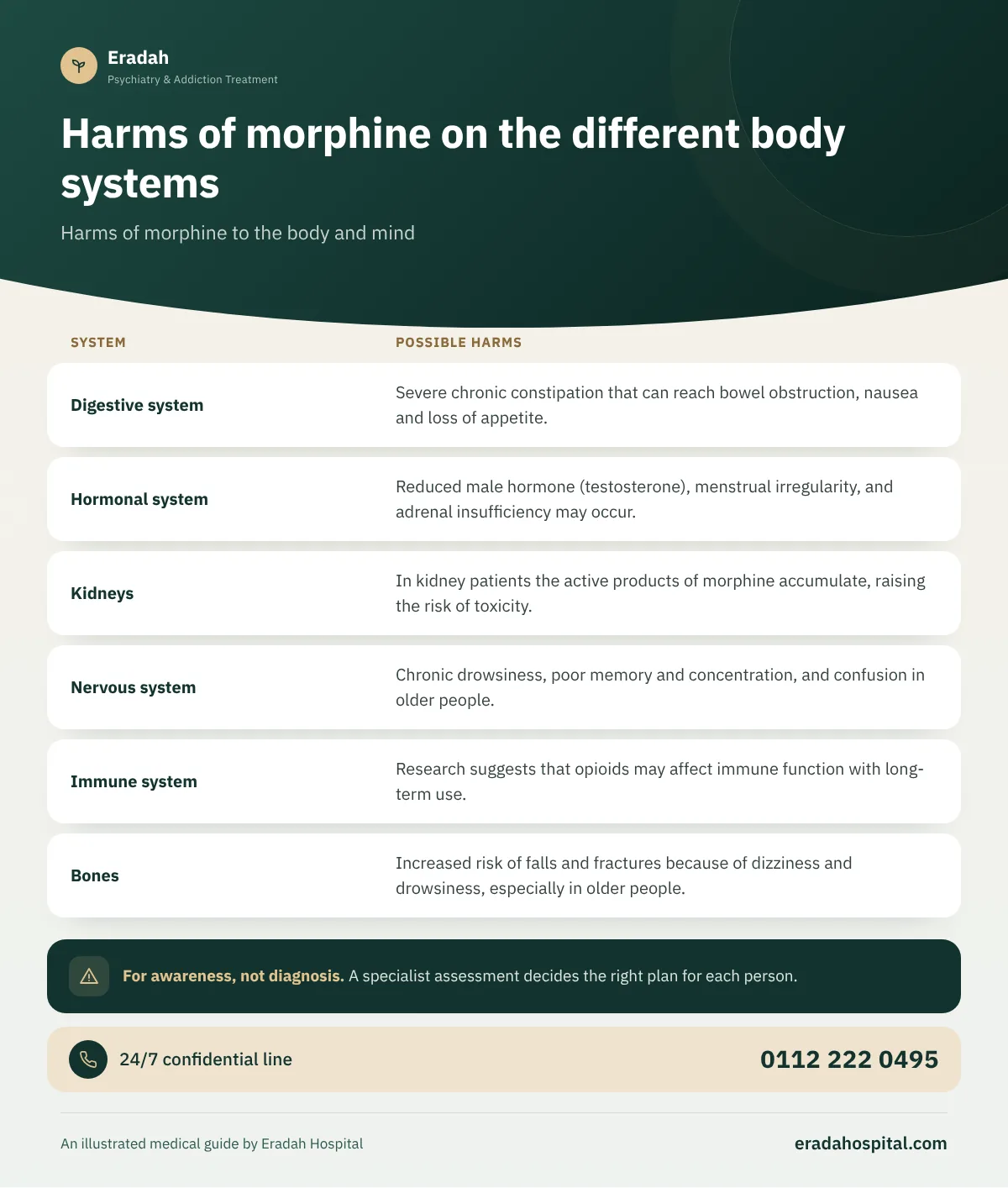
With long-term use, especially without follow-up, harms may appear across several systems:
| System | Possible harms |
|---|---|
| Digestive system | Severe chronic constipation that can reach bowel obstruction, nausea and loss of appetite. |
| Hormonal system | Reduced male hormone (testosterone), menstrual irregularity, and adrenal insufficiency may occur. |
| Kidneys | In kidney patients the active products of morphine accumulate, raising the risk of toxicity. |
| Nervous system | Chronic drowsiness, poor memory and concentration, and confusion in older people. |
| Immune system | Research suggests that opioids may affect immune function with long-term use. |
| Bones | Increased risk of falls and fractures because of dizziness and drowsiness, especially in older people. |
Does morphine increase pain? Opioid-induced hyperalgesia
It may seem strange, but long-term use of some opioids, including morphine, can make the nervous system more sensitive to pain, so the person feels stronger pain or the pain spreads to new places despite a higher amount. This condition is known as opioid-induced hyperalgesia. It differs from tolerance, and the doctor assesses it and adjusts the treatment plan accordingly.
Harms of morphine on mental health
Depression and mood swings, and loss of enjoyment of ordinary things with long-term use.
Slowed thinking, poor memory and difficulty making decisions.
Sleep disturbance, and it may worsen sleep apnea.
Cravings and loss of control in those who misuse it.
If there is previous depression or anxiety, it needs treatment that deals with both conditions together, known as dual diagnosis.
Harms of mixing morphine with other substances
| The mix | The main risk |
|---|---|
| Morphine + sedatives | Severe respiratory depression that can reach coma and death, and one of the most dangerous mixtures. |
| Morphine + alcohol | Doubled depression of breathing and consciousness, and it may speed the release of extended-release tablets. |
| Morphine + pregabalin | Doubled depression of breathing and consciousness. |
| Morphine + other opioids | An overdose that is hard to predict, especially with tramadol or heroin. |
Harms of morphine in pregnancy and for children
Regular use of morphine during pregnancy may lead to a baby born with neonatal withdrawal syndrome, a condition that can threaten his life if it is not detected and treated. A pregnant woman must not stop it suddenly on her own, but should see her doctor to set a safe plan for her and the fetus.
Children are extremely sensitive to morphine; swallowing a small amount by mistake can be fatal, which is why it must always be kept in a locked place.
Harms of morphine in older people and kidney patients
Older people and kidney patients are more sensitive to morphine, because their bodies clear it and its active products slowly, so they accumulate in the blood. Among the main risks for them: severe drowsiness and confusion, falls and fractures, severe constipation, and respiratory depression. That is why doctors start with caution and follow them closely, and the family should tell the doctor immediately about any confusion or unusual drowsiness.
Harms of injecting morphine outside the hospital
Injecting morphine outside the medical framework adds new harms to those of the substance itself: sharing needles and equipment transmits serious viruses such as HIV and hepatitis, repeated injection causes collapsed veins, skin infections and abscesses, and bacteria can reach the blood and heart. Injection also delivers the substance to the brain faster, raising the risk of addiction and overdose.
Do the harms of morphine go away after stopping?
Most harms improve gradually after planned stopping under medical supervision: bowel movement returns and hormones regulate, sleep, mood and concentration improve, and the excess sensitivity to pain may lessen. For patients who need morphine for real pain, the doctor works to reduce its harms through follow-up and treating the side effects instead of stopping it suddenly.
Signs of morphine overdose: call an ambulance (123) immediately
- Pupils that are extremely small, like pinpoints
- Very slow, irregular or stopped breathing
- Blue lips and fingernails and cold skin
- Loss of consciousness, or severe drowsiness with difficulty waking
- Gurgling or unusual snoring sounds
Call an ambulance on 123, place the person on their side so they do not choke, and stay with them until help arrives. Naloxone reverses the effect of morphine if given in time and is available in emergency departments, and the patient may need monitoring for hours because the effect of morphine can return.
Call the ambulance 123
21Social and professional harms