Why do morphine withdrawal symptoms happen?
With continued use, the brain adapts to the presence of morphine. It reduces its own natural production of endorphins, and other systems become more active to compensate for the suppression, most notably the norepinephrine system, which is responsible for alertness and stress. When morphine is stopped suddenly, this balance is upset, and symptoms appear that are the opposite of morphine’s effects: instead of calm, drowsiness, constricted pupils and constipation, there is anxiety, insomnia, dilated pupils and diarrhea.
Morphine withdrawal timeline
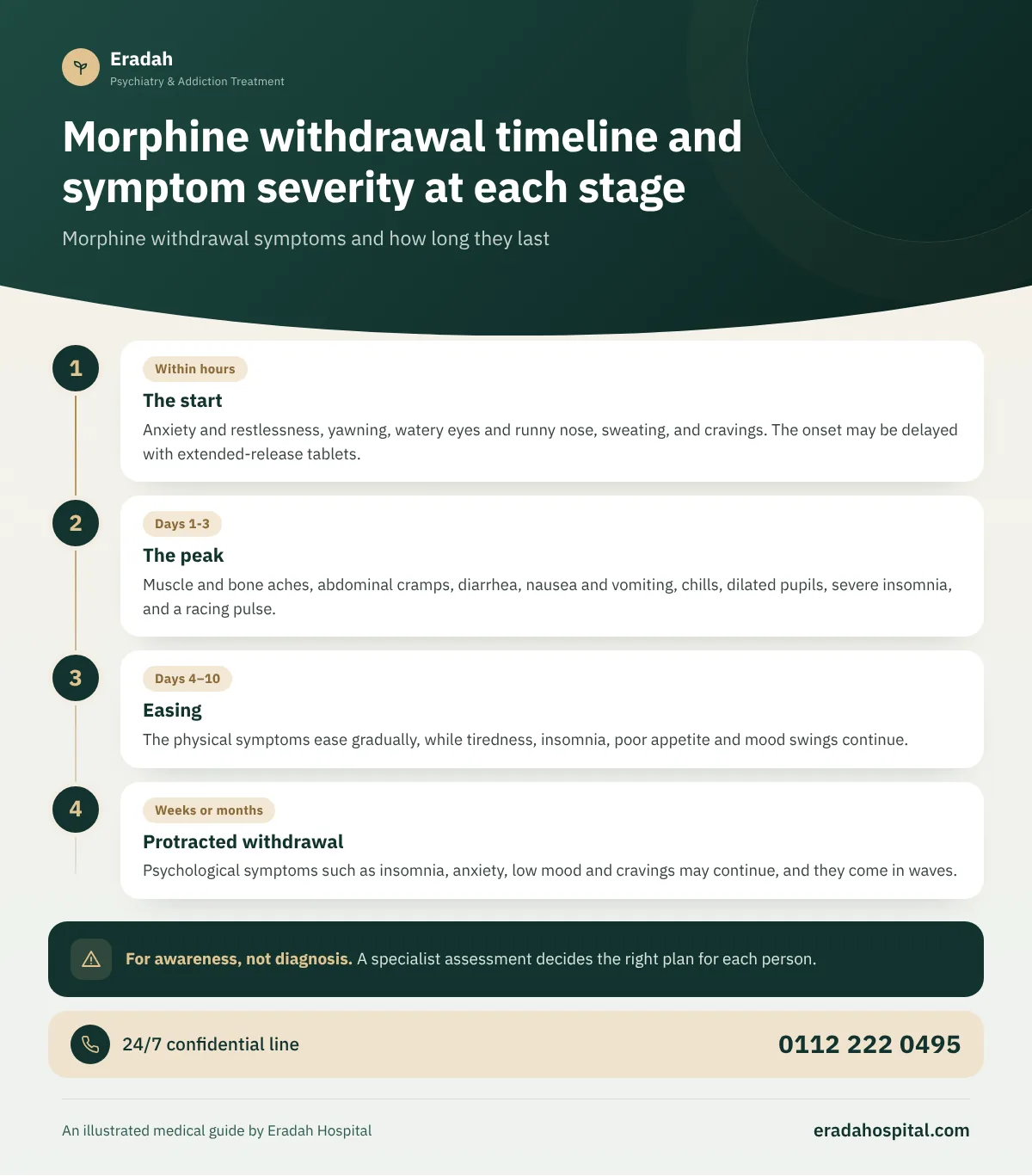
The course below is approximate and varies with the form of the medicine, how long it was used, the amount and general health:
- Within hoursThe start
Anxiety and restlessness, yawning, watery eyes and runny nose, sweating, and cravings. The onset may be delayed with extended-release tablets.
- Days 1-3The peak
Muscle and bone aches, abdominal cramps, diarrhea, nausea and vomiting, chills, dilated pupils, severe insomnia, and a racing pulse.
- Days 4–10Easing
The physical symptoms ease gradually, while tiredness, insomnia, poor appetite and mood swings continue.
- Weeks or monthsProtracted withdrawal
Psychological symptoms such as insomnia, anxiety, low mood and cravings may continue, and they come in waves.
Physical and psychological symptoms of morphine withdrawal
| Type | Symptoms |
|---|---|
| Early physical | Yawning, watery eyes and runny nose, sweating, chills, and muscle aches. |
| Later physical symptoms | Abdominal cramps, diarrhea, nausea and vomiting, loss of appetite, dilated pupils, and goosebumps. |
| Heart and breathing | Faster pulse and breathing, and raised blood pressure. |
| Psychological | Anxiety, irritability, insomnia, depression, and strong cravings. |
Does withdrawal differ by the form of morphine?
Symptoms start sooner and peak more strongly, but end relatively sooner.
The onset may be delayed and symptoms may appear more slowly, and they may last somewhat longer.
With planned gradual reduction, symptoms are much milder or not noticeable.
If you take morphine by medical prescription
If you are a patient taking morphine for real pain, do not stop it suddenly and do not change your dose yourself, even if you feel better or fear addiction. Medical guidelines advise that the doctor reduce the dose gradually over a period suited to your condition, and look with you for alternatives for pain relief if needed.
Common myths about morphine withdrawal
| The myth | The truth |
|---|---|
| Anyone who has withdrawal symptoms is addicted | Withdrawal symptoms can happen to any patient who stops suddenly after long use. They are a physical adaptation, not addiction. |
| Sedatives solve the withdrawal problem | Using them without supervision may shift the dependence onto them and double the risk of suppressed breathing. |
| When the physical symptoms end, the problem is over | Cravings and psychological symptoms may continue for weeks, and treatment after withdrawal is the most important part. |
Is morphine withdrawal dangerous?
Morphine withdrawal rarely threatens the life of an otherwise healthy person by itself, unlike alcohol and sedative withdrawal, but it is not entirely safe:
- Dehydration and electrolyte imbalance from vomiting and diarrhea, especially in older people and people with heart or kidney disease.
- Worsening of existing conditions such as heart disease, because of a faster pulse and higher blood pressure.
- Severe return of the original pain in people who were taking it for real pain.
- Severe depression and sometimes thoughts of self-harm, a situation that calls for immediate intervention.
- Relapse to escape the symptoms, which is the most common reason attempts to stop at home fail.
Stopping suddenly compared with gradual reduction
| Aspect | Stopping suddenly | Gradual reduction under medical supervision |
|---|---|---|
| Symptom severity | Strong symptoms within a few days | Milder or unnoticeable symptoms |
| The original pain | May return suddenly and severely | Managed at the same time with an alternative plan |
| Mental state | Anxiety, insomnia and depression without follow-up | Follow-up and treatment for psychological symptoms |
| Risk of relapse | High, to escape the symptoms | Lower with support and moving on to treatment |
Why is it not advisable to withdraw from morphine at home without a doctor?
- In a medical setting, approved medicines are used to ease pain, anxiety, insomnia and diarrhea.
- Vital signs, fluids and mental state are monitored continuously.
- The original pain, if there is any, is managed with a safe alternative plan.
- Medicines that prevent relapse can be started, with a direct move on to treatment and rehabilitation.
Sleep and mood after acute withdrawal ends
Even after the physical symptoms have gone, many people complain of insomnia, mood swings, and low energy and concentration for a while. This stage is expected and improves gradually with regular sleep, physical activity and psychological therapy. If depression or anxiety continues severely, it may be a mental health condition that needs its own treatment.
Dealing with this stage is an essential part of the treatment plan, not something to leave the patient to face alone.
How can a family support a person going through morphine withdrawal?
- Understand that irritability and anxiety are part of withdrawal and are not aimed at you.
- Encourage them to stick to the medical plan, and do not give them any medicines from the home.
- Watch for signs of dehydration and severe depression, and contact the medical team immediately if you are worried.
- Provide a calm environment, fluids and suitable food.
After withdrawal ends, the most important stage begins, and you will find its details on the page about morphine addiction treatment.
Signs of morphine overdose: call an ambulance (123) immediately
- Pupils that are extremely small, like pinpoints
- Very slow, irregular or stopped breathing
- Blue lips and fingernails and cold skin
- Loss of consciousness, or severe drowsiness with difficulty waking
- Gurgling or unusual snoring sounds
Call an ambulance on 123, place the person on their side so they do not choke, and stay with them until help arrives. Naloxone reverses the effect of morphine if given in time and is available in emergency departments, and the patient may need monitoring for hours because the effect of morphine can return.
Call the ambulance 123