Physical signs of morphine use
These signs appear while the substance is active, and they may be clearer with large amounts:
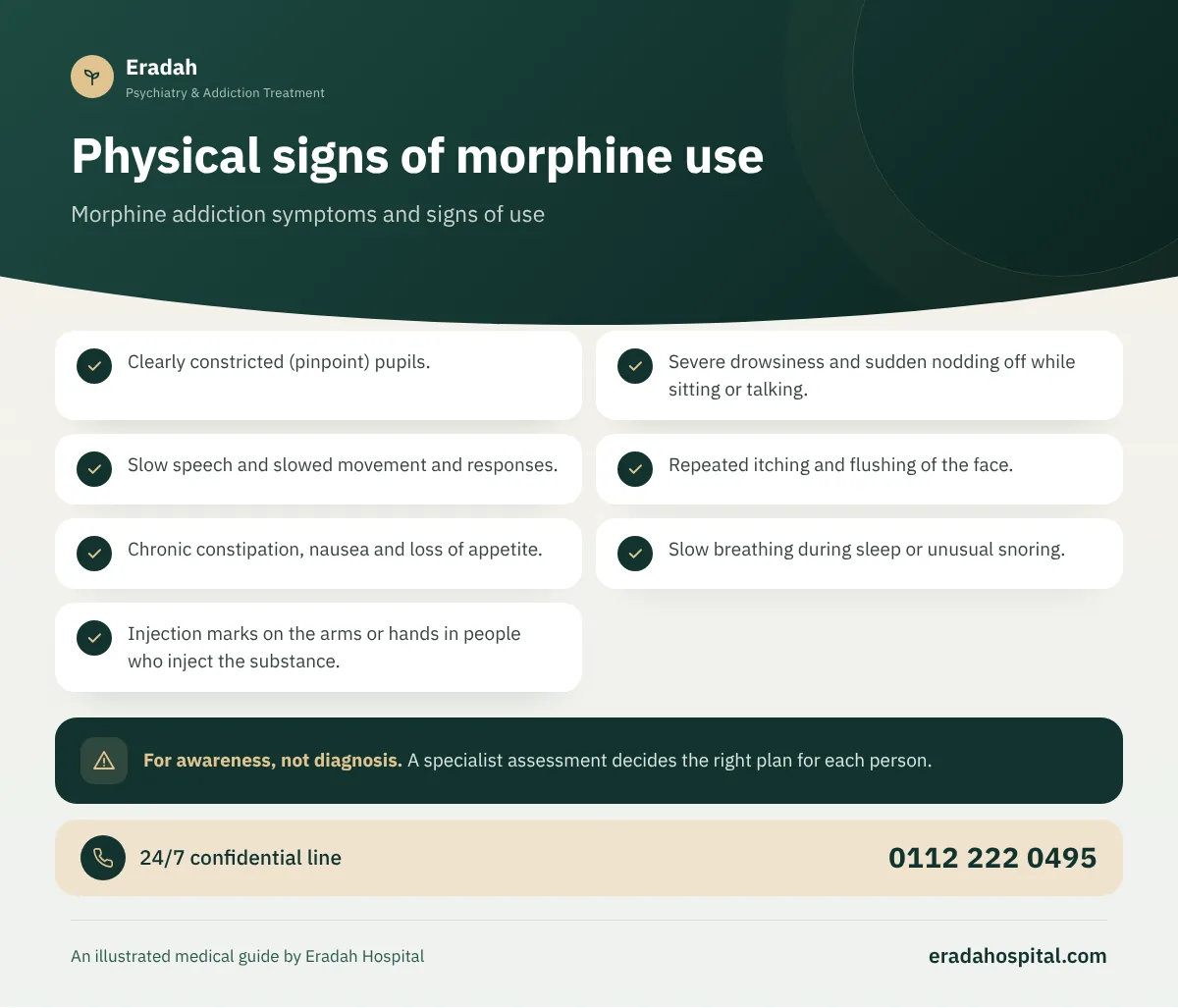
- Clearly constricted (pinpoint) pupils.
- Severe drowsiness and sudden nodding off while sitting or talking.
- Slow speech and slowed movement and responses.
- Repeated itching and flushing of the face.
- Chronic constipation, nausea and loss of appetite.
- Slow breathing during sleep or unusual snoring.
- Injection marks on the arms or hands in people who inject the substance.
Behavioral signs
- Pressing for the medicine before it is due, or repeatedly claiming the prescription or the medicine was lost.
- Going to more than one doctor or hospital to get prescriptions.
- The medicine disappearing from the home faster than expected.
- Exaggerating the pain or inventing new complaints.
- Withdrawing from others, excessive secrecy, and locking the room or phone.
- Neglecting work or study and family responsibilities.
- Asking for money often, or unexplained debts appearing.
Psychological signs
- Mood swings between exaggerated calm and severe irritability.
- Marked anxiety and depression, especially between doses.
- Loss of interest in hobbies and relationships.
- Poor concentration and memory, and slowed thinking.
A pain patient or loss of control? How can you tell?
This is one of the hardest points for families and doctors, because a pain patient may press hard for their medicine if their pain is not under control. The comparison below is approximate and meant to help you understand; the final judgment belongs to the doctor:
| Aspect | Pain patient in control | Signs of loss of control |
|---|---|---|
| Use | Takes the prescribed dose at the prescribed times | Raises the dose on their own and uses up the medicine before it is due |
| Goal | Pain relief and better mobility | Euphoria, sleep or calming anxiety |
| Source | One doctor and a known pharmacy | Multiple doctors or non-medical sources |
| Effect on life | Improvement in mobility and work | Decline in work and relationships despite the medicine |
Signs that may appear in healthcare workers
In medical workplaces, different signs may appear, such as: repeatedly volunteering to handle controlled medicines, repeated errors in their records, frequent absences or being present outside working hours, or clear changes in mood and performance. These are signs that call for early supportive intervention, not only punishment.
Signs that may show up at work or school
- Nodding off or zoning out at work, and slowness in completing usual tasks.
- Repeated lateness and absence without convincing reasons.
- Unusual mistakes in work the person is skilled at, or repeated minor accidents.
- Falling grades and attendance in students.
When these signs come together with what you notice at home, they deserve a calm conversation, not a hasty accusation.
How do you tell morphine use from other substances?
| Substance | Pupils | Activity | Distinguishing sign |
|---|---|---|---|
| Morphine | Very small | Drowsiness and dozing | Itching and constipation; may be linked to prescriptions |
| Tramadol | Constricted | Drowsiness or excess energy | Tremor or spasms |
| Pregabalin | Usually normal | Unsteadiness and dizziness | Poor balance and slurred speech |
| Stimulants | Dilated | Hyperactivity and severe insomnia | Loss of appetite and irritability |
Signs that call for emergency care immediately
Some things you may notice cannot wait or be talked through; they need emergency help right away:
Very slow breathing or strange snoring, with difficulty waking the person.
No response to being called or touched, with very small (pinpoint) pupils.
A sign of low oxygen in the blood that calls for emergency help right away.
In these situations, call the ambulance on 123 immediately, and tell them everything you know about the medicines and substances the person took.
Signs related to medicine kept at home
If there is prescribed morphine in the home for a family member, watch for: the amount running down faster than the scheduled doses, changes in where it is kept, empty packages that no one can account for, or the patient complaining that their medicine no longer lasts although their condition has not changed. These signs call for a calm conversation and a review by the doctor.
When does use become addiction? Diagnostic criteria
Doctors use the DSM-5 diagnostic criteria for opioid use disorder, which include eleven criteria within a year, among them: using larger amounts or for longer than intended, unsuccessful attempts to cut down, cravings, neglecting responsibilities, and continuing despite harm.
Importantly, tolerance and withdrawal symptoms are not counted toward the criteria in a patient who takes morphine under proper medical supervision, because they are an expected physical adaptation.
| Number of criteria | Level |
|---|---|
| 2 to 3 | Mild |
| 4 to 5 | Moderate |
| 6 or more | Severe |
What should you do if you notice these signs?
- Gather your observations calmly, without accusing or searching aggressively.
- If the morphine is prescribed, contact the treating doctor and tell them what you are noticing.
- Choose a quiet time to talk, and express your concern and your love.
- Do not encourage them to stop suddenly on their own.
- Offer a clear step: an assessment appointment or a confidential consultation.
For the symptoms that follow stopping, see the page on morphine withdrawal symptoms.
Signs of morphine overdose: call an ambulance (123) immediately
- Pupils that are extremely small, like pinpoints
- Very slow, irregular or stopped breathing
- Blue lips and fingernails and cold skin
- Loss of consciousness, or severe drowsiness with difficulty waking
- Gurgling or unusual snoring sounds
Call an ambulance on 123, place the person on their side so they do not choke, and stay with them until help arrives. Naloxone reverses the effect of morphine if given in time and is available in emergency departments, and the patient may need monitoring for hours because the effect of morphine can return.
Call the ambulance 123