What are the stages of opium addiction treatment?
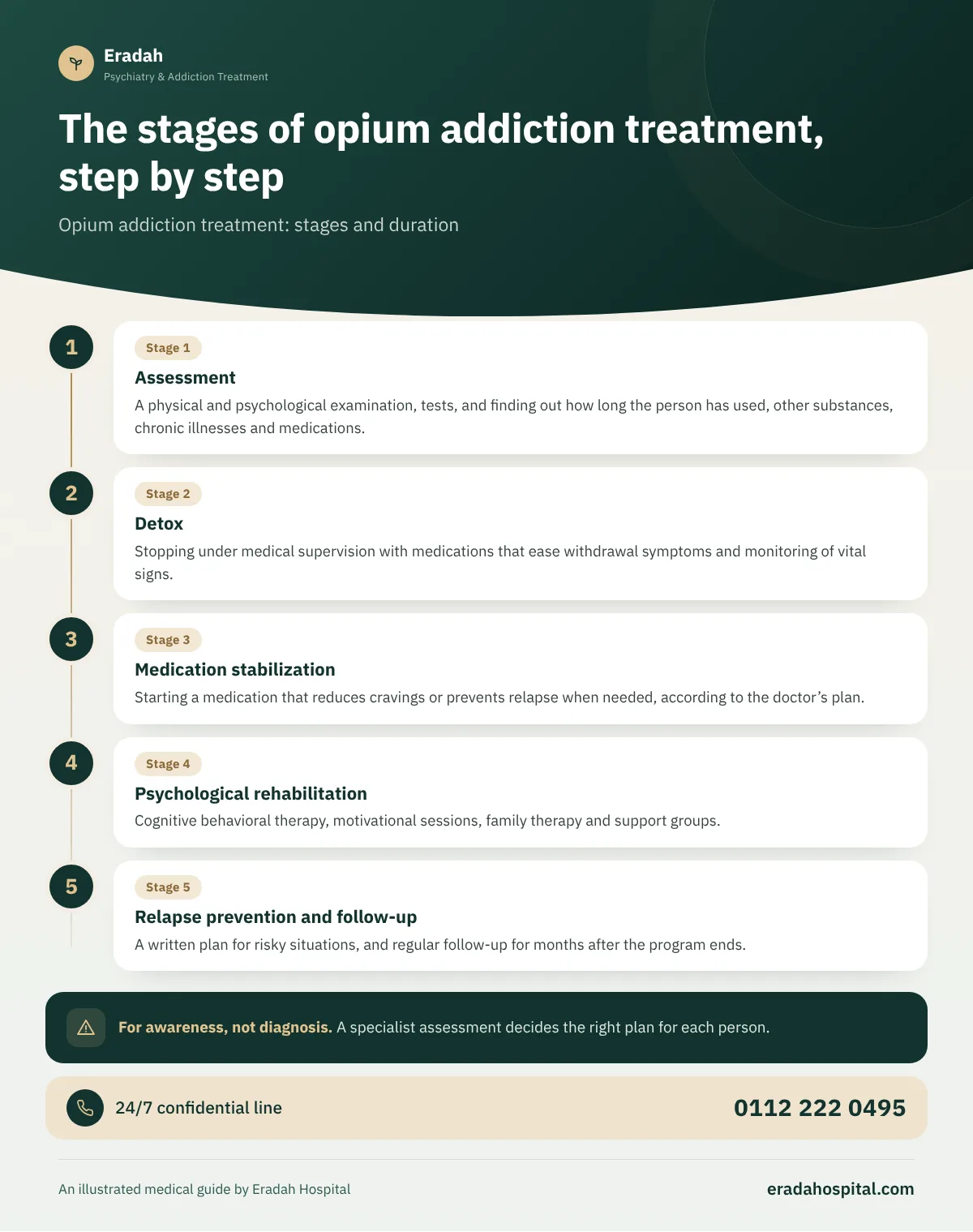
- Stage 1Assessment
A physical and psychological examination, tests, and finding out how long the person has used, other substances, chronic illnesses and medications.
- Stage 2Detox
Stopping under medical supervision with medications that ease withdrawal symptoms and monitoring of vital signs.
- Stage 3Medication stabilization
Starting a medication that reduces cravings or prevents relapse when needed, according to the doctor’s plan.
- Stage 4Psychological rehabilitation
Cognitive behavioral therapy, motivational sessions, family therapy and support groups.
- Stage 5Relapse prevention and follow-up
A written plan for risky situations, and regular follow-up for months after the program ends.
Why does treatment begin with a comprehensive assessment?
Because every patient is different. A young man who uses opium with sedatives is different from an older man who has used it for twenty years to ease back pain and has diabetes and high blood pressure. The assessment covers:
- History of use: how long, how often, and other substances involved.
- Physical condition: heart, lungs, liver, kidneys, chronic illnesses and their medications.
- Mental state: depression, anxiety, sleep disorders and dangerous thoughts.
- Family and social situation and sources of support.
- Previous treatment attempts and the reasons for relapse.
How is detox from opium done?
Detox is the stage in which the body clears opium under medical supervision, with withdrawal symptoms eased by suitable medications and fluids and vital signs monitored. Acute symptoms usually last from a few days to about two weeks, and the details are on the opium withdrawal symptoms and how long they last page.
What medications are used to treat opium addiction?
Internationally approved medications are used to treat opioid dependence. The doctor chooses what suits each case and what is available, and sets the duration and follow-up. The main ones are:
A partial agonist at opioid receptors that eases withdrawal and cravings, and may be used for detox or long-term treatment.
A long-acting full agonist, used within licensed substitution treatment programs under strict supervision.
Blocks opioid receptors so the drug has no effect, and is used after detox is finished to help prevent relapse.
Such as clonidine to ease anxiety, sweating and cramps, and medications for nausea, diarrhea and sleep.
The World Health Organization describes substitution treatment with methadone or buprenorphine as having the strongest evidence of effectiveness for treating opioid dependence. But these medications are used only with a prescription and follow-up, and some can cause sudden withdrawal if started at the wrong time. Learn more about methadone.
What psychological treatments are there for opium addiction?
| Treatment | What it offers |
|---|---|
| Cognitive behavioral therapy | Helps the person recognize the thoughts and situations that drive use and learn alternative ways of coping with them. |
| Motivational interviewing | Strengthens the person’s motivation to change and helps them resolve their ambivalence. |
| Family therapy | Repairs relationships and teaches the family how to support without enabling use. |
| Support groups | Meetings with people in recovery reduce loneliness and provide realistic examples of recovery. |
| Treating co-occurring disorders | Treating depression, anxiety, insomnia and chronic pain at the same time. |
How is someone treated who was using opium to relieve chronic pain?
This group is common among people who use opium, and stopping without a plan for the pain makes relapse almost certain. So treatment includes assessing the cause of the pain itself, suitable medical and natural treatments such as physical therapy and non-opioid medications, sometimes working with a pain or orthopedic doctor, and teaching the patient ways to live with pain without relying on an intoxicating substance.
How long does opium addiction treatment take?
| Stage | Approximate duration |
|---|---|
| Detox | A few days to about two weeks |
| Intensive rehabilitation | Weeks to a few months depending on the case |
| Follow-up and relapse prevention | Six months to a year or more |
| Long-term medication treatment, if prescribed | Set by the doctor according to the patient’s stability |
Durations are approximate and vary with the severity of the addiction, other substances involved, physical and mental condition, and the support available.
Is residential or outpatient treatment better?
| Aspect | Residential treatment | Outpatient treatment |
|---|---|---|
| Suits | Severe addiction, mixing with other substances, chronic illnesses, and failed earlier attempts | Milder cases with strong family support and a stable environment |
| Follow-up | around the clock | Regular sessions and appointments |
| Environment | Away from triggers and the substance | The person stays in their daily environment |
| Daily life | A temporary break from work | Can often keep working |
How is relapse prevented after opium treatment?
- Recognizing personal triggers: places, people, feelings and times linked to use.
- A written plan for what to do when a craving hits.
- Keeping up follow-up and the prescribed medication, if any.
- Treating pain, insomnia and depression rather than leaving them unresolved.
- Building a healthy daily routine: regular sleep, physical activity, work and supportive relationships.
- Treating a slip as a signal to ask for help, not as a final failure.
How do you choose the right opium addiction treatment center?
- An official license and a team that includes psychiatrists, internists and psychologists.
- A comprehensive assessment before the plan is set, not one program for everyone.
- The ability to handle older adults, chronic illnesses and dual diagnosis.
- Use of scientifically approved medications, not promises of a quick cure within days.
- A family program and follow-up after discharge.
- Respect for privacy, dignity and confidentiality of information.
Choosing a hospital for opium addiction treatment
A sizable share of those seeking opium addiction treatment are older, started using in a social setting or to ease chronic pain, and also have high blood pressure, diabetes or heart disease. So a place that merely knows opioid withdrawal is not enough. You need a doctor who manages the chronic illnesses during detox, and who understands that the real danger begins after discharge, when the body’s tolerance falls and the old amount becomes enough for an overdose.
| Ask | A reassuring answer |
|---|---|
| How are chronic illnesses monitored during detox? | Regular checks of vital signs and fluids, and a review of the patient’s usual medications |
| What is the pain plan after stopping? | Non-opioid alternatives and working with a specialist doctor rather than leaving the pain untreated |
| Is the family told about the overdose risk after discharge? | Yes, with a written plan for what to do if use happens |
| What about approved medications to prevent relapse? | The doctor decides what is suitable after assessment, with no promises of a cure in days |
At Eradah, detox begins under the supervision of a doctor and nursing staff around the clock, and the patient is taken by ambulance to the nearest hospital if his health requires it. Then residential treatment continues the work with individual and group sessions and a medication plan set by the doctor.
Opium addiction treatment at Eradah
At Eradah Psychiatry & Addiction Treatment we begin with a comprehensive assessment that determines each patient’s needs. Then we set a plan that combines safe detox under medical supervision, approved medications when needed, individual and group psychotherapy, a family program, and follow-up after discharge to prevent relapse. We pay particular attention to older adults, people with chronic pain, and those with accompanying illnesses, while fully protecting confidentiality.