Why do opium withdrawal symptoms happen?
With repeated use, the brain adapts to the presence of the morphine in opium, so it reduces its natural production of endorphins, and the body’s arousal systems become active to make up for the constant suppression. When use stops, this balance is suddenly upset, and symptoms appear that are the opposite of opium’s effects: anxiety instead of calm, insomnia instead of drowsiness, diarrhea instead of constipation, and pain instead of relief.
The severity of withdrawal is linked to how long and how often the person used, how strong the opium was, whether other substances such as sedatives or tramadol were involved, and general physical and mental health.
What is the opium withdrawal timeline?
The course differs from person to person, but it usually follows these stages:
- First hours – day 1The start
Anxiety and tension, frequent yawning, tears and a runny nose, sweating, and a strong craving to use.
- Days 2 – 4The peak
Muscle and bone aches, abdominal cramps, diarrhea, nausea and vomiting, chills, dilated pupils, and severe insomnia.
- Days 5 – 14Easing
The physical symptoms ease gradually, while tiredness, insomnia, poor appetite and mood swings continue.
- Weeks to monthsProtracted withdrawal
Insomnia, anxiety, low mood and cravings that come in waves, improving gradually with treatment.
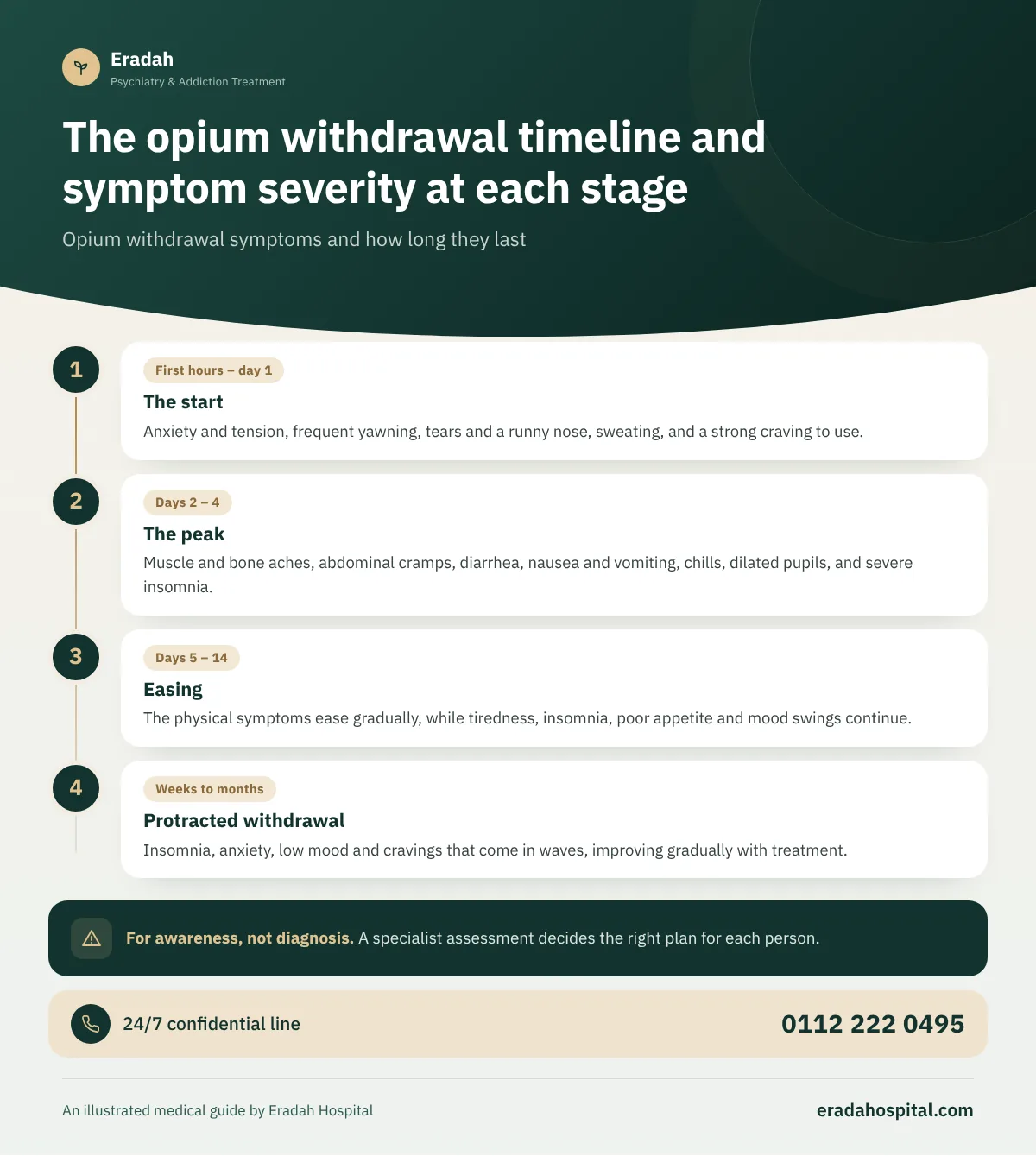
These time frames are approximate. Symptoms may start faster or slower depending on the pattern of use, and may last longer in people who were mixing opium with longer-acting opioids or sedatives.
What are the physical and psychological symptoms of opium withdrawal?
| Stage | Symptoms |
|---|---|
| Early | Anxiety and restlessness, muscle aches, tears and a runny nose, sweating, frequent yawning, insomnia. |
| Late | Abdominal cramps, diarrhea, nausea and vomiting, enlarged pupils, chills and goosebumps. |
| Psychological | Intense cravings, irritability, depression, difficulty concentrating, a feeling of unease. |
Someone who was using opium to relieve chronic pain may feel the original pain return temporarily and more strongly. This needs an assessment and safe treatment of the pain itself.
Is opium withdrawal dangerous?
Opioid withdrawal rarely threatens the life of a healthy person by itself, unlike alcohol and sedative withdrawal, but it is not completely safe:
- Dehydration and electrolyte imbalance from diarrhea and vomiting, which is more dangerous in older adults and people with kidney and heart disease.
- A rapid pulse and high blood pressure, which can strain the heart in people with heart disease.
- Withdrawal from other substances at the same time. If the person mixes opium with sedatives or alcohol, withdrawal from those can be dangerous and cause seizures.
- Relapse to escape the symptoms, which is the most common reason stopping without support fails.
Why do older adults and people with illnesses need special medical supervision?
Many of those who use opium traditionally are older adults or have chronic illnesses such as diabetes, high blood pressure, and heart and lung disease. They may be affected more than others by dehydration, electrolyte imbalance and high blood pressure, and their medications may interact with withdrawal medications. So their withdrawal needs a comprehensive assessment and monitoring of vital signs, and sometimes a stay in an equipped facility.
- Reviewing all chronic medications before withdrawal begins.
- Monitoring blood pressure, blood sugar, pulse and fluids daily.
- A plan to treat the chronic pain that opium was masking.
- Assessing mental and cognitive state, especially in the elderly.
Why is sleep so disturbed during opium withdrawal?
Insomnia is one of the most distressing withdrawal symptoms and one of the longest-lasting, because the brain has long been used to the sedating effect of opium, especially in people who used it for sleep in the first place. Sleep disturbance can continue for weeks after the physical symptoms end, and it increases anxiety and cravings. The doctor helps with a plan that includes regular sleep habits, psychological treatment for insomnia, and suitable medications when needed that do not cause a new addiction. Using sedatives without a prescription to make up for opium is never advised.
Why is it not advisable to stop opium at home without supervision?
Stopping suddenly at home means facing the hardest days without medications to ease the symptoms, without monitoring for dehydration and complications, and without protection from relapse. Folk remedies and mixing medications without a doctor can also cause additional harm. In a medical setting, it is possible to:
- Use approved medications that ease pain, anxiety, insomnia and diarrhea.
- Use medications that act on opioid receptors to ease withdrawal gradually, when the doctor decides to.
- Monitor vital signs and fluids around the clock.
- Move straight into a psychological treatment and rehabilitation program.
What is protracted withdrawal after opium?
After the acute physical symptoms end, a person may go through a longer stage of insomnia, fatigue, anxiety, low mood, and cravings that appear suddenly when facing a place, person or situation linked to use. This stage is an expected part of the brain’s recovery, and it improves gradually with psychotherapy, regular sleep, physical activity and family support. It is also the period in which many relapses happen if there is no plan.
How can the family support someone going through opium withdrawal?
Irritability and mood swings are part of withdrawal, not a personal stance against you.
Encourage him to keep up with the doctor, and do not give him medications or remedies of your own.
Keep away any substances or non-prescribed sedatives, and provide light food and enough fluids.
Know the signs of an overdose and the ambulance number (123), especially if he goes back to use.
Withdrawal is only the beginning. Real treatment includes supportive medications, psychotherapy and relapse prevention. Learn about the stages on the opium addiction treatment page.
Signs of opium overdose: call an ambulance (123) immediately
- Pupils that are extremely small, like pinpoints
- Very slow, irregular or stopped breathing
- Loss of consciousness, with no response to calling or touch
- Blue lips and fingernails
- Gurgling or unusual snoring sounds
Call an ambulance on 123, place the person on their side so they do not choke, and stay with them until help arrives. The medicine naloxone reverses the effect of an opioid overdose if given in time, and it is available in emergency departments.
Call the ambulance 123