Is opium addiction a lack of willpower or a disease?
The US National Institute on Drug Abuse describes addiction as a chronic disorder that changes brain function in the areas of reward, impulse control and response to stress. That is why we look at the causes of opium addiction: to know what needs treating so the person does not return to it, not to excuse the use.
People also differ in how susceptible they are to addiction. Not everyone who tries opium becomes dependent, but the more risk factors come together, the greater the likelihood, and the faster it can happen.
How does opium cause addiction in the brain?
Opium contains morphine, which binds to opioid receptors in the brain, releasing dopamine in the reward circuits and giving a feeling of relief, calm and no pain. With repeated use, the following happens:
- Tolerance: the person needs a larger amount to feel the same effect.
- Physical dependence: the body adapts to the presence of the substance, so unpleasant symptoms appear when it is absent.
- Using to avoid pain: the motive shifts from seeking relief to escaping withdrawal symptoms.
- Cravings: the brain links opium with places, people and feelings, so the urge appears when they are encountered.
Why is opium associated with pain relief and fatigue?
One of the most common paths into opium addiction is when a person starts taking it to relieve chronic back or joint pain, to endure hard physical work for long hours, or to overcome insomnia and exhaustion, without seeing a doctor. Opium does mask pain and tiredness at first, so the person thinks they have found a solution, while dependence forms gradually without their noticing.
How do folk beliefs contribute to opium addiction?
In some communities, including some rural areas, opium has been tied across generations to a false positive image: a “natural” remedy for pain, a way to endure work, a folk treatment for chronic conditions such as diabetes and blood pressure, or a sexual stimulant. This image weakens the sense of danger and makes use socially acceptable, practiced by adults in front of children.
- The belief that what is natural cannot cause harm.
- Seeing relatives or neighbors use it with no visible consequences at first.
- Confusing opium with its pharmaceutical derivatives that doctors prescribe under supervision.
- A lack of reliable information about its harms and about where to get treatment.
Does genetic predisposition play a role in opium addiction?
Research suggests that genetic factors explain a large part of a person’s susceptibility to addiction in general. Someone with a parent or sibling who has an addiction is more at risk. The reason is that genes may affect how the brain responds to the substance and the ability to control impulses, not that addiction is “fate.” This often combines with an environmental factor: use being familiar in the home itself.
What is the link between mental health conditions, trauma and opium addiction?
Some people with these conditions find temporary calm in opium, and it turns into a mistaken form of self-medication that makes the condition worse.
Using opium for sleep is a common way in, and sleep soon gets worse without it.
Loss, violence and severe stress make escaping painful feelings a strong motive for use.
Attention-deficit/hyperactivity disorder and personality disorders raise susceptibility to addiction.
Having a mental health condition together with addiction is called dual diagnosis, and it needs treatment that deals with both conditions at once. Read about dual diagnosis.
How does the environment affect opium addiction?
- Availability: having the substance close by makes it easier to start and to continue.
- Friends and coworkers: group use at late-night gatherings or after work makes it a social habit.
- Poverty, unemployment and financial pressure: these raise stress and reduce opportunities for recreation and support.
- Lack of supervision and family support: especially for teenagers and young people.
- Starting use at a young age: this raises the likelihood of addiction later because the brain is still developing.
Who is most at risk of opium addiction?
Some groups have more risk factors coming together than others, so they need particular attention in prevention and early detection:
| Category | Why more at risk? |
|---|---|
| People in physically demanding jobs | The belief that opium gives endurance and eases body aches after work. |
| Older adults and people with chronic pain | Using it as a folk remedy for pain, insomnia and chronic illnesses without a medical diagnosis. |
| Children of families where a parent uses | A combination of genetic predisposition and use being treated as normal in the home. |
| People with previous addiction to other substances | Switching between substances, especially between opioids and sedatives. |
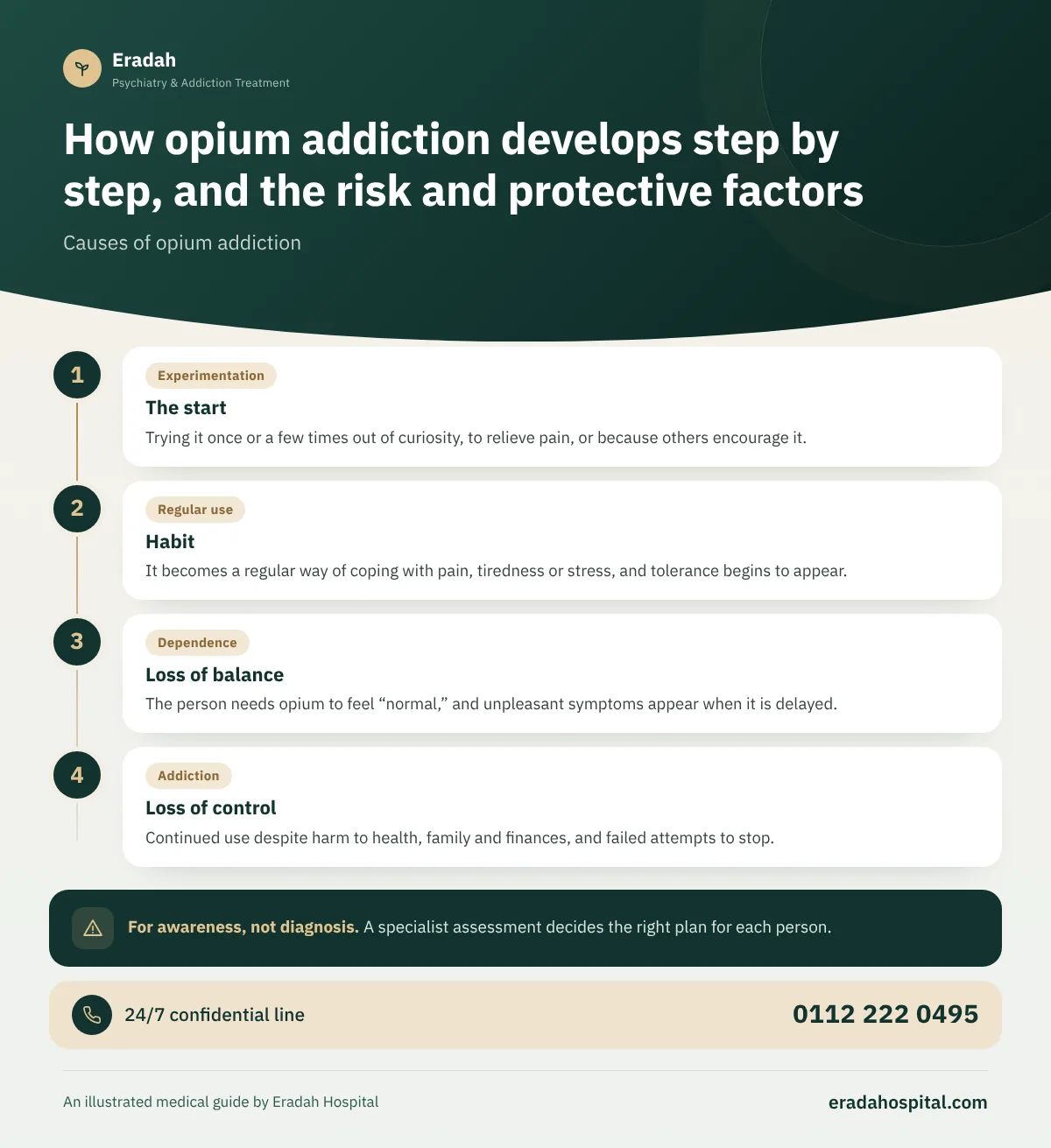
What are the stages in the development of opium addiction?
- ExperimentationThe start
Trying it once or a few times out of curiosity, to relieve pain, or because others encourage it.
- Regular useHabit
It becomes a regular way of coping with pain, tiredness or stress, and tolerance begins to appear.
- DependenceLoss of balance
The person needs opium to feel “normal,” and unpleasant symptoms appear when it is delayed.
- AddictionLoss of control
Continued use despite harm to health, family and finances, and failed attempts to stop.
What are the risk factors and protective factors for opium addiction?
| Risk factors | Protective factors |
|---|---|
| Chronic pain without medical diagnosis and treatment | Regular medical follow-up and suitable pain treatment |
| A family member who uses | An informed family that talks openly about drugs |
| Untreated depression, anxiety or trauma | Early psychological treatment and skills for coping with stress |
| Folk beliefs about the benefits of opium | Reliable, accessible health information |
| Starting use at a young age | Support for young people, alternative activities and clear goals |
Having risk factors does not mean addiction is inevitable, and having protective factors does not mean complete immunity. But strengthening protective factors is the heart of prevention, and an essential part of opium addiction treatment and relapse prevention.