What are the physical signs of opium use?
These signs usually appear within hours of use, and repeat in a noticeable pattern with regular use:
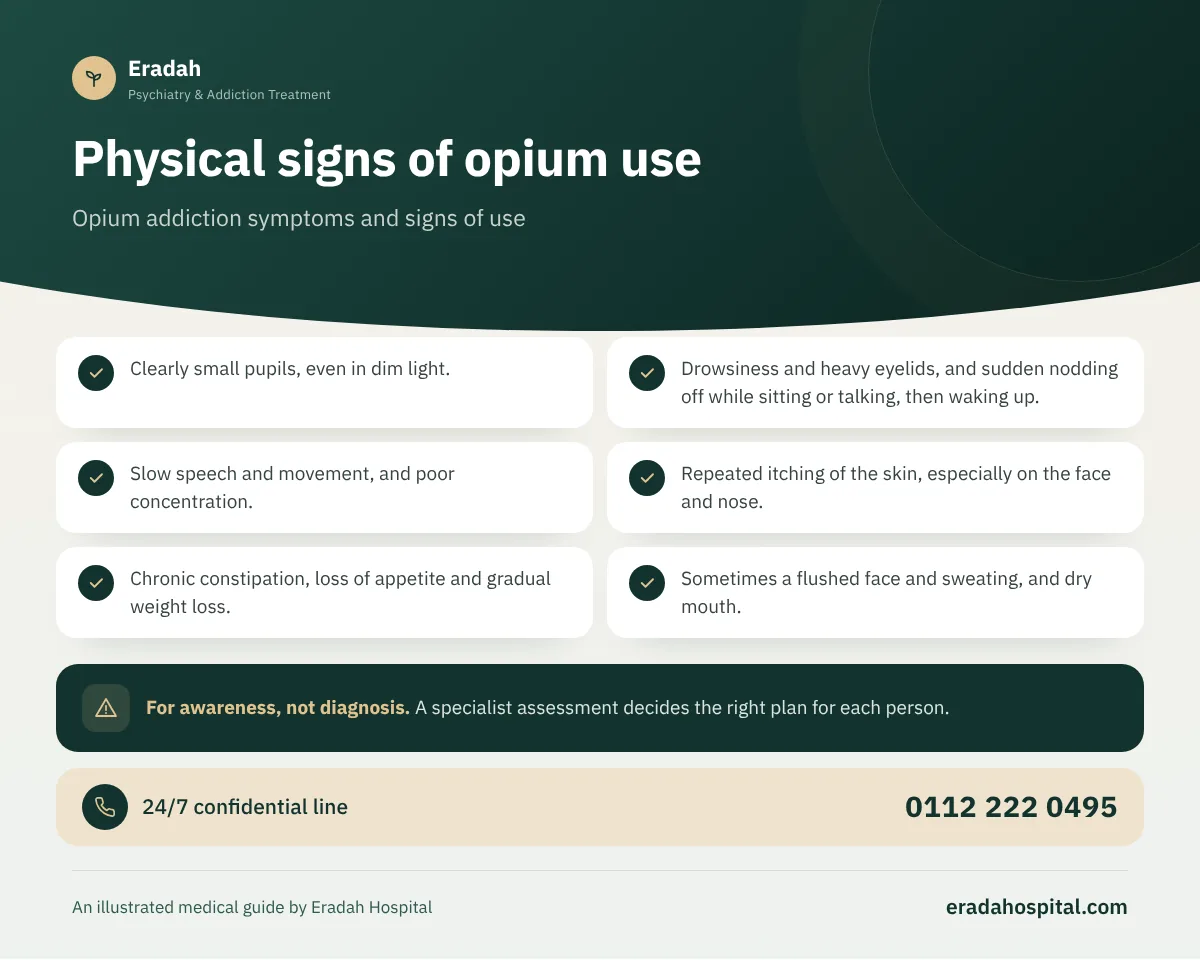
- Clearly small pupils, even in dim light.
- Drowsiness and heavy eyelids, and sudden nodding off while sitting or talking, then waking up.
- Slow speech and movement, and poor concentration.
- Repeated itching of the skin, especially on the face and nose.
- Chronic constipation, loss of appetite and gradual weight loss.
- Sometimes a flushed face and sweating, and dry mouth.
What behavioral signs might the family notice?
Sleeping at unusual times, being away for periods without explanation, and being late for work.
Closing doors, avoiding questions, and hiding things in unusual places.
Drifting away from old friends and spending more time with new people or at late-night gatherings.
Constantly asking for money, money and belongings going missing from the home, or unexplained debts.
Declining interest in work, family and personal appearance.
Looking for extra painkillers or sedatives, or pressing hard to get them.
What are the psychological signs of opium addiction?
- Mood swings between exaggerated calm after use and irritability and tension when it is delayed.
- Losing interest in hobbies and activities they used to enjoy.
- Anxiety, depression and withdrawal from social life.
- Denial and justification, such as saying it is a “medicine for tiredness” or a “harmless habit.”
- A mind preoccupied with getting the substance and arranging the money for it.
When a person is late for their usual time of use, signs such as yawning, a runny nose and irritability may appear. These are the start of withdrawal, and the details are on the opium withdrawal symptoms page.
How does the family tell the problem has gone beyond experimenting?
- Physical signs recurring in a regular pattern, not a one-off.
- Repeated promises to stop, then going back.
- The amount or number of times increasing over time.
- Continued use despite clear health, family or financial problems.
- Severe distress and tension when the substance cannot be obtained.
How is opium addiction diagnosed medically?
Doctors rely on the criteria of the DSM-5 diagnostic manual for opioid use disorder, or the international classification ICD-11. The criteria revolve around loss of control, continued use despite harm, tolerance and withdrawal symptoms. The number of criteria met within one year indicates the severity of the disorder:
| Area | Examples of criteria |
|---|---|
| Impaired control | Using larger amounts or for longer than intended, failing to cut down, spending a lot of time getting it, and cravings. |
| Social impact | Neglecting work or home, continuing despite problems with others, and giving up important activities. |
| Risky use | Using in dangerous situations, and continuing despite knowing it harms the body or mind. |
| Pharmacological criteria | Tolerance, and withdrawal symptoms when stopping. |
This is an awareness summary, not a tool for self-diagnosis. A diagnosis is made by a specialist doctor after a full assessment.
Do the signs of opium use differ in older adults?
In older adults, signs of use may be wrongly put down to “getting older”: a lot of drowsiness, forgetfulness, slowed movement, constipation, repeated falls and weight loss. The person may have been using opium steadily for years, so no one notices the change until another illness, a hospital admission, or when the substance is cut off. That is why it is important that the treating doctor knows about any use, because it affects the choice of medications, anesthesia and the treatment plan.
What are common mistakes when opium use is discovered?
- Downplaying it: treating it as an “old habit” or a “mood” that needs no treatment.
- Violent confrontation: shouting, threats and throwing the person out, which push them to hide it more.
- Sudden stopping at home: locking the person up or forcing them to stop without medical supervision.
- Giving medications from the family: sedatives or painkillers without a doctor, which can cause a dangerous mix.
- Hiding it from the doctor: when entering a hospital or having surgery, which puts the patient at risk.
How do you tell opium use from other substances?
| The sign | Opium and opioids | Hashish | Stimulants |
|---|---|---|---|
| Pupils | Very small | Usually normal with red eyes | Dilated |
| Activity | Drowsiness and nodding off | Relaxation and slowness | Overactivity and insomnia |
| Appetite | Weak | Often increased | Very weak |
| Speech | Poor | Sometimes slow | Fast and flowing |
The signs of opium may resemble those of other opioids such as tramadol and heroin, or of sedatives. The substance cannot be identified precisely from signs alone; testing and a medical assessment are the right way.
How do you talk to someone you suspect is using opium?
- Choose a calm time when the person is fully alert, not during use or right after a direct problem.
- Start with concern and love, not accusation: “I noticed you are very tired and I am worried about you.”
- Describe what you have noticed with specific facts, without labels or insults.
- Listen without interrupting, and expect denial the first time.
- Offer practical help: an appointment for a confidential medical assessment.
- If they are older and have used it for years, focus on their health, chronic illnesses and the importance of medical follow-up.
What next after noticing the signs?
The next step is to ask for a specialist assessment, without interrogation or hunting for conclusive proof. Through an interview, examination and tests, the doctor can determine whether there is use, dependence or addiction, which substances are involved, and whether there are accompanying illnesses or mental health conditions. The family can start with a consultation on their own if the person is not ready yet, and then move step by step to opium addiction treatment.
Signs of opium overdose: call an ambulance (123) immediately
- Pupils that are extremely small, like pinpoints
- Very slow, irregular or stopped breathing
- Loss of consciousness, with no response to calling or touch
- Blue lips and fingernails
- Gurgling or unusual snoring sounds
Call an ambulance on 123, place the person on their side so they do not choke, and stay with them until help arrives. The medicine naloxone reverses the effect of an opioid overdose if given in time, and it is available in emergency departments.
Call the ambulance 123