What are the short-term harms of opium?
These harms appear within hours of use, and a person can experience them even the first few times:
- Suppressed breathing and a slow heartbeat, which in an overdose can go as far as breathing stopping.
- Severe drowsiness, slowed thinking and movement, and poor concentration.
- Nausea, vomiting and dizziness, with a risk of choking on vomit if consciousness is lost.
- Constipation, itchy skin, dry mouth and difficulty urinating.
- Impaired judgment and decision-making, which raises the risk of accidents and injuries.
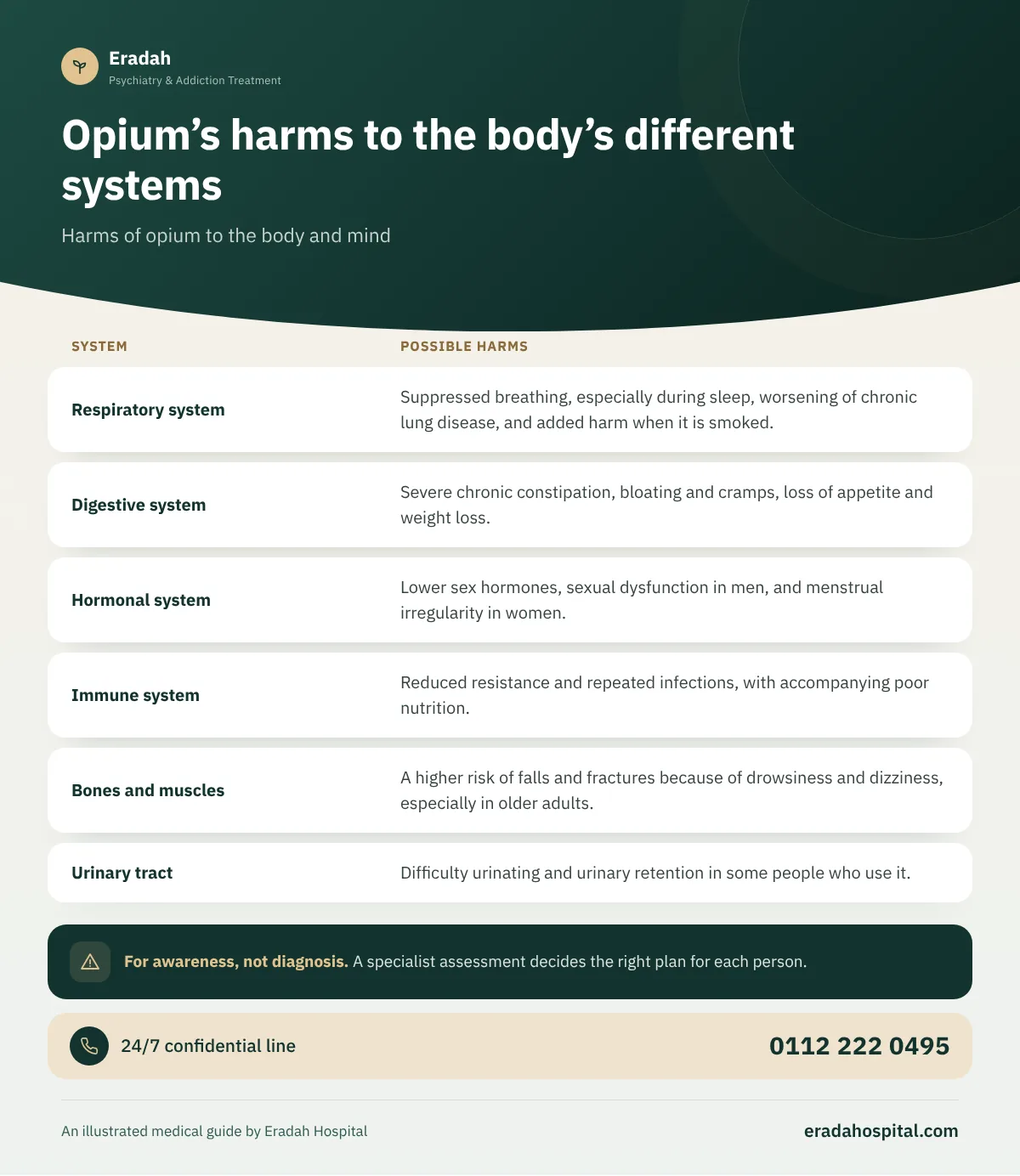
What are the long-term harms of opium to the body’s systems?
| System | Possible harms |
|---|---|
| Respiratory system | Suppressed breathing, especially during sleep, worsening of chronic lung disease, and added harm when it is smoked. |
| Digestive system | Severe chronic constipation, bloating and cramps, loss of appetite and weight loss. |
| Hormonal system | Lower sex hormones, sexual dysfunction in men, and menstrual irregularity in women. |
| Immune system | Reduced resistance and repeated infections, with accompanying poor nutrition. |
| Bones and muscles | A higher risk of falls and fractures because of drowsiness and dizziness, especially in older adults. |
| Urinary tract | Difficulty urinating and urinary retention in some people who use it. |
Does opium cause cancer?
In 2020, the International Agency for Research on Cancer of the World Health Organization classified opium use as Group 1: carcinogenic to humans, after reviewing the available scientific evidence. This means the evidence is sufficient to link it to cancer in humans.
| Strength of evidence | Cancer types |
|---|---|
| Sufficient evidence | Lung cancer, laryngeal cancer, and bladder cancer. |
| Limited evidence | Cancer of the esophagus, stomach, pancreas, and pharynx. |
This risk is linked to the use of raw or minimally processed opium, and it does not mean that morphine medications used in hospitals cause cancer in the same way. The risk also rises with longer duration of use and is multiplied in smokers.
Why is adulterated opium an added danger?
Opium sold on the illicit market is not subject to any oversight, and it may be mixed with substances to increase its weight or change its appearance. Medical reviews from countries where opium is widespread have documented cases of lead poisoning among people who use it because of adulteration, and this poisoning can cause severe abdominal pain, anemia and nerve disorders.
What is the danger of mixing opium with sedatives and alcohol?
The World Health Organization considers using opioids together with alcohol or sedatives, such as benzodiazepines or other medications that suppress breathing, among the most important risk factors for death from overdose. It is common for opium to be mixed with sedatives, pregabalin or tramadol in search of a stronger effect, and this multiplies the suppression of breathing in ways that cannot be predicted.
Benzodiazepines with opium are among the most dangerous combinations for breathing.
It multiplies drowsiness and respiratory suppression and raises the risk of choking on vomit.
Mixing it with tramadol or codeine suddenly raises the total amount of opioids.
What are opium’s harms to the brain and mental health?
With repeated use, the brain adapts to the presence of opium, so its sense of natural pleasure weakens and it becomes more sensitive to stress. This shows up as:
Poor memory and concentration, slowed thinking, and difficulty planning and making decisions.
Depression, anxiety, loss of enjoyment in usual activities, and mood swings between doses.
Disrupted sleep cycles, and suppressed breathing during sleep in some people who use it.
Someone with a previous mental health condition such as depression or anxiety may get worse, and needs treatment that deals with both conditions together. Learn about dual diagnosis.
Why is opium more dangerous for older adults and people with chronic illness?
In communities where opium is traditionally used, those who use it are often older adults or people with chronic illnesses, believing it eases their pain. But their bodies are less able to clear it, their lungs and hearts are more sensitive to suppressed breathing, and they often take other medications that interact with it. This raises their risk of falls, confusion and overdose, and opium may hide the symptoms of serious illnesses so that diagnosis is delayed.
What are opium’s harms during pregnancy and to the fetus?
Use during pregnancy raises the risk of premature birth and low birth weight, and the baby may be born with neonatal withdrawal syndrome. Stopping suddenly during pregnancy without medical follow-up is not advised, because withdrawal itself can harm the fetus. It is best to go straight to a specialist doctor who will set a safe plan for the mother and the baby.
Why is opium more dangerous for teenagers and young people?
The brain keeps developing until roughly the mid-twenties, especially the regions responsible for impulse control and decision-making. That is why starting use at a young age raises the likelihood of addiction later and affects school performance, relationships and skill-building. Young people are also more likely to mix substances and experiment in groups, which raises their risk of overdose. And when use is familiar at home, children learn that it is normal, so they start early.
Do opium’s harms go away after stopping?
Many of the harms improve gradually after stopping and treatment: sleep, appetite and bowel movement return, and hormones, mood and concentration improve within months. The cancer risk is tied to how long use lasted, and stopping early reduces further exposure. Any chronic damage to the lungs or elsewhere needs separate medical follow-up. The earlier treatment begins, the better the chances of recovery.
Signs of opium overdose: call an ambulance (123) immediately
- Pupils that are extremely small, like pinpoints
- Very slow, irregular or stopped breathing
- Loss of consciousness, with no response to calling or touch
- Blue lips and fingernails
- Gurgling or unusual snoring sounds
Call an ambulance on 123, place the person on their side so they do not choke, and stay with them until help arrives. The medicine naloxone reverses the effect of an opioid overdose if given in time, and it is available in emergency departments.
Call the ambulance 123
21What are the social and financial harms of opium use?