What does it mean that Valium accumulates in the body?
Because diazepam and its active metabolites need days to leave the body, taking it daily means each new dose is added to the remains of earlier doses. Over the days its level in the blood rises gradually, even if the dose itself does not change.
The person may not notice this at first, then begins to feel increasing sluggishness, slowed thinking and poor balance after a week or two. This build-up is clearer in older adults and people with liver disease, and in those who take other medicines that slow its breakdown.
Short-term harms of Valium
- Drowsiness and fatigue that may extend into the next morning.
- Slow reactions and poor attention, and a real danger when driving.
- Dizziness, unsteadiness and muscle weakness.
- Forgetting what happens while the medicine is acting.
- Lower blood pressure in some people, with dizziness on standing.
- Sometimes the opposite effect, with nervousness and irritability instead of calm, especially in older adults.
Long-term harms of Valium
| Area | Possible harms |
|---|---|
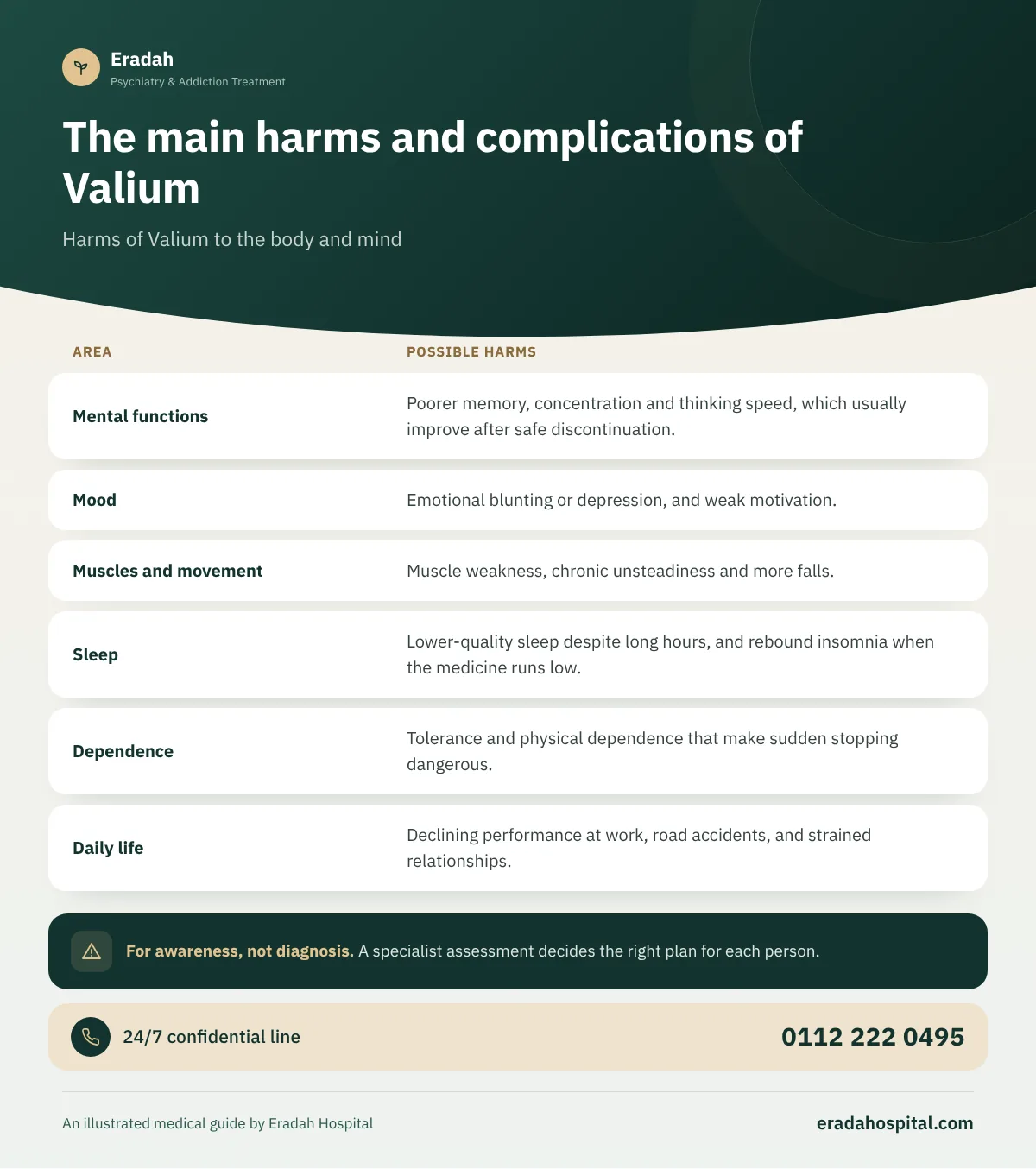
| Mental functions | Poorer memory, concentration and thinking speed, which usually improve after safe discontinuation. |
| Mood | Emotional blunting or depression, and weak motivation. |
| Muscles and movement | Muscle weakness, chronic unsteadiness and more falls. |
| Sleep | Lower-quality sleep despite long hours, and rebound insomnia when the medicine runs low. |
| Dependence | Tolerance and physical dependence that make sudden stopping dangerous. |
| Daily life | Declining performance at work, road accidents, and strained relationships. |
Why is mixing Valium with alcohol or opioids dangerous?
Toxicology references stress that poisoning with benzodiazepines alone is rarely fatal in healthy adults, and that most serious cases occur with other substances, the best known being alcohol. Alcohol and opioids, including tramadol, depress the breathing centers, and Valium multiplies this effect.
The risk is higher with Valium specifically because it stays in the body for days; a person may drink alcohol on a day when they did not take the medicine, thinking its effect is over, while it is still present in their blood at an effective level.
Why is Valium one of the riskiest sedatives for older adults?
In older adults the liver clears diazepam more slowly, so it stays longer and accumulates more. That is why medical references recommend great caution when prescribing it to them, as it can cause confusion and forgetfulness wrongly mistaken for dementia, falls that may end in a hip fracture, and sometimes the opposite effect of agitation.
- Review with the doctor all the sedative medicines an older person takes.
- Watch for any increase in forgetfulness, stumbling or daytime drowsiness.
- Remove tripping hazards in the home and provide night lighting.
- Do not stop the medicine suddenly; ask for a gradual reduction plan.
Valium and liver disease
The liver is mainly responsible for breaking down diazepam, and when its function is weak, as in cirrhosis or chronic hepatitis, the medicine stays longer and its effect is stronger. Combining liver disease with alcohol drinking and Valium also raises the risk of mental confusion and poisoning. That is why people with liver disease need a special assessment before any sedative prescription.
What is the effect of Valium on pregnancy and breastfeeding?
Diazepam crosses the placenta and reaches breast milk. References indicate that prolonged exposure during pregnancy may be linked to complications, and that use near delivery may cause the newborn sluggishness, poor muscle tone, difficulty feeding, or withdrawal symptoms. The UK National Health Service advises against using it in pregnancy unless the doctor recommends it.
On the other hand, a pregnant woman who takes it regularly must not stop suddenly, because withdrawal can harm both the mother and the fetus. The right step is to see the doctor quickly to set up a suitable plan.
Valium and driving the next day
Many people know that driving right after taking a sedative is dangerous, but few notice that the effect of Valium can last until the next morning. A person who took it at night may wake feeling normal, while their reaction time is still slower and their attention weaker than usual.
The risk rises in the first days of use, with build-up of the medicine after days of repeated use, and when combined with any amount of alcohol. That is why doctors advise not driving until the person knows how the medicine affects them, and discussing it with the doctor frankly.
Valium with stimulants and other substances
Some people who use stimulants such as Captagon or cocaine use sedatives to ease the tension and insomnia after using. This pattern creates a dangerous cycle of stimulant then sedative, raises the likelihood of dependence on both substances together, and makes it hard to tell the effects of each in an emergency. Taking tablets of unknown origin also carries the risk that they are counterfeit or stronger than expected.
Psychological and social harms of Valium
Some long-term users complain of feeling numb and losing enthusiasm.
The medicine calms anxiety without treating its causes, so it returns stronger if not treated in other ways.
Drowsiness, forgetfulness and mood swings affect performance and family relationships.
Non-medical use of Valium is often linked to alcohol or other substance addiction.
Signs of Valium poisoning: call an ambulance (123) immediately
- Great difficulty waking the person, or no response to calling out or touch
- Slow or weak breathing or unusual snoring, especially with alcohol or opioid painkillers
- Blue or pale lips and cold skin
- Severe confusion and inability to speak or stand
- Seizures days after stopping, which with Valium may come more than a week later
Call an ambulance on 123 immediately, place the person on their side to keep the airway open, and stay with them until help arrives. Bring all the medicines they take, and tell the medical team if they have been drinking alcohol.
Call the ambulance 123