Physical signs during use
These signs appear during the effect or shortly after, and can disappear quickly because the effect of cocaine is short:
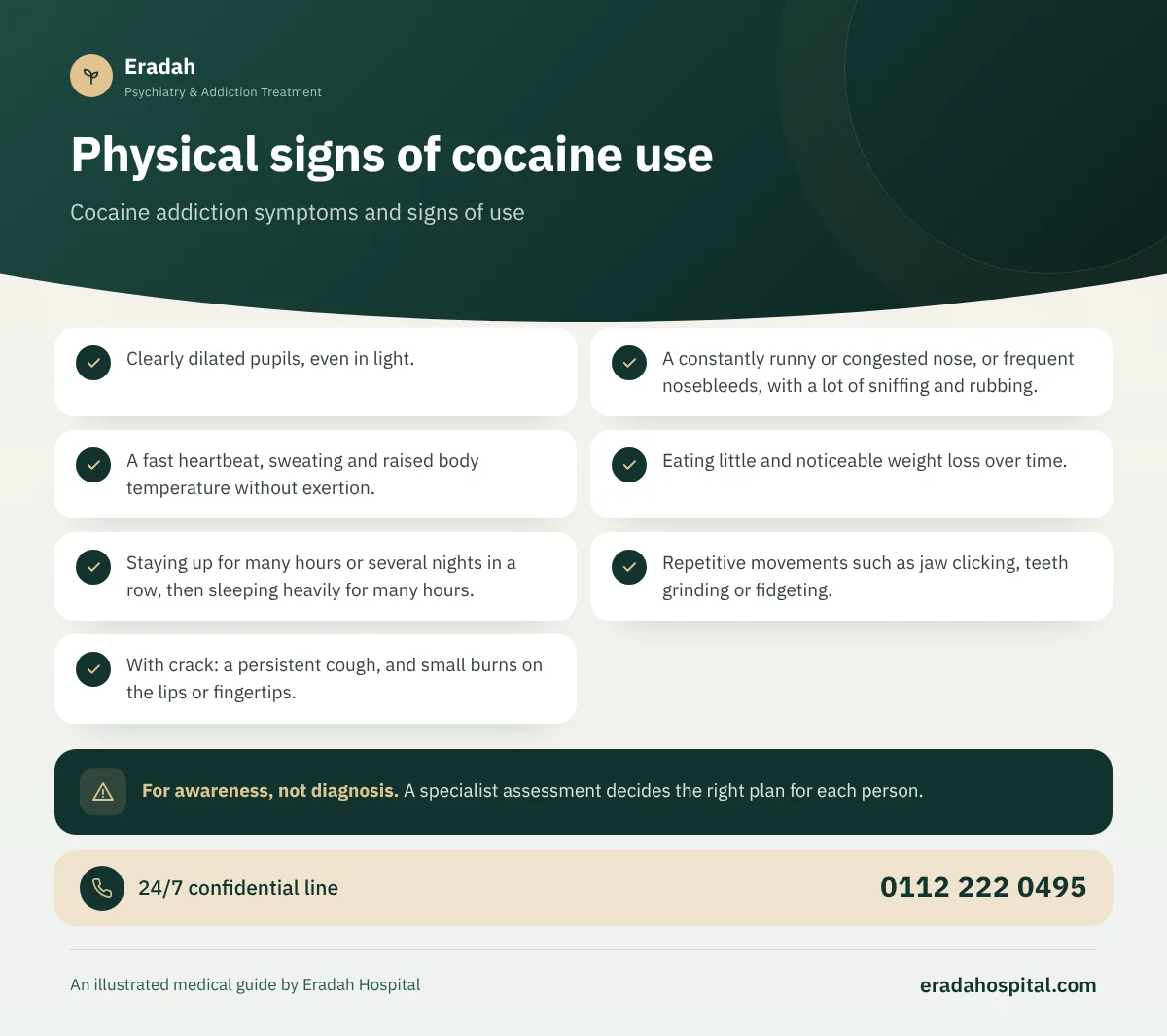
- Clearly dilated pupils, even in light.
- A constantly runny or congested nose, or frequent nosebleeds, with a lot of sniffing and rubbing.
- A fast heartbeat, sweating and raised body temperature without exertion.
- Eating little and noticeable weight loss over time.
- Staying up for many hours or several nights in a row, then sleeping heavily for many hours.
- Repetitive movements such as jaw clicking, teeth grinding or fidgeting.
- With crack: a persistent cough, and small burns on the lips or fingertips.
Behavioral signs the family notices
Behavioral signs are often clearer than physical ones, because they build up over time and affect daily life:
Fast, excessive talking, exaggerated confidence, sudden big plans, then a complete burnout.
Closing the door of the room, hiding the phone, going out repeatedly late at night, and new friends the family does not know.
Repeated requests for money for changing reasons, debts, and valuables disappearing from the home.
Absence from work or school, especially on the days after a late night, and a decline in performance and responsibilities.
Repeatedly slipping away to the bathroom during gatherings, with a clear change in mood on returning.
Psychological and mood signs
- Sharp swings between euphoria, irritability and collapse within the same day.
- Anxiety, tension and quick temper, which may progress to verbal or physical aggression.
- Morbid suspicion of family and friends, and a feeling of being watched or followed.
- Sadness and loss of interest once the effect wears off, and thoughts of hopelessness or suicide may appear that call for urgent intervention.
What does the crash after bouts of use mean?
After a continuous binge, the person usually enters a crash: long sleep, exhaustion, a big appetite and low mood. The family may notice this repeated pattern of abnormal activity followed by a “collapse” for a day or two. What happens on complete cessation and how long it lasts is explained on the cocaine withdrawal symptoms page.
Signs that appear with prolonged continued use
When use becomes an ongoing pattern, signs build up that are not tied to the moment of the effect itself but to what cocaine leaves behind in the body and in life:
- Clear weight loss, pallor, and neglect of appearance and personal hygiene after a period of excessive attention to them.
- Chronic nose problems: constant congestion, a weakened sense of smell, or a change in the voice.
- Repeated complaints of palpitations, chest pain or headaches with no clear explanation.
- Closed cycles of staying up late and then sleeping for a long time, and being unable to wake for work or school.
- A change in the circle of friends, and distancing from family and old friends.
Things the family may notice at home or among belongings
These items alone do not mean the person is using, but they may be an indicator when they appear together with behavioral signs: very small plastic bags, traces of white powder on surfaces or on the phone, banknotes rolled in an odd way, or plastic cards with traces of powder, and with crack: small glass pipes or tools with burned ends. More important than searching is opening an honest conversation and asking for a specialist assessment.
Signs specific to teenagers and students
In a teenager, the signs of use can blend with normal adolescent ups and downs, but some signals deserve attention: a sudden drop in grades, a complete change of friends, asking for more money than usual, staying out late with changing excuses, and unexplained outbursts of anger. Consulting a specialist early is far better than waiting until the picture becomes clear.
When does use become addiction? Diagnostic criteria
Doctors rely on the DSM-5 diagnostic criteria for stimulant use disorder: 11 criteria assessed over the past 12 months. Here are the main ones in simplified form:
- Using larger amounts or for longer than the person intended.
- A wish to cut down and unsuccessful attempts to stop.
- Spending a lot of time obtaining the substance, using it or recovering from its effects.
- A strong craving to use.
- Failing to fulfill major obligations at work, school or home.
- Continuing despite clear family or social problems caused by it.
- Giving up important activities or hobbies because of it.
- Using in physically dangerous situations, such as driving.
- Continuing despite knowing about the physical or psychological harm.
- Tolerance: needing a larger amount for the same effect.
- Symptoms appearing on stopping, or using to avoid them.
| Number of criteria | Level |
|---|---|
| 2 – 3 | Mild |
| 4 – 5 | Moderate |
| 6 or more | Severe |
These criteria are for awareness only; the diagnosis is made by a psychiatrist after a comprehensive assessment.
How can you tell cocaine use from use of other stimulants?
The signs of stimulants overlap a great deal, but some differences may help the doctor, and they do not replace assessment and testing:
| Substance | Length of visible activity | Distinctive signs |
|---|---|---|
| Cocaine | Short, repeating within hours | Nose problems, and short bursts of activity followed by a quick crash |
| Crystal meth (shabu) | Very long, days of staying awake | Hallucinations, violence, tooth damage and skin sores |
| Amphetamine and Captagon | Many hours | Insomnia, eating little and tension, and more common among students |
How do you talk to someone you suspect is using cocaine?
- Choose a quiet time when they are away from the effect and from a severe crash.
- Start with what you specifically noticed: “I’ve noticed you aren’t sleeping and money keeps disappearing,” instead of a general accusation.
- Use the language of concern, not condemnation, and avoid labels, shouting and threats.
- Listen more than you talk, and expect denial the first time without losing hope.
- Offer specific help: an assessment appointment or a confidential consultation.
- Look after yourself too, and ask for a family consultation even if he refuses.