What happens in the brain when you stop Valium?
After weeks of regular use, the nervous system adapts to the constant sedating effect of diazepam and reduces the activity of its natural GABA system. When the drug is stopped, its level falls and the nervous system stays overexcited until it regains its balance. That overexcitation is what withdrawal symptoms are.
What is different with Valium is that the drug level does not collapse suddenly. It declines slowly over days because of its long-lasting active breakdown products. This is why diazepam is sometimes described as "self-tapering," but that advantage does not make abrupt discontinuation safe after long-term use.
Why are Valium withdrawal symptoms delayed, and what is the risk?
A week or more may pass before the person notices clear symptoms, so they assume they got through it safely and return to normal life without taking precautions. Then symptoms appear or intensify suddenly, at a moment they do not expect, perhaps while driving, at work or alone at home.
Valium withdrawal timeline
This is a rough picture of what may happen with abrupt discontinuation after long daily use, which we never recommend:
- The first daysA deceptive calm
Mild symptoms or none, because the drug and its breakdown products are still in the blood.
- From about day 3 to the end of the first weekThe start
Anxiety, insomnia, irritability, tremor and sweating, with sensitivity to light and sound.
- About the second weekPeak for many people
Symptoms intensify, and seizures or confusion may occur at this stage or afterward.
- Weeks 3 to 6Gradual decline
Physical symptoms ease slowly, while anxiety and sleep disturbance linger for a while.
- AfterwardProtracted withdrawal in some people
Intermittent symptoms that may last for months and then gradually improve.
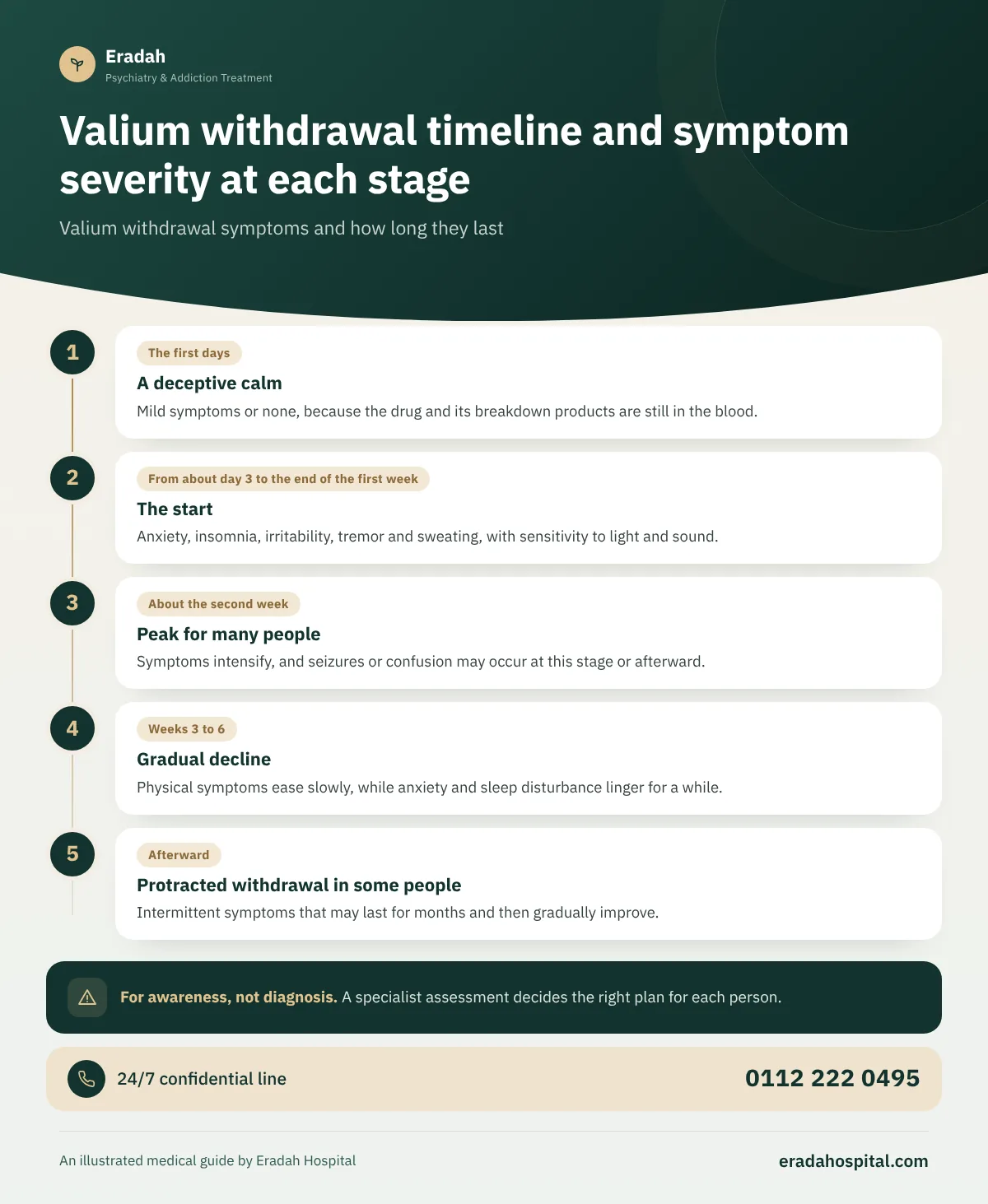
The timeframes are approximate and vary widely between individuals. StatPearls references indicate that benzodiazepine withdrawal symptoms generally appear within two to ten days of stopping, depending on the drug and how long it was used, and may last for weeks.
What are the symptoms of Valium withdrawal?
| Severity | Symptoms |
|---|---|
| Mild to moderate | Anxiety, tension, insomnia, headache, muscle tightness, sweating, loss of appetite, difficulty concentrating. |
| Moderate to severe | Marked tremor, palpitations, panic attacks, extreme sensitivity to light and sound, tingling in the limbs, a feeling of unreality. |
| Serious | Seizures, confusion and delirium, hallucinations, high temperature, high blood pressure and rapid breathing. |
Is Valium withdrawal dangerous?
Yes, it can be life-threatening. Medical references group benzodiazepine withdrawal with alcohol withdrawal among the types of withdrawal that can cause seizures and delirium. In its 2020 warning, the US Food and Drug Administration stressed that abrupt discontinuation or rapid dose reduction can cause life-threatening reactions.
- The risk is higher with: longer duration of use, large amounts, and a history of seizures or epilepsy.
- And with: co-occurring alcohol dependence, or the use of other sedatives at the same time.
- And in: older adults and people with co-existing physical or mental health conditions.
What if Valium was prescribed for alcohol detox?
When diazepam is used as part of an alcohol detox program, it is usually given for a short time and reduced gradually under the supervision of the medical team until it is stopped. The problem arises when the patient keeps using it after the program ends, or goes back to alcohol while taking Valium. Then two dependencies and the risk of two withdrawals come together at once.
In this situation the patient needs urgent assessment, because combined alcohol and sedative withdrawal raises the risk of seizures and delirium, and usually requires inpatient care in a properly equipped setting.
Is it withdrawal, or the original anxiety coming back?
Because Valium withdrawal symptoms are delayed and gradual, it can be hard for the patient and family to tell whether what they feel is withdrawal or a return of the anxiety or insomnia the drug was originally prescribed for. The key difference is that withdrawal symptoms improve gradually over time and may come with new physical and sensory symptoms that were not there before the drug, whereas the original disorder continues in its old pattern. The doctor settles this through follow-up.
Protracted Valium withdrawal
After the acute phase, some people have symptoms that extend for weeks or months, and the FDA has described them as lasting up to 12 months in some. The most notable are intermittent anxiety, insomnia, impaired memory and concentration, depression, and sometimes sensory symptoms such as tinnitus and tingling.
These symptoms do not mean the damage is permanent. They usually improve slowly and in waves. A slow, well-planned reduction from the start lowers the chance or severity of these symptoms, and psychological support helps the patient get through this phase without going back to the drug.
Why is medical supervision needed?
Setting the pace of reduction according to length of use, age and health, and adjusting it when needed.
Follow-up that extends beyond the first days, because Valium complications can come late.
Addressing alcohol or other substances within the same plan.
Telling withdrawal apart from a return of anxiety or depression, and treating each.
You can find the full treatment stages, from gradual reduction to psychotherapy and relapse prevention, on the Valium addiction treatment page.
How can the family support someone going through Valium withdrawal?
- Do not be reassured by the absence of symptoms in the first days, and keep following up.
- Help them stick to the doctor's plan and not change it on their own.
- Provide a calm routine and regular sleep, and cut back on caffeine.
- Make sure they stay completely away from alcohol during this period.
- If a seizure or severe confusion occurs, place them on their side and call an ambulance (123) immediately.
Signs of Valium poisoning: call an ambulance (123) immediately
- Great difficulty waking the person, or no response to calling out or touch
- Slow or weak breathing or unusual snoring, especially with alcohol or opioid painkillers
- Blue or pale lips and cold skin
- Severe confusion and inability to speak or stand
- Seizures days after stopping, which with Valium may come more than a week later
Call an ambulance on 123 immediately, place the person on their side to keep the airway open, and stay with them until help arrives. Bring all the medicines they take, and tell the medical team if they have been drinking alcohol.
Call the ambulance 123