"It's just a strawberry vape, Mom." That sentence may be true, and it may not. A device that looks like a pen or a flash drive can hold nicotine, or it can hold a liquid containing cannabis or a synthetic substance whose makeup even the seller does not know. That is where the term drug vapes comes from, which parents in Egypt have begun to hear.
What is a drug vape?
As the US National Institute on Drug Abuse explains, an e-cigarette is a battery-powered device with four parts: a tank or "pod" holding a liquid, a heating element, a battery, and a mouthpiece. When the person inhales, the liquid heats up and turns into an aerosol that is breathed in. The institute adds that these devices can look like pens or USB drives, are easy to hide, and do not leave the usual smell of cigarettes.
A drug vape is the same device, but the liquid in it is not nicotine. The two most common contents are THC oils or liquids extracted from cannabis, and liquids with synthetic cannabinoids from the family of Strox and "chemical" added. Nicotine e-cigarettes have their own guide on the page about smoking and nicotine addiction.
Types of drug vapes: what goes into the liquid?
| Nicotine vape | Cannabis (THC) vape | Synthetic cannabinoid vape | |
|---|---|---|---|
| Substance | Nicotine and flavorings | THC extracted from cannabis | Laboratory compounds that imitate THC at far greater strength |
| Does the user know what they are taking? | Usually | Sometimes, and it is often adulterated | Rarely, and it may be sold as "hashish" |
| Main risk | Nicotine addiction | Psychosis and anxiety, and lung injury with additives | Seizures, psychosis and loss of consciousness |
| Does it show up on a drug test? | Not usually tested for | Shows up on a cannabis test | Much of it does not show up on the usual test strips |
The problem is that the eye cannot tell the three apart. The devices look alike, the liquids are colored and scented, and an adulterated bottle carries nothing on its label that tells the truth.
What have studies found in drug vape liquids?
In a study published in the journal Addiction in 2025, British researchers analyzed e-cigarettes and liquids confiscated by teachers from 27 secondary schools in England. They found synthetic cannabinoids in 17.4% of all samples, and in schools making up 77.8% of those taking part. Most were in refillable devices and liquid bottles, while only a few samples contained THC.
This finding matters because the study began after reports of students collapsing unconscious at school after using a vape believed to be "hashish". In other words, many young people think they are smoking cannabis when they are in fact inhaling a stronger and more dangerous laboratory-made substance.
In France, a medical report published in 2021 described a 16-year-old who developed symptoms resembling an epileptic seizure minutes after using a friend's e-cigarette. The synthetic cannabinoid 5F-ADB was found in the liquid and in his blood.
Vaping-associated lung injury (EVALI)
In 2019 the United States saw a wave of acute lung injuries among e-cigarette users, named EVALI. According to the US Centers for Disease Control and Prevention's final update in February 2020, 2,807 cases needed hospitalization or ended in death, including 68 confirmed deaths.
The CDC concluded that vaping products containing THC, especially from informal sources such as friends and dealers, were linked to most cases, and that vitamin E acetate, added to some THC liquids, was strongly linked to the injuries, though other chemicals were not ruled out. The lesson is that an adulterated liquid can harm the lungs, not only the brain.
Risks of drug vapes
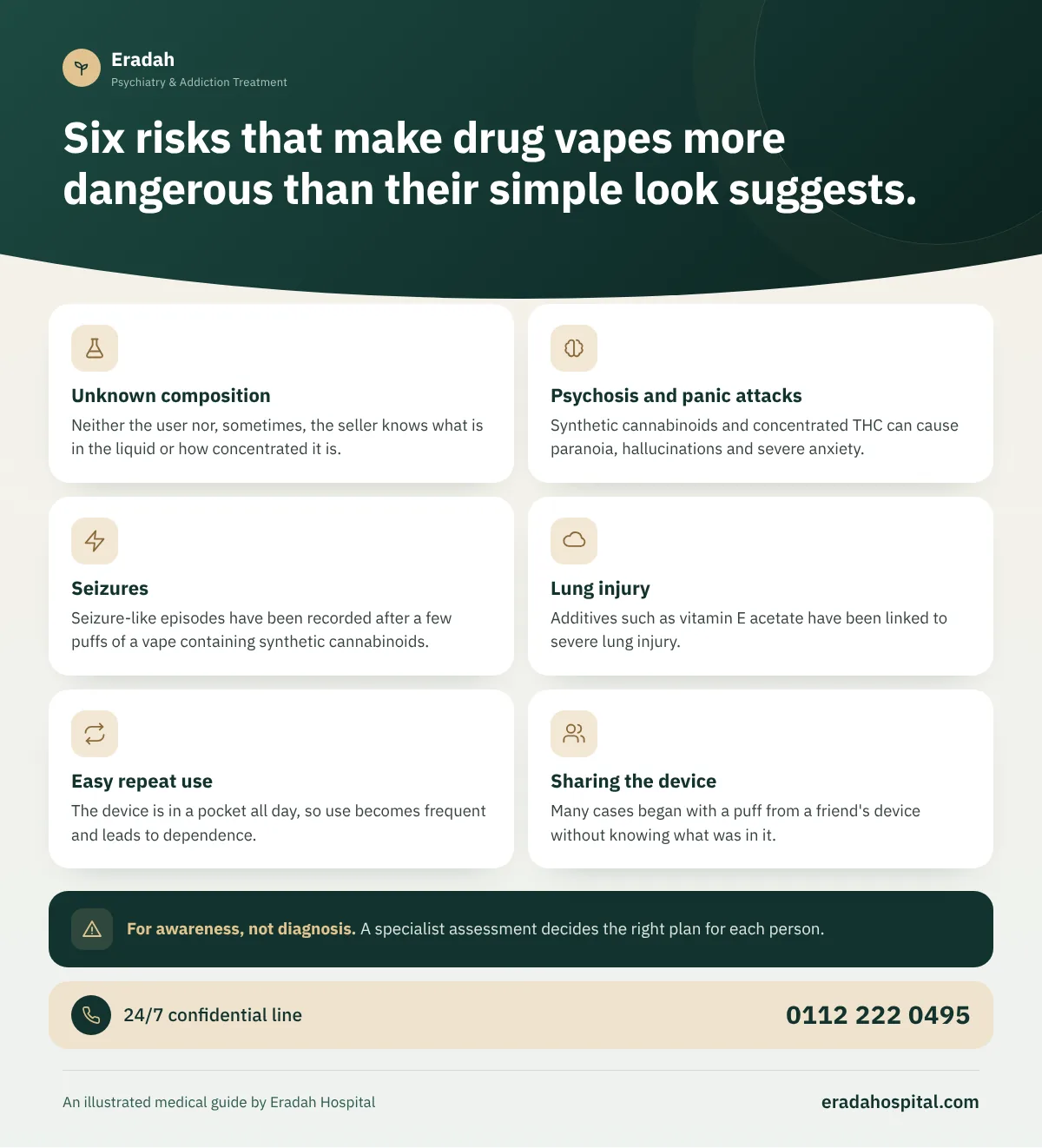
Neither the user nor, sometimes, the seller knows what is in the liquid or how concentrated it is.
Synthetic cannabinoids and concentrated THC can cause paranoia, hallucinations and severe anxiety.
Seizure-like episodes have been recorded after a few puffs of a vape containing synthetic cannabinoids.
Additives such as vitamin E acetate have been linked to severe lung injury.
The device is in a pocket all day, so use becomes frequent and leads to dependence.
Many cases began with a puff from a friend's device without knowing what was in it.
The National Institute on Drug Abuse notes that THC concentration in seized cannabis products rose about fourfold between 1995 and 2022, and that higher concentrations are linked to a greater chance that use will develop into cannabis use disorder. You can find details in the guide to hashish.
How can a family tell whether a vape contains drugs?
- Red eyes, or unusual laughter, drowsiness or confusion after using the device.
- A device that is carefully hidden or borrowed from one particular "friend".
- Cartridges or liquid bottles with no clear labels, or with strange names.
- A sudden change in sleep, schoolwork and friends.
- A panic attack, suspicion, a seizure or fainting after vaping, which is a danger sign.
A single sign does not mean your child is using drugs. A calm conversation works better than searching their things and confronting them harshly, as the guide to signs of drug use explains.
What should you do if someone becomes unwell after a drug vape?
You will find detailed first-aid steps in the guide to acute drug poisoning.
How is someone who is used to drug vapes treated?
Treatment begins with an assessment of what was actually being used, then treatment of any withdrawal symptoms, cognitive behavioral therapy to change the hand-and-device habit, and treatment of any accompanying anxiety or depression. Many young people need outpatient treatment with family support, while someone who has had repeated psychotic episodes or seizures needs a more careful assessment and may need a short stay.