What does the disorder do to the person and those around them?
The common picture focuses only on the harm the person does to others, but the truth is that the person with the disorder pays a heavy price too: injuries and accidents, addiction, prison, loss of work and relationships, and a shorter life expectancy on average. At the same time, their family lives with psychological and financial pressure and sometimes physical danger.
Knowing about these harms is not meant to frighten or stigmatize anyone. It is meant to encourage early intervention and a realistic protection plan for the family.
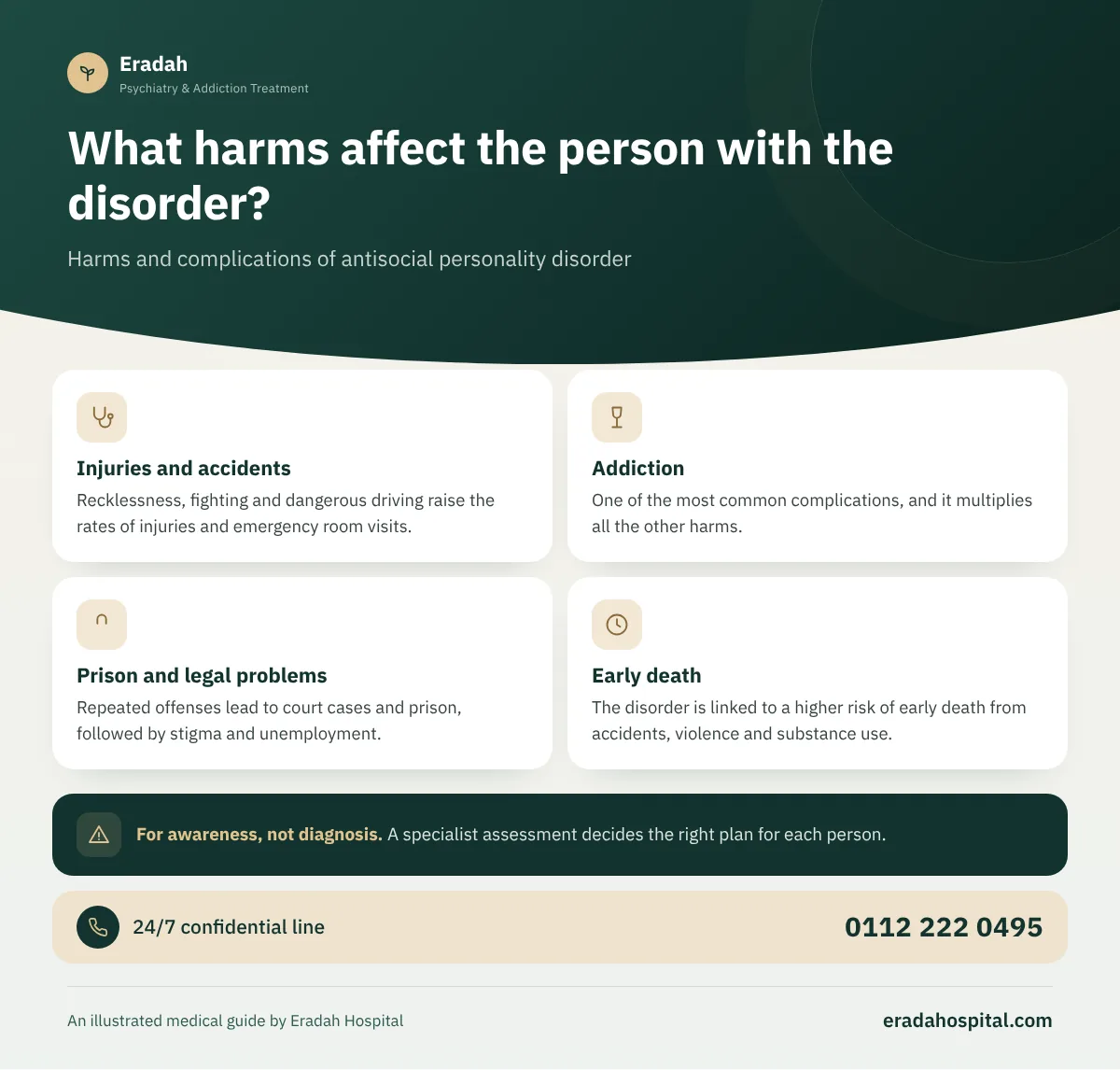
What harms affect the person with the disorder?
Recklessness, fighting and dangerous driving raise the rates of injuries and emergency room visits.
One of the most common complications, and it multiplies all the other harms.
Repeated offenses lead to court cases and prison, followed by stigma and unemployment.
The disorder is linked to a higher risk of early death from accidents, violence and substance use.
Reviews also indicate that people with this disorder are at risk of lifestyle-related health problems, such as blood-borne infections in those who inject drugs, and neglect of medical care.
How does it affect physical health?
The lifestyle linked to the disorder wears down the body over the long term: often heavy smoking, drinking and substance use, irregular sleep, neglected checkups and treatment, and repeated injuries that can leave permanent disabilities. Periods in prison or homelessness also increase exposure to infectious diseases and malnutrition.
Because people with the disorder rarely keep follow-up appointments, chronic conditions such as high blood pressure, alcohol-related liver disease and hepatitis may be discovered late. This is why any treatment program should include a general medical checkup.
Can a person with antisocial personality disorder become depressed or think about suicide?
Yes, and this side is often overlooked. A person with the disorder may experience depression and anxiety, especially after major losses such as prison, divorce or losing a job, and their risk of suicide attempts is higher than in the general population, particularly with substance use and impulsivity.
Other conditions are also common with the disorder, such as attention-deficit/hyperactivity disorder (ADHD), anxiety disorders and other personality disorders, which makes a comprehensive assessment essential.
How does it affect the family?
Families of people with the disorder often live in a cycle of hope and disappointment: promises to change, then the same behavior again. The family carries debts, court cases and compensation payments, and lives with constant worry about the next phone call. Mothers, wives or siblings may be exposed to violence, threats or financial exploitation.
| Form of harm | What helps |
|---|---|
| Violence or threats | A clear safety plan, moving away when there is danger, and calling the police (122) |
| Financial exploitation | Protecting documents and money, and not guaranteeing debts under pressure |
| Emotional exhaustion | Psychological support for family members, and family support groups |
| Isolation and social shame | Breaking the silence with trusted people and professionals |
How are children affected at home?
Children who live with an affected parent may be neglected, exposed to violence or experience it directly, or live with instability because of prison, moving house and debts. These same experiences are risk factors for behavior problems, anxiety and depression in the children later on.
NICE guidelines recommend that services always consider the needs of children in the family and the risks to them, and protect their interests. In Egypt, you can contact the Child Helpline (16000) when a child is at risk, and professionals can provide psychological support for children.
In these circumstances a child needs a clear message that what is happening is not their fault, a routine that is as stable as possible, and a safe adult to turn to. Monitoring their behavior and schoolwork early reveals any problem before it gets worse.
What about the partner and relationships?
A relationship may begin with great charm and trust, then lying, infidelity, exploitation and avoidance of responsibility appear. The partner often feels confused and blames themselves, and may be subjected to violence. Protecting yourself in this situation is a necessity, not selfishness.
If you are a woman experiencing violence, you have the right to seek protection. You can contact the police (122) and the National Council for Women complaints line (15115) for support and guidance.
How does it affect work and finances?
Impulsivity, avoiding responsibility and conflicts lead to frequent job changes or unemployment, and to debts and financial court cases. With imprisonment, years of education and experience are lost, so the person and their family fall into a cycle of poverty that is hard to escape.
The family often bears a large part of this cost: legal fees, compensation payments, and debts that relatives feel obliged to repay to protect their reputation. Over time these burdens can drain the family's savings and affect the education and future of other siblings, which is why setting clear financial limits is a necessity, not cruelty.
Do the complications change with age?
Offenses and impulsive violence tend to decline in some people after middle age, but the effects of the earlier years remain: a legal record, debts, illnesses linked to substance use, broken relationships and loneliness. The fewer losses that build up in youth, the greater the chance of stability later.
What is the cost to society?
The disorder is linked to a large share of repeat offending and to pressure on prisons, hospitals and addiction services. For this reason, international guidelines see early prevention with children and addiction treatment in adults as an investment that protects the whole of society, not only the person affected.
Can complications be avoided?
- Early intervention with children who show strong behavior problems.
- Treating co-occurring addiction, since it is the thing that can be changed fastest.
- Treating depression, ADHD and any co-occurring disorder.
- A protection plan for the family, with clear limits that include no funding of substance use.
- Behavioral programs focused on problem-solving and anger control.
Many of the harms lessen when the person stops using substances and joins a structured program, and with advancing age. You can learn about the available options on the treatment page.
Risk of violence or self-harm? Get help now
- An explicit threat to harm a family member or others, or violence that has already begun
- Severe agitation and aggression, especially under the influence of alcohol or drugs
- Recklessness that endangers their life or the lives of others, such as driving under the influence
- Talk of wanting to die or of severe hopelessness after a crisis or major loss
- Immediate danger to children or older people in the home
Your safety and the children's safety come first: do not get into an argument or a physical confrontation, move to a safe place, and call the police on 122 if violence is threatened or the ambulance on 123 if someone is injured or life is in danger. If the danger is to the person themselves, stay close if it is safe to do so, and call the mental health support line 16328 or go to the nearest emergency department.
Ambulance 123 Mental health support line 16328