“The doctor wrote me Seroxat for social anxiety, and my relative told me it's hard to quit.” Your relative's remark contains some truth, but it does not mean the drug causes addiction. Here we explain paroxetine calmly: what it helps with, what its effects are, and why stopping it needs a plan with your doctor.
What is paroxetine (Seroxat)?
Paroxetine is an active ingredient from the antidepressants, and its best-known brand names in Egypt are Seroxat and the extended-release Seroxat CR, and in the US it is known as Paxil. Products carrying the active ingredient's own name are also sold in Egypt. According to the NHS, it works by raising the level of serotonin in the brain, a neurotransmitter linked to mood and anxiety.
What paroxetine is used for
According to the US National Library of Medicine MedlinePlus and the StatPearls reference, paroxetine is prescribed for:
- Depression.
- Panic disorder.
- Social phobia.
- Obsessive-compulsive disorder.
- Generalized anxiety disorder.
- Post-traumatic stress disorder (PTSD).
- Premenstrual dysphoric disorder, and hot flashes in some women.
In The Lancet's 2018 analysis comparing 21 antidepressants, paroxetine was among the more effective drugs in head-to-head comparisons.
When does paroxetine start working?
The NHS states that improvement may take several weeks, that most side effects ease after about two weeks, and that treatment often continues for several months or more. The doctor usually starts with a low dose and then adjusts it according to response, and this is their decision alone.
Side effects of paroxetine
- Nausea and sometimes vomiting.
- Drowsiness, dizziness, or general weakness.
- Trouble sleeping.
- Headache and blurred vision.
- Weight change, and diarrhea or constipation.
- Sweating, yawning, and dry mouth.
- Reduced sexual desire or delayed ejaculation and orgasm.
Rare serious effects include severe allergy with throat swelling, serotonin syndrome, manic episodes, unexplained bleeding, and angle-closure glaucoma, which shows as eye pain and changes in vision.
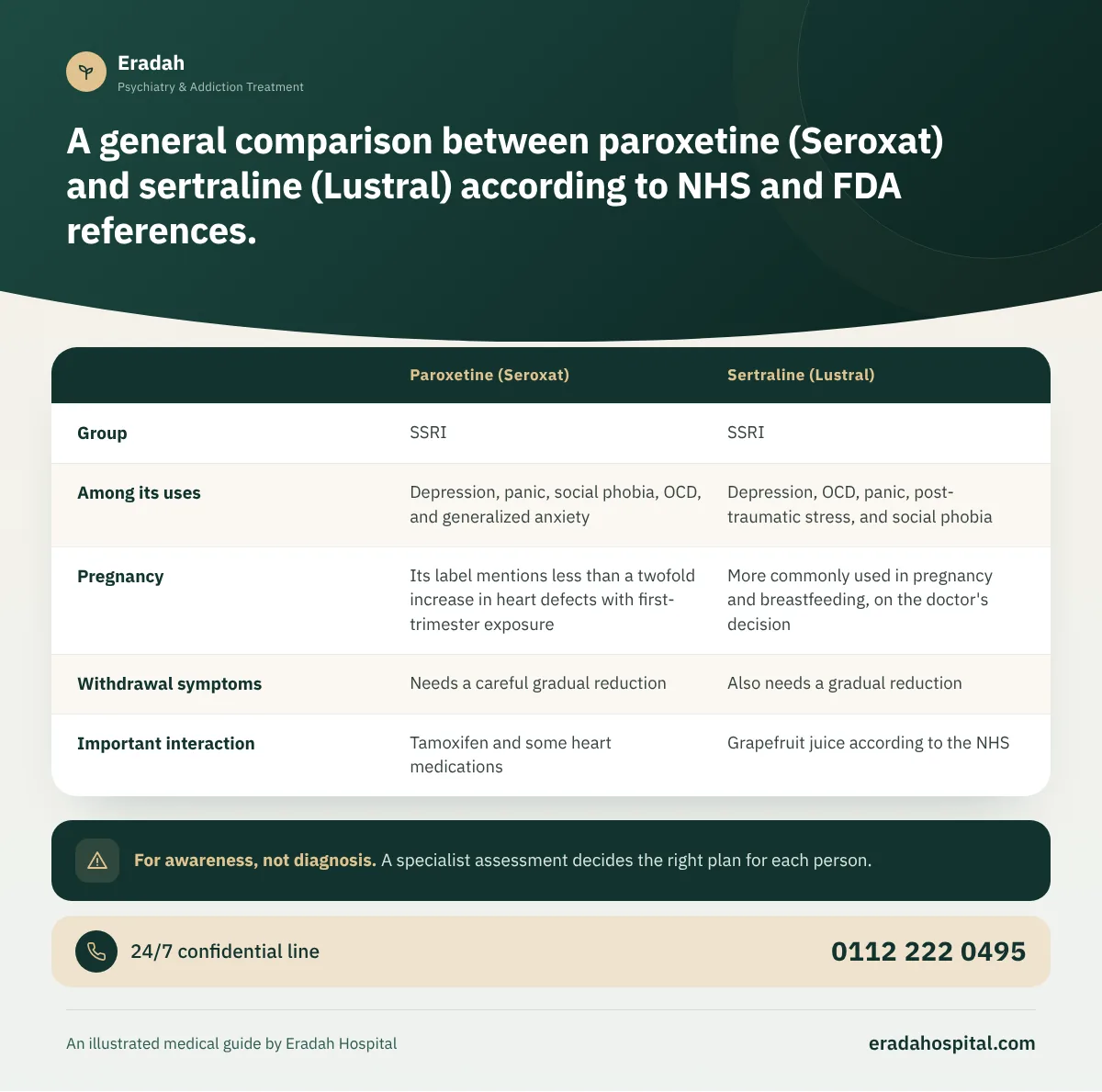
The difference between paroxetine and sertraline
| Paroxetine (Seroxat) | Sertraline (Lustral) | |
|---|---|---|
| Group | SSRI | SSRI |
| Among its uses | Depression, panic, social phobia, OCD, and generalized anxiety | Depression, OCD, panic, post-traumatic stress, and social phobia |
| Pregnancy | Its label mentions less than a twofold increase in heart defects with first-trimester exposure | More commonly used in pregnancy and breastfeeding, on the doctor's decision |
| Withdrawal symptoms | Needs a careful gradual reduction | Also needs a gradual reduction |
| Important interaction | Tamoxifen and some heart medications | Grapefruit juice according to the NHS |
Interactions, pregnancy, and breastfeeding
- MAOIs, tramadol, buprenorphine, and St. John's wort: risk of serotonin syndrome.
- Blood thinners such as warfarin, and painkillers such as ibuprofen and aspirin: increase the risk of bleeding.
- Tamoxifen and some epilepsy, heart, and migraine medications: need review by your doctor.
- Alcohol: the NHS advises avoiding it because it increases side effects.
The US label states that exposure to paroxetine in the first trimester of pregnancy was linked in analyses to a less than twofold increase in heart defects, so it advises considering other options first for anyone planning a pregnancy. In contrast, the NHS states that it can be used in pregnancy if needed, and that it is often used during breastfeeding. The decision here is shared between the doctor and the mother, taking into account the risk of untreated depression.
Is paroxetine addictive? And how is it stopped?
Paroxetine does not cause euphoria or addiction, as explained in the guide on whether psychiatric medications cause addiction. But stopping it suddenly can cause discontinuation symptoms that the US National Library of Medicine lists, including dizziness, irritability, anxiety, numbness in the limbs, strange dreams, insomnia, and nausea. Because its half-life is relatively short, the doctor reduces it gradually over weeks or months according to the NHS.
When should you see the doctor?
See your doctor if you do not improve after several weeks, if the side effects are bothersome, or if excessive energy with little sleep appears. And if social anxiety or panic is pushing you toward alcohol or sedatives to get through situations, Eradah's dual diagnosis treatment deals with both together, through outpatient treatment or the psychiatry department depending on the case.