“The doctor prescribed me Trittico at night for sleep, but when I read the leaflet I found it was an antidepressant, and I got scared.” There is no need to be afraid, as many doctors use trazodone for this purpose. But you have a right to know why it is prescribed, what the evidence says, and which effects deserve attention.
What is trazodone (Trittico)?
Trazodone is an antidepressant that the StatPearls reference classifies as a “serotonin antagonist and reuptake inhibitor.” It blocks the reuptake of serotonin and blocks some serotonin receptors, and it also blocks histamine and alpha-1 receptors, which explains its sedating effect. Its brand name in Egypt is Trittico, sold as tablets. It differs from the SSRI group to which most modern antidepressants belong.
Uses of trazodone
The approved use of trazodone is depression. The US National Library of Medicine's MedlinePlus notes that it is sometimes used off-label for insomnia and anxiety, for certain involuntary movements caused by other medications, and as part of managing alcohol dependence. The UK's National Health Service (NHS) lists its use for depression and anxiety, and advises taking it at night if the person has trouble sleeping.
Trazodone for sleep: what does the evidence say?
Although it is widely prescribed for insomnia, a Cochrane review published in 2018 on antidepressants for insomnia concluded that the studies were few, small and short. It found that low-dose trazodone and doxepin may bring a slight improvement in sleep quality in the short term compared with placebo, with no evidence supporting long-term use for insomnia. Cognitive behavioral therapy for insomnia therefore remains the most appropriate starting point, as the guide to treating chronic insomnia explains.
Even so, a doctor may sometimes prefer trazodone to sleeping pills known for their risk of dependence, such as zolpidem and benzodiazepines, particularly for people with a history of substance use or depression alongside insomnia. The decision depends on a full assessment.
Side effects of trazodone
- Drowsiness, dizziness and tiredness, so do not drive until they pass.
- Headache.
- Nausea, constipation or diarrhea.
- Dry mouth.
- Muscle pain.
- Changes in appetite or weight, and a blocked nose.
- Sexual problems such as low desire or delayed orgasm.
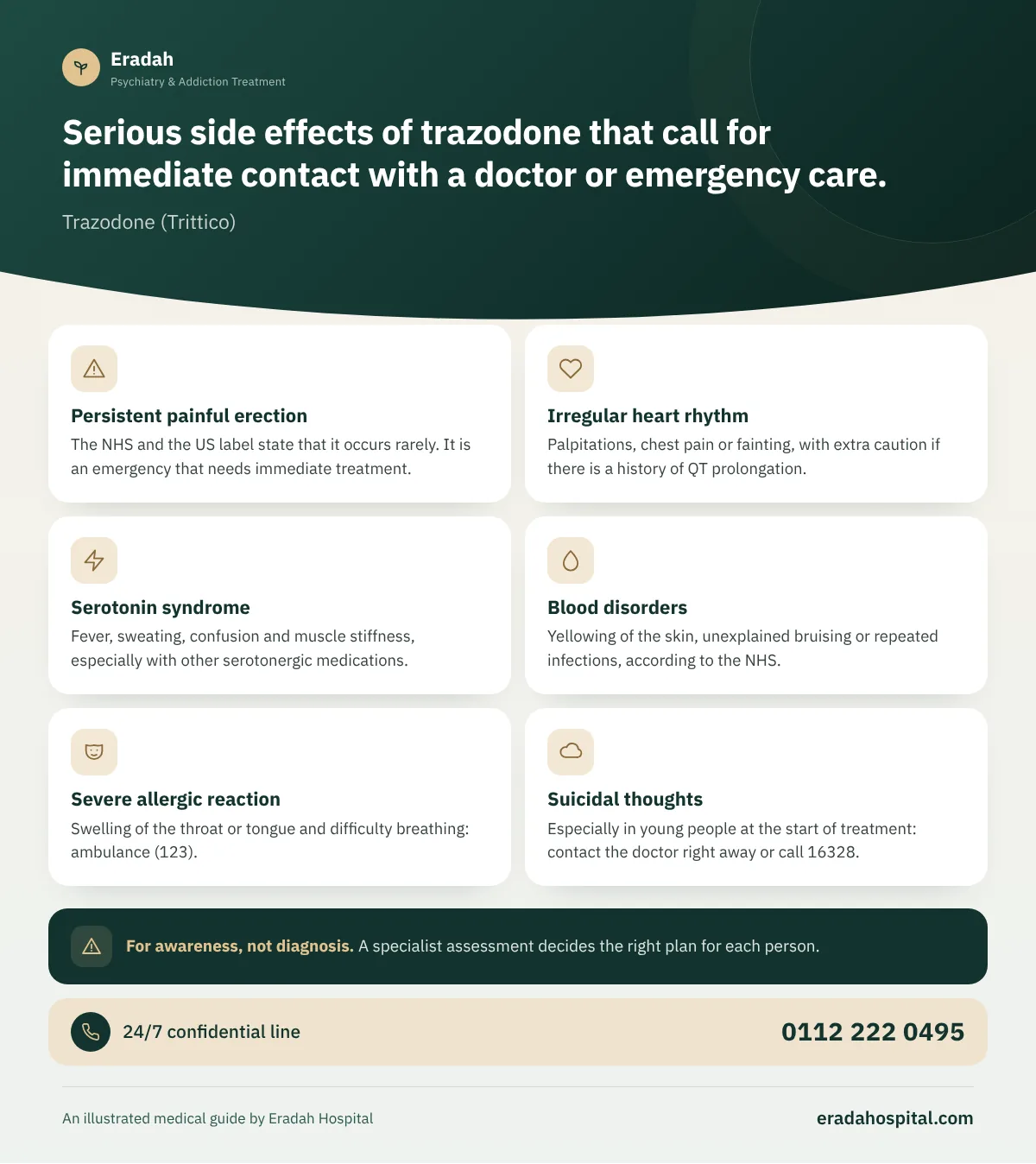
Serious side effects of trazodone that need emergency care
The NHS and the US label state that it occurs rarely. It is an emergency that needs immediate treatment.
Palpitations, chest pain or fainting, with extra caution if there is a history of QT prolongation.
Fever, sweating, confusion and muscle stiffness, especially with other serotonergic medications.
Yellowing of the skin, unexplained bruising or repeated infections, according to the NHS.
Swelling of the throat or tongue and difficulty breathing: ambulance (123).
Especially in young people at the start of treatment: contact the doctor right away or call 16328.
Interactions, pregnancy and who trazodone may not suit
- Sleeping pills, sedatives and alcohol: they increase drowsiness and dull alertness, and the NHS advises avoiding alcohol.
- Other antidepressants and St. John's wort: risk of serotonin syndrome. It must not be combined with MAOIs.
- Warfarin and anti-inflammatory painkillers: risk of bleeding.
- Other medications such as itraconazole, erythromycin, carbamazepine, phenytoin and levodopa need review by the doctor.
The NHS notes that it may not suit people with a history of bipolar disorder, heart, liver or kidney disease, epilepsy, or an overactive thyroid. In pregnancy it can be used if needed after discussion with the doctor, and during breastfeeding the doctor may sometimes prefer another medication.
Is trazodone addictive? And how is it stopped?
Trazodone is not regarded as a drug that causes a “high” or addiction, and this is one reason it is sometimes preferred to sleeping pills. However, the NHS warns against stopping it suddenly because it can cause discontinuation symptoms, and notes that the doctor lowers the dose gradually over weeks or months.
When should you ask for help?
If your sleep has come to depend on a pill, if you have started increasing the dose in order to sleep, or if the insomnia is linked to substance use or withdrawal, a specialist assessment is best. At Eradah, the dual diagnosis program treats insomnia, depression and substance use together, and follow-up can continue through outpatient treatment in complete confidentiality.