“I forgot my Efexor for one day, and I felt dizzy and like electricity in my head.” Many people describe this experience, and it sums up what is most distinctive about venlafaxine: it is an effective drug for many people, but it does not tolerate sudden interruption. Here we explain what you need to know before starting and during treatment.
What is venlafaxine (Effexor)?
Venlafaxine is an antidepressant that, according to the US National Library of Medicine's MedlinePlus, increases serotonin and norepinephrine in the brain, two neurotransmitters that help balance mood, attention and the response to stress. Its original brand name is Effexor, and in Egypt it is usually sold as extended-release capsules under the name Efexor XR; products carrying the name of the active ingredient itself are also available. It belongs to the same class as duloxetine.
Uses of venlafaxine
- Depression.
- Generalized anxiety disorder.
- Social phobia.
- Panic attacks.
- Off-label uses, according to the StatPearls reference: hot flashes, nerve pain, migraine prevention, and some cases of post-traumatic stress and obsessive-compulsive symptoms.
Venlafaxine compared with SSRIs
| Venlafaxine (Efexor) | SSRIs such as sertraline | |
|---|---|---|
| How they work | Raises serotonin and norepinephrine | Mainly raises serotonin |
| Effectiveness in the 2018 Lancet analysis | Among the most effective in head-to-head comparisons | Varies, with escitalopram among the highest |
| Tolerability in the same analysis | Among the drugs with the highest dropout rates | Sertraline and escitalopram are among the best tolerated |
| Special monitoring | Regular blood pressure checks, according to its label | Caution about bleeding with blood thinners, as with other antidepressants |
| Withdrawal symptoms | Pronounced because of the short half-life | Also occurs and needs gradual lowering |
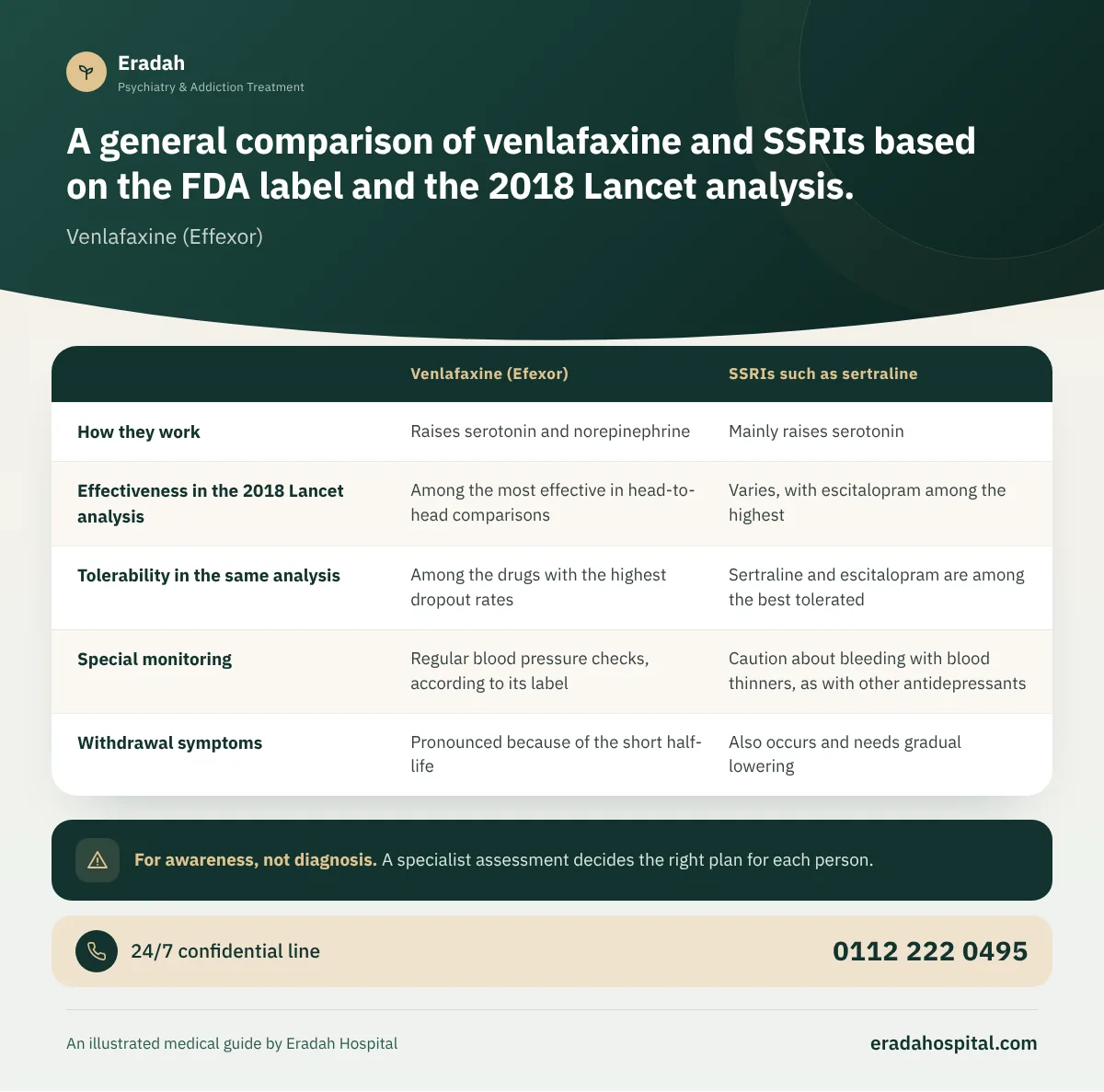
This is why doctors often turn to venlafaxine when one SSRI is not enough, choosing according to symptoms, tolerability and any other conditions.
Side effects of venlafaxine
- Headache and nausea, and sometimes vomiting.
- Dizziness or drowsiness.
- Dry mouth.
- Diarrhea or constipation.
- Insomnia and changes in weight.
- Reduced sexual desire, difficulty with erection, or delayed ejaculation and orgasm.
- Excess sweating.
According to the UK's National Health Service (NHS) and the US National Library of Medicine, rare serious effects include severe allergic reaction, serotonin syndrome, a fast or irregular heartbeat, seizures, unusual bleeding and unexplained muscle pain. The US label also calls for blood pressure measurement before starting and regularly during treatment, because the drug may raise it.
Interactions, pregnancy and who venlafaxine may not suit
- MAOIs: must not be combined with it, and MedlinePlus advises waiting at least one week after stopping it before starting them.
- Blood thinners such as warfarin and apixaban, and painkillers such as aspirin and ibuprofen: risk of bleeding.
- St. John's wort, tryptophan and tramadol: risk of serotonin syndrome.
- Alcohol: the NHS advises avoiding it because it increases side effects.
The NHS notes that it may not suit people with heart disease, diabetes, epilepsy, glaucoma, a bleeding disorder, or a personal or family history of mania. In pregnancy it can be used if needed after discussion with the doctor, while during breastfeeding the doctor may sometimes prefer another antidepressant.
Is venlafaxine addictive? And why is it hard to stop?
Venlafaxine does not cause a “high” or addiction, but its half-life is short; its US label states that it is about 5 hours, and about 11 hours for its active metabolite. Its level therefore drops quickly if doses are missed or it is stopped suddenly. MedlinePlus lists the possible discontinuation symptoms, including dizziness, anxiety, irritability, nausea, insomnia, nightmares, ringing in the ears, sensations like electric shocks, and rarely seizures. The solution is gradual lowering over weeks or months under the doctor's plan.
When should you see the doctor?
See the doctor if you develop a severe headache or palpitations that may mean high blood pressure, if you have not improved after several weeks, or if you develop excessive energy with little sleep. If anxiety or depression occurs together with the use of painkillers or sedatives, then Eradah's dual diagnosis treatment addresses both sides together, through outpatient treatment or the Psychiatry Department.