“The doctor wrote me an antidepressant for nerve pain. Am I depressed?” Not necessarily. Duloxetine is one of the few medications that treat mood and pain at the same time, because the neural circuits that regulate the two overlap. This guide explains when it is prescribed, and what you need to know before starting and before stopping.
What is duloxetine?
Duloxetine is an active ingredient whose original brand name is Cymbalta, and generic versions are available in Egypt, with brand names including Duloxeprin, Simbatex and Nervalta. It is one of the antidepressants from the serotonin-norepinephrine reuptake inhibitor group, meaning it raises serotonin and norepinephrine together, unlike the SSRI group, which focuses on serotonin. It comes as capsules designed to release in the intestine, which is why they are swallowed whole.
Uses of duloxetine
According to the StatPearls reference and the UK's National Health Service, duloxetine is used for:
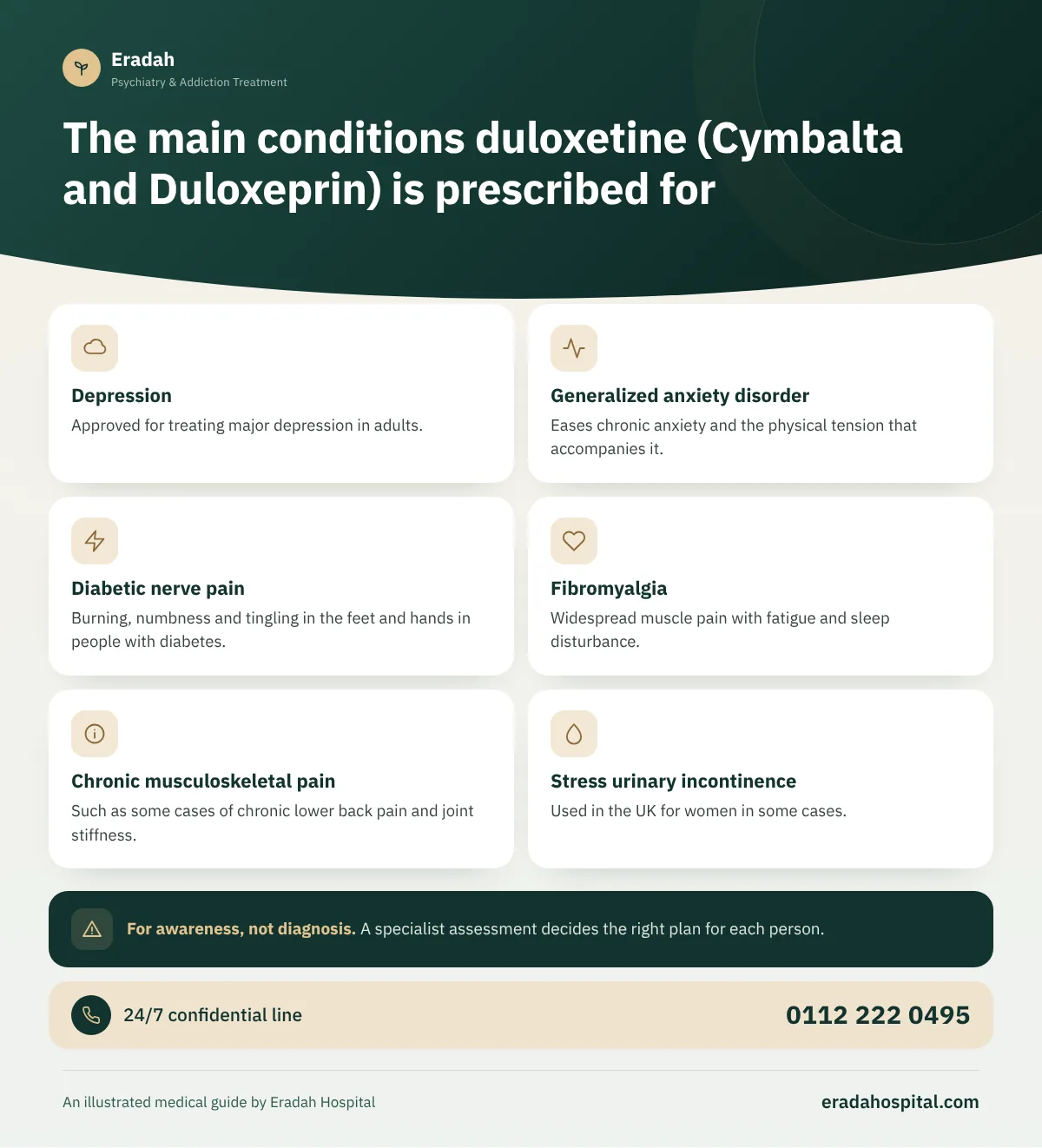
Approved for treating major depression in adults.
Eases chronic anxiety and the physical tension that accompanies it.
Burning, numbness and tingling in the feet and hands in people with diabetes.
Widespread muscle pain with fatigue and sleep disturbance.
Such as some cases of chronic lower back pain and joint stiffness.
Used in the UK for women in some cases.
The UK's National Institute for Health and Care Excellence (NICE) recommends offering amitriptyline, duloxetine, gabapentin or pregabalin as a first-line treatment for nerve pain, except for trigeminal neuralgia. The advantage of duloxetine here is that it does not carry the risk of misuse known with pregabalin and gabapentin, which is an important consideration for people with a history of addiction.
When does duloxetine start working?
The US National Library of Medicine (MedlinePlus) says that feeling the full benefit may take from 1 week to 4 weeks or more. The doctor may start with a low dose and raise it after a week or more to reduce nausea. The medication controls symptoms but does not cure the cause, so it continues even with improvement unless the doctor decides otherwise.
Side effects of duloxetine
- Nausea and sometimes vomiting, especially at the start.
- Headache and dizziness or drowsiness.
- Dry mouth.
- Diarrhea or constipation.
- Insomnia.
- Reduced appetite and weight.
- Sweating, and sometimes night sweats.
- Reduced desire, erectile difficulty or delayed ejaculation.
Effects worth attention include raised blood pressure, which is why MedlinePlus advises measuring it before treatment and regularly during it; signs of liver injury such as pain in the upper right abdomen, yellowing of the skin or eyes and dark urine; serotonin syndrome; manic episodes; low sodium; and angle-closure glaucoma.
Interactions and who the medication does not suit
- MAOI-type antidepressants: MedlinePlus says to wait at least 5 days after stopping duloxetine before starting them.
- Blood thinners and antiplatelet drugs such as warfarin and clopidogrel, and anti-inflammatory painkillers: risk of bleeding.
- Tramadol and any drug that raises serotonin, and St. John's wort.
- Caution in epilepsy, heart disease, glaucoma, uncontrolled high blood pressure and a history of mania.
- In pregnancy and breastfeeding: the decision rests with the doctor after weighing benefit against risk.
Symptoms of stopping duloxetine
Duloxetine is not addictive and does not cause euphoria, but stopping it suddenly can cause the symptoms MedlinePlus describes: nausea, vomiting and diarrhea, anxiety, dizziness, exhaustion and headache, pain, burning or numbness in the hands and feet, irritability, insomnia and nightmares, and sweating. NICE points out that these symptoms are often mild and resolve within one to two weeks, but they can become severe with sudden discontinuation, and that drugs with a short half-life need slower tapering.
When should you ask for help?
Call the doctor immediately if suicidal thoughts, yellowing, severe headache with raised blood pressure, or symptoms of serotonin syndrome appear. If chronic pain or depression comes together with misuse of painkillers or sedatives, dual diagnosis treatment at Eradah handles pain, mood and substance use in a single plan, with medically supervised detox when needed.